
How to Read River Currents for Fishing
Table of Contents
- Observe the River Before You Fish
- Understand Fast Water and Slow Water
- Identify River Current Seams for Fishing
- Recognize Riffles, Runs, Pools, and Glides
- How to Fish Eddies in a River
- River Fishing Techniques for Beginners
- Read Water Features: Rocks, Boulders, and Depth Changes
- Adjust Your Approach When Water Level and Current Change
- Frequently Asked Questions
Last Updated: October 9, 2026
Observe the River Before You Fish
Before you cast a line, spend time watching the water. To read river currents effectively, start with observation. Look at how the water moves. Notice where it speeds up and slows down. Watch for patterns in the surface.
Stand on the bank for five to ten minutes. Don't rush. Watch the current flow around rocks and trees. Notice foam lines and debris. These visual clues tell you where fish are likely to hold.
Look for these key signs:
- Water color and clarity
- Surface ripples and waves
- Foam and debris movement
- Where water changes speed or direction
- Shadows in the water that might indicate depth
At Blue River Carp, Inc., we know that successful catfish anglers start with observation. Whether you're using our premium cut bait or another approach, understanding the water is your foundation. The time you spend watching pays off with better catches.
Pay attention to the entire river section. Don't just focus on one spot. See how the water flows from the top of your fishing area to the bottom. This big-picture view helps you identify the best spots to fish.
Understand Fast Water and Slow Water
Fast water and slow water create different holding locations. Fish position themselves based on current speed. In fast water, fish face into the current. They hold behind rocks or in deeper pockets where the flow is slower. In slow water, they spread out more and feed actively.
Fast water has visible movement. You can see it rushing over rocks or down a slope. The surface looks choppy. Slow water appears calm and glassy. It moves gently or barely at all.
Fish use current to their advantage. They stay in fast water to rest and hide. The current brings food to them. But they don't want to fight the current constantly. So they position themselves where the water slows just enough to rest while still accessing the main flow.
How Current Speed Changes Fish Location
Current speed determines where fish hold and how active they are. When water moves fast, fish seek shelter. They hide behind rocks, logs, or undercut banks. When current slows, fish move into the open. They feed more aggressively and cover more ground.
Water level changes affect current speed too. High water means faster current. Fish move to calmer spots. Low water means slower current. Fish spread out into shallower areas. Understanding this connection helps you adjust your fishing strategy when conditions change.
The relationship between current and fish location is simple: find where the current slows, and you find the fish. This is true whether you're using cut bait from Blue River Carp, Inc. or live bait. The water conditions matter more than the bait type.
Identify River Current Seams for Fishing
A current seam is where fast water meets slow water. This is one of the most productive spots in any river. Fish hold at current seams because they offer the best of both worlds: access to food-carrying current plus shelter from the force of fast water.
Current seams appear as visible lines on the water surface. You'll see foam, debris, or a color change marking the boundary. On one side flows fast water. On the other side flows slow water. The seam itself is the transition zone.
Fish position themselves right at the seam. They face the fast water to intercept food. When they need to rest, they slip into the slow water. This positioning requires minimal energy while maximizing feeding opportunities.
Look for seams in these locations:
- Along the edge of the main current channel
- Where a tributary joins the main river
- Behind large rocks or boulders
- At the inside bend of a river curve
- Where shallow water drops into deeper water
Cast your bait right at the seam line. Let the current carry it along the boundary. Fish will move out from the slow water to intercept it. This is where river current seams fishing becomes highly effective.
Recognize Riffles, Runs, Pools, and Glides
These four water types make up every river section. Each has distinct characteristics. Each holds fish differently. Learning to identify them transforms how you read water.
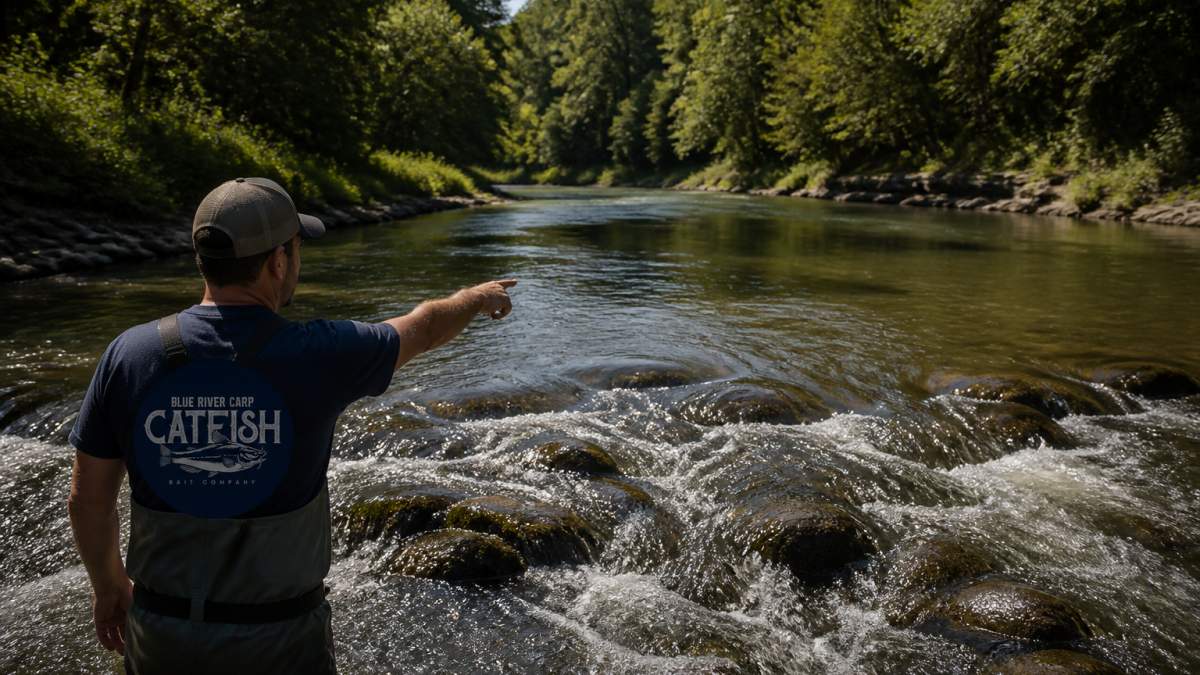
A riffle is shallow, fast water flowing over rocks. The surface is choppy and broken. Riffles oxygenate the water and carry food downstream. Fish use riffles to feed, but they don't hold there long.
A run is deeper than a riffle but still moving. The water flows steadily without breaking into white water. Runs are productive fishing zones. Fish hold in runs because the current is moderate. It brings food without being too forceful.
A pool is deep, slow water. The current moves gently or barely at all. Pools are rest areas for fish. They gather here during high water or heat.
A glide is smooth, medium-speed water. It looks calm on the surface but moves steadily. Glides are excellent fishing zones. Fish feed actively in glides. The current isn't too fast, and visibility is good.
Where Fish Hold in Rivers
Fish select their location based on energy efficiency and food access. They want food delivery without fighting current. They also want shelter from predators and other fish.
In riffles, fish hold at the edges and tail-out areas. They dart into the fast water to feed, then retreat to calmer spots.
In runs, fish spread throughout the section. They hold near the bottom and along the sides. This is where you'll find the most consistent catches.
In pools, fish hold in the deepest parts and near structure. They rest in these zones, especially during midday heat. Early morning and evening, they move to shallower edges to feed.
In glides, fish hold throughout but prefer areas with slight depth changes. They feed actively across the entire section. Glides offer good fishing all day long.
Understanding where fish hold in rivers means matching your approach to the water type. Use quality bait like what Blue River Carp, Inc. provides, and position it where fish naturally congregate based on the water type you're fishing.
How to Fish Eddies in a River
An eddy is a circular current that forms behind obstacles. Water flows into the main current, then circles back upstream. Eddies are fish magnets. They're rest areas filled with food.
Eddies form behind:
- Large rocks and boulders
- Downed trees and logs
- Bridge pilings
- Undercut banks
- Islands
Fish hold in eddies because they can rest completely. The circular current brings food in constantly. There's no need to fight the main current. Eddies are low-energy feeding zones.
To fish an eddy, cast your bait into the circular current. Let it drift around the eddy. Fish will intercept it. Cast multiple times to cover the entire circular zone. Start at the upstream side and work your way around.
How to fish eddies in a river requires patience. Let your bait sit longer in eddies than in other zones. Fish move slower in these calm areas. Give them time to find your bait. This is where shelf-stable bait that doesn't get mushy becomes valuable. It holds together through extended soaks.
River Fishing Techniques for Beginners
Start simple. Use a basic setup: rod, reel, line, and bait. Don't overcomplicate things. Focus on reading water and positioning your bait correctly.
Basic casting technique:
- Hold the rod at waist height
- Point toward your target
- Bring the rod tip back to ear level
- Accelerate smoothly forward
- Release the line at the right moment
- Follow through toward your target
Bait placement:
- Identify where fish should hold
- Cast upstream of that spot
- Let the current carry your bait to the fish
- Keep slight tension on the line
- Feel for bites
Reading bites:
Fish signal bites differently depending on the situation. In fast water, you'll feel a sharp tug. In slow water, you might feel steady pressure. Stay alert. Set the hook when you feel contact.
Beginner mistakes to avoid:
- Casting too hard and spooking fish
- Fishing the same spot repeatedly without moving
- Using bait that falls apart in the current
- Not waiting long enough for fish to find your bait
- Fishing too fast instead of letting the current work
Quality bait matters for beginners. Blue River Carp, Inc. produces cut bait that stays on the hook through multiple casts. This means more time fishing and less time retying. For someone learning river fishing techniques for beginners, this reliability builds confidence and improves results.
Read Water Features: Rocks, Boulders, and Depth Changes
Rocks and boulders create current breaks. Fish hide behind them. Current breaks reduce the force of the water, creating resting zones. This is fundamental to reading water.
A large boulder creates a pocket of slow water immediately downstream. Fish hold in this pocket. Cast your bait right at the boulder's edge.
Multiple rocks create complex current patterns. Water flows around each rock differently. This creates numerous pockets and seams. Fish move between these spots as they feed.
Depth changes affect fish location too. Where the river bottom drops suddenly, the current changes. Fish gather at depth transitions. They use the depth change as a reference point.
Reading rocks and boulders means understanding current flow. Water flows around obstacles in predictable ways. Fast water flows over the top and sides. Slower water forms behind.
Depth changes create feeding zones. Shallow water transitions to deep water. Fish move between depths as conditions change. During bright sunlight, they move deeper.
Adjust Your Approach When Water Level and Current Change
Water level changes everything. High water means faster current and different fish locations. Low water means slower current and exposed structure.
High water conditions:
- Current runs faster
- Fish move to calmer zones
- Eddies become more pronounced
- Pools hold more fish
- Riffles become too fast for most fish
In high water, focus on eddies, pools, and the edges of the current. Fish abandon their normal holding spots. They seek refuge from the force.
Low water conditions:
- Current slows throughout
- Fish spread out more
- Shallow areas become fishable
- Pools hold fewer fish
- Riffles become productive
In low water, fish move into shallower areas. They feed more actively. Focus on runs and glides.
Current speed changes:
Fast current means fish need shelter. Slow current means fish spread out. Adjust your casting location based on current speed. In fast current, cast near structure.
Seasonal changes affect water level and current. Spring runoff brings high water (Snowmelt Runoff and the Water Cycle). Summer brings low water. Fall brings moderate conditions.
Bait choice matters when conditions change. Durable bait that doesn't fall apart in current remains effective across all conditions.
Reading river currents transforms fishing from guessing to strategy. You learn to see what the water is telling you. You understand where fish hold and why.
Frequently Asked Questions
How can you tell the direction of a river flow?
Look for water moving around rocks and obstacles, the current flows in the direction the water moves. Observe the surface: faster water appears rougher and whiter, while slower water looks smoother. Watch floating debris or foam lines; they travel in the direction of the current. In eddies, water circles backward. These visual cues help you read river currents and understand where fish will position themselves relative to the flow.
Where do fish hold in a fast-moving river?
Fish hold behind rocks, boulders, and other current breaks where water slows. They position themselves in eddies, slack water, and pockets where they conserve energy while staying in feeding water. Current seams, the boundary between fast and slow water, are prime holding locations. Fish also hold in deeper runs and pools where the current is less intense. By reading river currents, you can identify these fish-holding locations and cast accordingly.
What should I do if the river level rises or the current gets stronger?
Rising water and faster currents push fish into slower, deeper water and behind larger obstacles. Fish move away from the main channel into eddies, slack areas near the bank, and behind substantial structure. Adjust by fishing deeper water, casting closer to the bank, and targeting areas where current breaks are strongest. Use heavier baits or lures to reach deeper holding water. A quality catfish bait like Blue River Carp's scent-infused cut bait stays effective in changing conditions because it maintains its scent profile and doesn't wash away easily in strong current.
Can I use these current-reading techniques for catfish, or only for trout?
These techniques work for catfish, trout, and most river species. Catfish hold in eddies, behind rocks, in deep pools, and along current seams just as trout do. They prefer deeper, slower water and are less selective about exact positioning. Understanding river currents helps you locate catfish feeding water and predict where they'll hold. The principles of reading fast water, slow water, current breaks, and structure apply across species and water types.


