

Best Time of Day to Catch Catfish: A 2026 Guide
Table of Contents
- Why Catfish Feed on a Schedule (and How to Read It)
- Dawn and Early Morning: The Most Reliable Bite Window
- Dusk to After Dark: When Catfish Move Shallow
- The Best Time to Catch Catfish at Night
- Catfish Fishing at Night vs Day: Which Actually Produces More
- The Best Time to Catch Catfish in the Summer
- The Best Weather for Catfishing (and What Ruins a Bite)
- A Simple Trip-Planning Checklist for Any Water
- Frequently Asked Questions
Last Updated: October 4, 2026
Why Catfish Feed on a Schedule (and How to Read It)
Catfish feed in windows set by light, water temperature, and current. Reading those three signals is the fastest way to plan around the best time of day to catch catfish.
At Blue River Carp, Inc., we build our bait around one fact: when catfish are actively searching for food, they commit hard to a scent trail.

Catfish feeding activity is the daily pattern of movement and feeding, driven mostly by light levels and water temperature. When light drops, catfish leave deep cover and roam toward shorelines and flats to forage.
A few things stay true across almost every body of water:
- Low light triggers movement. Dawn, dusk, and after dark are prime.
- Stable water temperature keeps fish active. Big swings slow them down.
- Moving water concentrates fish. Current delivers scent and food.
How Light, Water Temperature, and Current Drive Feeding Windows
Light is the master switch. Catfish have sensitive skin and whiskers built for low-light hunting, so bright sun pushes them into cover; as light fades, they roam.
Water temperature sets the mood. Stable temps mean confident feeding; a fast cold front makes catfish lethargic and shrinks bite windows.
Current does the delivery work.
The simple rule: fish low light, stable temps, and moving water. That combination produces more bites than any single factor alone.
Dawn and Early Morning: The Most Reliable Bite Window
The most reliable time to catch catfish is the first two hours of daylight, when light is soft and baitfish are on the move.
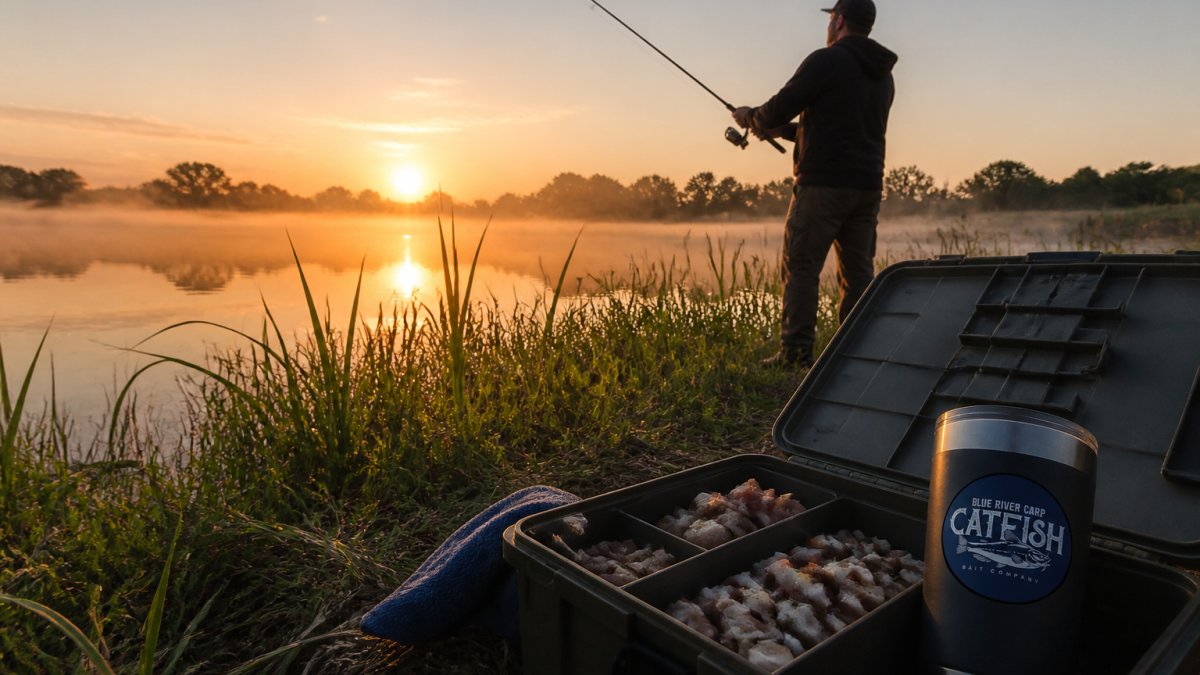
This window stacks two triggers: low light makes catfish feel safe moving shallow, and overnight food has collected in the shallows.
What most guides miss is timing. "Early morning" means first light to about two hours after sunrise, not 9 a.m.
Species Differences at Dawn
Channel cats are the most consistent dawn feeders, shallow-oriented, aggressive, and often first to bite as light builds. Blue cats follow, especially in rivers where they push onto flats and channel edges to intercept baitfish. Flatheads are the least reliable at dawn; these nocturnal ambush predators occasionally feed at first light, but most activity happens after dark. If flatheads are your target, dawn is a bonus window, not a primary one.
How the Dawn Window Shifts by Season
The clock time changes, but so does the length and quality of the window.
- Spring: The bite can start before sunrise and last three to four hours. Cool water and spawning behavior keep channel cats shallow and active. Fish the warmest shallow flats first.
- Summer: The window is short and early. Be on the water 30 minutes before sunrise. By two hours after sunrise, fish are already sliding deep. Target shaded banks and any current seam that holds cooler water.
- Fall: The window lengthens again. Channel cats and blues feed heavily as water cools, and the bite can hold until mid-morning. Fish shallow flats near deeper water.
Where to Fish at Dawn
Location matters as much as timing. At dawn, catfish move from deep resting cover to shallow feeding areas, so fish the travel lanes and edges where shallow meets deep.
- Ponds and lakes: Fish shoreline edges, shallow flats, and points that drop into deeper water. Channel cats will be tight to cover; blues will roam the flat.
- Rivers: Fish inside bends, current seams, and the downstream side of bridge pilings and wing dams. Catfish park behind structure and let the current deliver food.
- Reservoirs: Look for creek channels and flooded timber. Fish the shallow ends at dawn and follow the channel deeper as light builds.
A Practical Dawn Setup
- Set up 30 minutes before sunrise
- Fish shallow first, then follow fish deeper as light builds
- Use a strong scent trail to pull fish in fast
Dusk to After Dark: When Catfish Move Shallow
Dusk is the second great window, and for many anglers it beats dawn.
Catfish do not need total darkness to feed, they need fading light. The transition period, not midnight, is often the hottest part of the evening.
Location matters more at dusk than at dawn.
A common mistake is fishing too deep at dusk, leaving baits in the main channel while fish have already moved shallow. Move with the fish.
The Best Time to Catch Catfish at Night
Night fishing works because catfish are built for it: their senses are tuned to low light, and darkness lets them hunt shallow without feeling exposed.
Where you fish at night matters as much as when. Flatheads hug heavy cover and deep holes. Blues roam open water and channel edges.
Bait choice matters more at night because fish hunt by scent and vibration.
- Fish the first three hours after dark for the strongest action
- Target shallow flats, channel edges, and cover near deep water
- Use strong-scented bait to pull fish through dark water
Catfish Fishing at Night vs Day: Which Actually Produces More
Catfish fishing at night vs day is not close in most waters.
Night fishing produces bigger fish because large blues and flatheads feed after dark. Day fishing produces more bites because channel cats stay active in low-light morning and evening hours and are less picky.
Catfish Weekend Kit - 4 x 7oz Nuggets →
The real answer depends on your goal:
| Goal | Best Window | Why |
|---|---|---|
| Trophy blue or flathead | First 3-4 hours after dark | Big fish feed in low light |
| Numbers of channel cats | Dawn and first 2 hours | Active, less spooky |
| Summer daytime trip | Dawn and dusk only | Midday bite fades |
| Cold-water season | Midday warm-up | Fish seek warmth |
If you want a mixed bag, fish dawn and dusk and skip the midday lull. If you want a big fish, commit to the night.
The Best Time to Catch Catfish in the Summer
Summer changes the schedule. Heat pushes catfish deep during the day, so the best time to catch catfish in the summer is dawn, dusk, and after dark.
Water temperature is the reason. In summer, surface water gets hot and shallow flats lose oxygen, so catfish drop to deeper, cooler water and wait, feeding when light fades and the shallows cool.
But "dawn, dusk, and after dark" is where most guides stop.
Summer Time Windows by Species
- Channel cats: Best at dawn and dusk. They stay shallow and active in low light. In summer, the dawn window is short, often 90 minutes to two hours. The dusk window can run from the last hour of light into the first two hours after dark.
- Blue cats: Best after dark, especially the first three to four hours. Blues roam open water and channel edges at night, then slide deep during the day. In rivers, they often feed on current seams after dark.
- Flatheads: Almost entirely nocturnal in summer. The best window is the first three hours after dark, and the biggest fish often bite between midnight and 2 a.m. on stable, warm nights. Flatheads hug heavy cover and deep holes during the day.
How Heat, Clarity, and Fronts Change the Pattern
Summer is not one pattern but several, shifting with conditions.
- Stable heat: Fish deep during the day, shallow at night. The dawn and dusk windows are reliable but short.
- Cloud cover: An overcast summer day can extend the dawn bite and create a midday window. Fish shallow longer than you would on a clear day.
- Muddy water: Catfish feed more by scent and vibration, and muddy water lets them move shallow during the day. Fish closer to shore and use strong-scented bait.
Where to Fish in Summer
Location is the other half of the summer puzzle. Catfish move vertically and horizontally as light and temperature change.
- Rivers: Fish deeper holes and channel edges during the day, then move shallow at night. Current seams and the downstream side of structure hold fish around the clock.
- Ponds and lakes: Follow fish to deeper water at midday and back to the bank at dusk. Points, creek channels, and shaded banks are key.
- Reservoirs: Look for flooded timber and creek channels. Fish the channel edges at night and the deeper ends during the day.
A Summer Decision Framework
When planning a summer trip, run through these questions in order:
- What species am I targeting? Channel cats favor dawn and dusk; blues and flatheads favor after dark.
- What is the water temperature? Stable, warm water keeps fish active. A fast drop shuts them down.
- Is there cloud cover? If yes, extend your shallow fishing into the day.
- Is a front approaching? If yes, fish it hard before it hits.
- Is the water clear or muddy? Muddy water means fish shallow and use scent; clear water means fish deep and low light.
The Best Weather for Catfishing (and What Ruins a Bite)
The best weather for catfishing is stable, warm, and slightly cloudy. Cloud cover extends feeding windows by keeping light low, a steady barometer keeps fish comfortable, and light wind adds ripple and pushes scent around.
Here is what ruins a bite:
- A fast-moving cold front drops water temp and shuts fish down
- Bright, clear, high-pressure days push fish deep and slow
- Sudden temperature swings make catfish lethargic
The best plan is to fish before a front, not after. Fish feed hard as pressure falls; once it passes and pressure spikes, expect a slow day or two.
Cloud cover is your friend. An overcast day can turn a slow midday bite into a steady one.
A Simple Trip-Planning Checklist for Any Water
Use this checklist to plan any catfishing trip on ponds, lakes, or rivers. It takes about five minutes.
Total Time: 5 minutes to plan, plus travel
- Check the forecast: stable temps and cloud cover beat clear and cold
- Note sunrise and sunset times for your spot
- Plan to be set up 30 minutes before the window opens
Bait is the one variable you control completely. Frozen bait gets mushy, falls off the hook, and needs a cooler.
For a weekend trip, the Catfish Weekend Kit packs four 7oz nugget packs plus a 4oz blood scent oil. For bigger cats and set lines, the Big-Cat Chunk Kit uses 2" x 3" chunks built for blues and flatheads.


The hardest part of catfishing is not the fishing.
Blue River Carp, Inc. makes that part easy.
Get set up with Blue River Carp, Inc. and stop losing fish to mushy bait.
Frequently Asked Questions
What time of day do catfish bite the best?
The strongest bite windows are the two hours around sunrise and the two hours after sunset. Channel catfish feed heavily in low light, and flatheads and blues follow the same pattern in most waters. Daytime fishing still produces fish, especially in deeper holes, under cloud cover, or in stained water. If you can only fish one window, pick dawn: the water is coolest, baitfish are active, and catfish are still roaming shallow flats before retreating to deeper cover.
Are catfish more active at night than during the day?
In most lakes and rivers, yes. Catfish are built to hunt in low light, and nighttime movement toward shorelines and shallow flats is well documented. That said, catfish fishing at night vs day is not a blowout. Big blue and flathead catfish often feed during daylight in deep water or on current seams. The difference is location more than willingness. At night you can fish shallow; during the day you generally need to fish deeper or find moving water.
What is the best weather for catfishing?
Steady conditions beat dramatic ones. A light breeze, stable barometric pressure, and cloud cover that softens the sun all improve daytime bites. The best weather for catfishing often arrives just before a front, when fish feed aggressively. After a cold front passes, expect a slower bite for a day or two. Warm rain in summer can also help by adding current and washing food into the water, especially in rivers and pond inlets.
What is the best time to catch catfish in the summer?
Summer splits into two windows. In early summer, dawn and dusk remain productive, and catfish are still shallow. In the hottest weeks, shift toward the last two hours before dark and the first three hours after. Water temperature above 85 degrees pushes channel catfish into deeper, cooler water during the day, while blue catfish often feed at night in the main channel. A preserved cut bait that stays firm on the hook means you can rig up at dusk and keep fishing past midnight without a cooler.