
Alternatives to Chicken Liver for Catfish Bait
Table of Contents
- Why Chicken Liver Fails and What Catfish Actually Want
- Top Alternatives to Chicken Liver for Catfish Bait
- The Best Bait for Channel Catfish and Other Species
- Scent-Infused Cut Bait Benefits for Catfishing
- How to Keep Bait on the Hook: Rigging and Hook Retention Tips
- Fresh vs. Frozen Bait: Quality, Cost, and Convenience
- Conclusion
- Frequently Asked Questions
Last Updated: October 2, 2026
Why Chicken Liver Fails and What Catfish Actually Want
Chicken liver has a reputation problem most anglers discover the hard way: it comes off the hook. Its soft, slimy texture means a single cast into current can strip it clean. This guide from Blue River Carp, Inc. covers the alternatives that hold up.
Catfish are scent-driven bottom feeders that hunt with their nostrils and barbels, following dissolved scent trails to their source. The best alternatives to chicken liver for catfish bait share two traits: a strong scent signature and enough toughness to survive the cast, current, and pickers.
Most guides list baits without explaining the trade-off between scent and durability. Soft baits disperse scent fast but fall off; tough baits stay on but release less.
Top Alternatives to Chicken Liver for Catfish Bait
The best alternatives to chicken liver for catfish bait are nightcrawlers, cut bait, gizzards, raw shrimp, hot dogs, and prepared dough baits. Each trades scent strength against hook retention differently, so the right choice depends on whether you're fishing current, still water, or set lines overnight.
Here's how the main options stack up before we break each one down:
| Bait | Scent Strength | Hook Retention | Best For |
|---|---|---|---|
| Nightcrawlers | Medium | High | Channel catfish, still water |
| Cut bait | High | Medium-High | Blues and flatheads |
| Gizzards | Medium-High | High | Current, set lines |
| Raw shrimp | Medium | Medium | Channel cats, casual trips |
| Hot dogs | Low-Medium | High | Beginners, kids |
| Dough bait | High | Medium | Chumming, still water |
Natural Baits: Nightcrawlers, Bluegill, and Sucker Minnows
Nightcrawlers are the most forgiving natural bait you can put on a hook. They stay put through a hard cast, stay alive in current, and channel catfish eat them year-round.
Live bluegill and sucker minnows target bigger fish. Flatheads prefer live prey over anything dead or prepared, so a 3- to 5-inch bluegill on a slip-sinker rig is a serious flathead setup.
Cut Bait and Gizzards: A Cut Bait vs. Liver Comparison
Cut bait beats liver on every metric that matters. A chunk of bluegill, shad, or sucker holds through repeated casts, bleeds scent continuously, and stays visible to fish hunting by sight in stained water.
Chicken gizzards are the sleeper alternative: tough, cheap, and holding a hook like leather. Many anglers marinate them in garlic or scent oil overnight to boost the trail.
Grocery Store Bait Alternatives: Raw Shrimp, Hot Dogs, and Strawberry Jello
Raw shrimp is the easiest grocery-store upgrade. Buy them with the shells on, leave the shell intact to hold the hook, and let the natural saltwater scent work.
Hot dogs are the beginner's bait: firm, easy to rig, and kid-friendly. Their weakness is scent, since a plain hot dog releases very little.
Strawberry jello is the classic homemade trick. Toss cut bait or hot dog pieces in a bag with a packet of strawberry gelatin, shake, and refrigerate overnight.
The Best Bait for Channel Catfish and Other Species
The best bait for channel catfish is cut bait or nightcrawlers, while flatheads favor live bluegill and blues take large cut chunks. Species-specific selection matters because the three main catfish species feed differently, hold in different water, and respond to different presentations. A bait that slays channel cats in a farm pond can sit untouched when flatheads are the target.
Here's the species-by-species breakdown, including the rigging and bait size that actually match how each fish feeds:
| Species | Top Bait | Bait Size | Rig | Where to Fish It |
|---|---|---|---|---|
| Channel catfish | Nightcrawlers, shrimp, cut bait | 1- to 2-inch chunks | Slip sinker, 1/0-3/0 circle hook | Ponds, slow rivers, flats |
| Blue catfish | Oily cut bait (shad, skipjack, carp) | 2- to 4-inch chunks | Fish-finder rig, 5/0-8/0 circle hook | Channels, deep ledges, current seams |
| Flathead catfish | Live bluegill, sucker, large shiner | 3- to 6-inch live bait | Slip sinker or 3-way, 6/0-10/0 circle or J hook | Heavy cover, log jams, bridge pilings |
| Bullhead & madtom | Cut bait, gizzards, worms | 1-inch or smaller | Small slip sinker, 1/0 or smaller | Small creeks, backwaters, weed edges |
Channel catfish are the most adaptable feeders, eating nightcrawlers, shrimp, dough bait, gizzards, and cut bait with equal enthusiasm. If you're new to catfishing, start with nightcrawlers or shrimp.
Blue catfish run bigger and prefer oily cut bait.
Flatheads are predators first. Live bluegill, sucker minnows, and large shiners out-fish everything else, and flatheads often ignore dead bait entirely.
Bullheads and madtoms are the small-water specialists.
Catfish Weekend Kit - 4 x 7oz Nuggets →
Scent-Infused Cut Bait Benefits for Catfishing
Scent-infused cut bait benefits come down to one thing: a longer, stronger scent trail. Catfish locate food by smell, so a bait that keeps releasing scent after it hits the bottom draws fish in long after a plain bait has gone quiet.
Prepared cut bait made from invasive carp solves the two problems that make fresh cut bait a hassle: it doesn't need refrigeration, so it won't spoil in a hot tackle box, and it stays firm on the hook instead of turning to mush. That's why shelf-stable cut bait is a go-to for anglers who fish on short notice.
You can also boost any bait's scent with additives. Blood meal, fish oil, and amino acid powders like L-lysine dissolve into the water and pull fish toward your rig.
How to Keep Bait on the Hook: Rigging and Hook Retention Tips
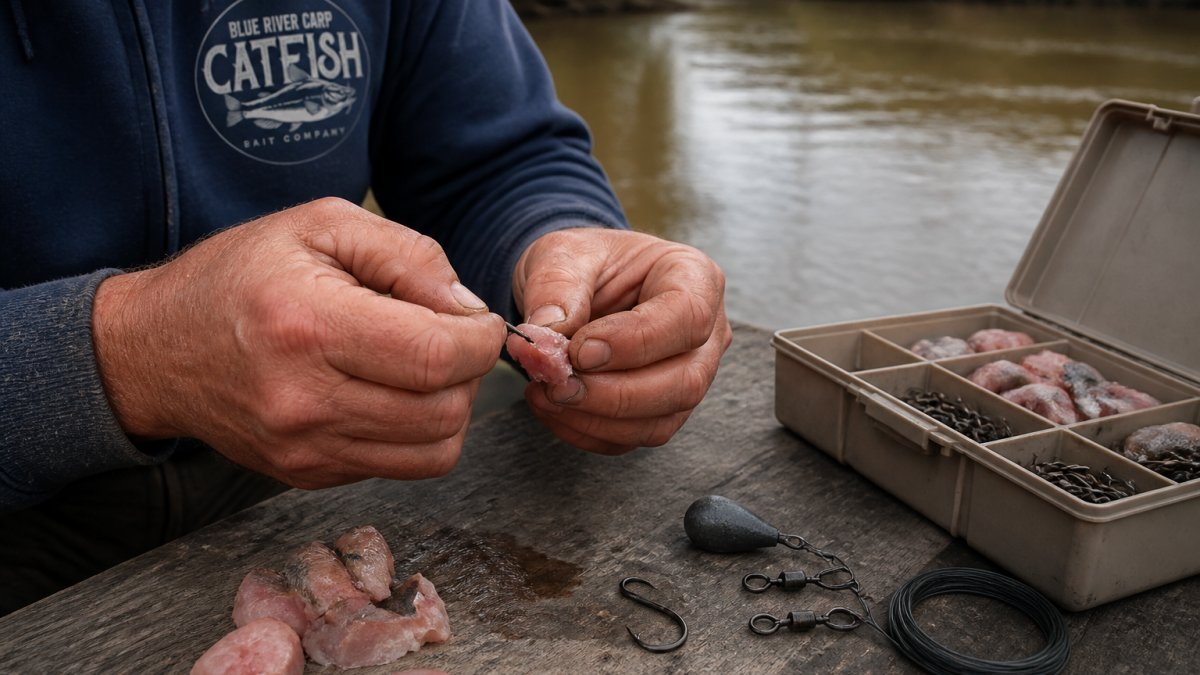
Keeping bait on the hook comes down to three things: matching hook size to bait size, threading soft baits through a tough section, and using a bait cage, thread, or elastic when the bait is too soft to hold on its own.
Why soft baits fall off
A cast generates centrifugal force that pulls bait away from the hook shank, and water resistance adds drag the moment it hits the water. Soft baits like liver, dough, and ground bait have almost no internal structure to resist that force, so they slide down the shank and off the bend. The fix is to give the bait something to grip (a barb, a stop, a thread) or wrap it in something that holds it (mesh, elastic, pantyhose).
Step-by-step: keeping soft baits on the hook
- Match the hook to the bait. Too small leaves no room for the bait to grip; too big tears through soft bait on the cast. The bait should cover the shank but leave the point and barb fully exposed.
- Thread through the tough part. Push the hook through the firmest section, not the soft center: the skin side on cut bait, the tail shell on shrimp, the thickest muscle on gizzards.
- Use a bait cage or pantyhose. For liver, dough, or ground bait, wrap it in a small piece of pantyhose or load it into a spring-style bait cage. The mesh holds the bait while scent leaks through. A 2-inch square and a half-turn of the shank is enough for one bait.
- Add a bait stop or thread. Bait stops are tiny plastic or rubber pegs that slide onto the hook point and lock soft chunks in place; bait thread is wrapped around the bait and shank in a figure-eight and tied off.
- Double-hook large chunks. For big cut bait, run a second hook through the trailing end so a short strike still finds a point. This is standard on trotlines and limb lines.
- Try a hair rig for dough and paste baits. A hair rig threads the bait onto a short loop below the hook bend, so the fish takes the bait and the hook follows into the mouth. It's standard for European-style carp and catfish fishing and works anywhere soft paste baits are used.
Rigging tools worth carrying
- Bait elastic: thin stretchy thread wrapped around soft baits to bind them to the shank. Cheap, reusable, effective on shrimp, cut bait, and dough.
- Bait stops: small pegs that lock a bait in place on the shank. Sold in packs of 50-100 for a few dollars.
- Bait cages (method feeders): spring or cage-style feeders that pack ground bait around the hook, with the hook sitting inside or just outside the cage.
- Pantyhose squares: 2-inch squares used to wrap liver, dough, or ground bait. The mesh holds the bait and lets scent through.
- Bait thread: waxed thread for tying soft baits to the shank, especially on larger cut bait chunks.
The single biggest mistake is over-baiting. A giant wad of soft bait hides the hook point and won't survive a cast. Use a piece that leaves the point exposed and the bait snug against the shank.
Fresh vs. Frozen Bait: Quality, Cost, and Convenience
Fresh bait outperforms frozen on scent and texture, but frozen wins on convenience and cost for occasional anglers.
Fresh cut bait bleeds the most scent and holds the firmest texture, but you have to catch or buy it, keep it cold, and use it before it turns.
Frozen bait solves spoilage but loses some scent and texture in the freeze-thaw cycle. It's the practical choice for set lines and overnight trips where you need volume.
Shelf-stable preserved bait splits the difference.
If you want the convenience without the cooler, the Catfish Weekend Kit packs four 7oz nugget pouches in Blood, Garlic, Shad, and Natural plus a 4oz blood scent oil, all shelf-stable and sized for channel cats on rod and reel. For bigger blues and flatheads, the Big-Cat Chunk Kit runs 2" x 3" chunks that hold up on limb lines and trotlines. Both are made from invasive carp, so every bag you fish helps clear a non-native species from the water.


Conclusion
Switching off chicken liver doesn't mean giving up on soft, scent-heavy bait. It means choosing baits that hold the hook, release scent over time, and match the species you're chasing.
Blue River Carp, Inc. makes that switch simple. Our scent-infused cut bait is crafted from invasive carp, veteran-owned, and made in Indiana, with a 12+ month shelf life and no refrigeration or freezing needed.
Get started with Blue River Carp, Inc. and keep a bait that's always ready, always firm, and always fishing.
Frequently Asked Questions
What is irresistible to catfish?
Catfish are drawn to strong scents and proteins. Natural baits like nightcrawlers, bluegill, and sucker minnows work well, but scent-infused cut bait made from invasive carp offers a powerful scent trail. Blood, garlic, and shad scents are particularly effective. The key is matching the bait to the species and water conditions. For example, channel catfish respond well to blood and shad, while flatheads prefer live or fresh cut bait.
Is chicken liver or gizzards better for catfish bait?
Gizzards are tougher and stay on the hook longer than chicken liver, which falls apart easily. However, liver produces a stronger scent trail. Many anglers use gizzards for their durability, but alternatives like cut bait or scent-infused nuggets offer both toughness and scent. For example, Blue River Carp's 7oz Nuggets are firm, pre-cut pieces that hold up on the hook and release scent over time, combining the best of both worlds.
Why does chicken liver fall off the hook so easily?
Chicken liver is soft and breaks down quickly in water, especially when cast or exposed to current. Its texture lacks the toughness needed to stay on a hook during a cast or when a catfish nibbles. To keep bait on the hook, try wrapping liver in pantyhose or using a bait cage. Better yet, switch to a firmer alternative like cut bait chunks or Fish Attack Strips, which are designed to stay securely on the hook.
How do I choose the best bait for channel catfish?
Channel catfish are opportunistic feeders and respond to a variety of baits. For consistent results, use scent-infused cut bait in sizes like 1x2-inch nuggets, which are easy for channel cats to take. Natural baits like nightcrawlers and shrimp also work. Consider water temperature and current: in colder water, smaller, scent-heavy baits are better. Blue River Carp's Catfish Weekend Kit includes four scents (Blood, Garlic, Shad, Natural) to match changing conditions.
What are the benefits of scent-infused cut bait?
Scent-infused cut bait releases a steady scent trail that attracts catfish from a distance and encourages them to hold on longer. It is shelf-stable, requiring no refrigeration, so it's ready anytime. The firm texture stays on the hook better than liver or other soft baits, reducing re-baiting. For example, Blue River Carp's preserved cut bait has a 12+ month shelf life and comes in resealable pouches, making it convenient for spontaneous trips.