
Catfish Bait That Stays Hooked: A How-To Guide
Table of Contents
- Why Catfish Bait Falls Off the Hook
- Choosing the Right Hook for Bait Retention
- How to Rig Chicken Liver for Catfish
- Using Bait Mesh for Catfish
- Best Catfish Bait for Current
- Cut Bait vs. Soft Bait: Which Stays on Better
- Bait Texture and Consistency Matter
- Common Mistakes That Cause Bait Loss
Last Updated: August 15, 2026
Why Catfish Bait Falls Off the Hook
Catfish bait falls off when anglers don't match their rigging technique to the bait's physical properties. Soft baits like chicken liver, cut shad, and stink baits have different tensile strengths than firm baits. Using the wrong hook size, hook style, or rigging method means the bait can't withstand casting, retrieval, or the catfish's strike.
In practice: chicken liver slides down the hook shank because the gap is too wide; cut bait tears during casting because the hook barb is positioned wrong; stink bait crumbles because it's not bound tightly enough. Each failure has a specific mechanical cause. Understanding hook selection, rigging mechanics, and bait choice solves most of these problems. At Blue River Carp, Inc., we've focused on bait designed to resist these failure points, products that stay intact through casting, sinking, and the strike itself.

Choosing the Right Hook for Bait Retention
The hook you choose determines whether your bait stays on or slides off before a catfish sees it. Two hook styles dominate catfish fishing: circle hooks and treble hooks.
Circle Hooks vs. Treble Hooks
Circle hooks have a curved shank that turns inward toward the eye. When a catfish takes the bait, the hook naturally sets in the corner of the mouth, keeping soft baits pressed firmly against the shank. This design creates friction that prevents slipping and tearing. Circle hooks excel at holding chicken liver, punch bait, and other soft baits because the curve presses the bait inward rather than stretching it outward. Most experienced catfish anglers prefer circle hooks for their forgiving soft bait retention and reliable hooking without aggressive sets.
Treble hooks have three points radiating from a central shank, creating multiple contact points with the bait. They're excellent for holding cut bait and firm baits, but require careful rigging. If you don't thread the bait properly onto all three points, it can rotate and slip off during casting or in current. For beginners or anglers using chicken liver or stink bait, a circle hook is the safer choice.

Hook Size and Shank Length
Hook size matters significantly. A hook that's too small tears soft bait; one that's too large allows bait to slide down the shank without resistance.
For chicken liver and punch bait, use 2/0 to 4/0 hooks. The gap should be just slightly larger than your bait's thickness when threaded on. For cut bait chunks, 3/0 to 6/0 hooks work best, giving you more surface area for rigging. Longer shanks let you space bait pieces along the hook, distributing weight evenly and reducing spinning or slipping. Short-shank hooks work better for single, compact baits where you want everything tight.
How to Rig Chicken Liver for Catfish
Chicken liver is popular but frustrating to keep on the hook. The tissue is soft and breaks apart easily if not rigged correctly.
Preventing Chicken Liver from Slipping
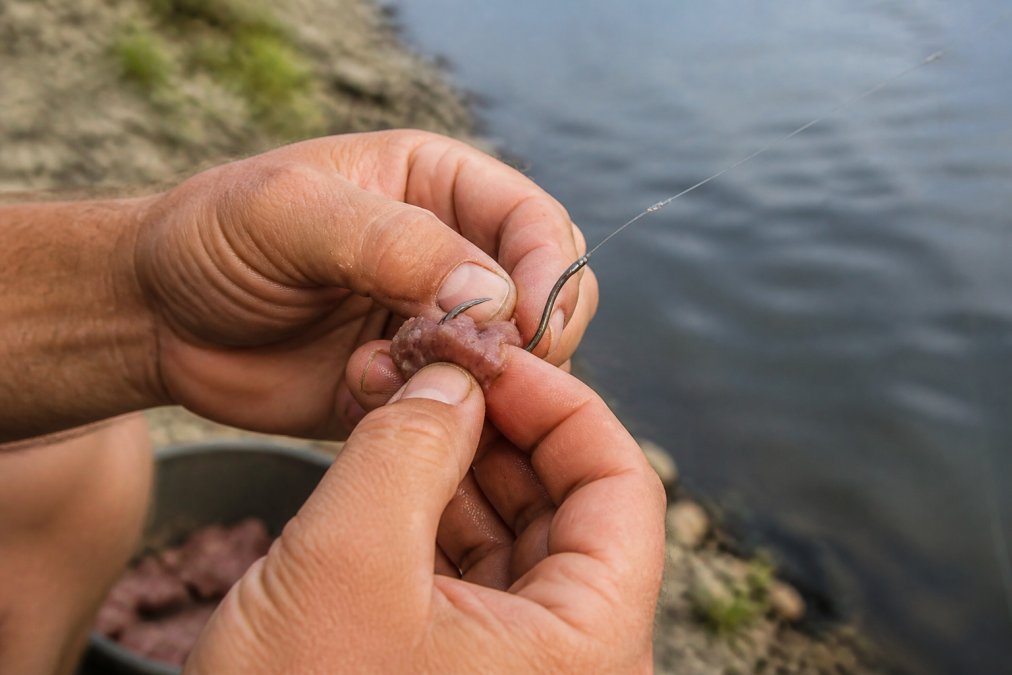
Start with fresh chicken liver, not frozen and thawed multiple times, which becomes mushy. Thread the hook through the membrane, the thin, tough outer layer, not the soft tissue. This is your anchor point. Push the hook through the membrane first, then let the bulk of the liver hang below. This single step prevents 90% of slippage.
For a circle hook, thread the membrane so the hook point faces upward slightly. The curve presses the bait inward, creating friction. For a treble hook, thread the membrane on one point, then carefully wrap soft tissue around the other two points without tearing. If your chicken liver still slips, you're using old, mushy bait or your hook is too large. Downsize the hook or switch to fresher liver.
Using Bait Mesh for Catfish
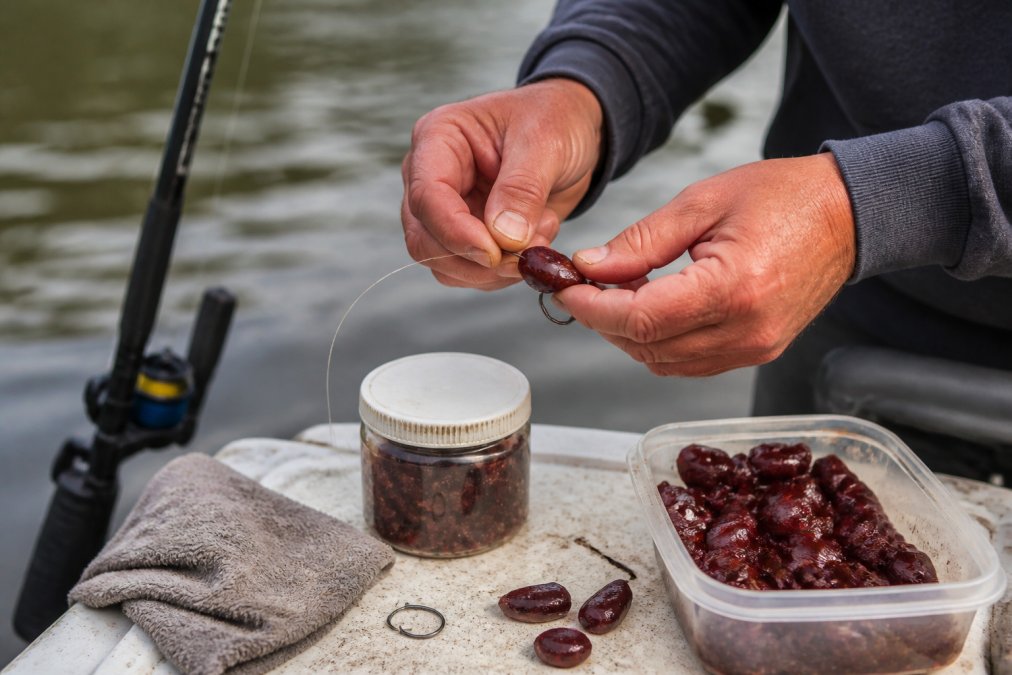
Bait mesh, also called bait bags or mesh wraps, solves the slipping problem by containing the bait in netting material. This method works especially well with punch bait, stink bait, or soft cut bait that tends to fall apart in current or during casting.

The mesh bag holds the bait together while allowing scent to escape into the water. Catfish can smell the bait from a distance, but the bait won't fall off before a fish finds it. Place your bait into a small mesh pouch, tie it closed with fishing line, then tie the pouch to your hook eye or a short leader above the hook. This method is particularly effective in current because the mesh keeps everything compressed and stable. For Blue River Carp, Inc.'s cut bait chunks, a mesh bag isn't always necessary because the bait is already preserved and firm, but it's still a solid choice in heavy current.
Best Catfish Bait for Current
Current puts stress on soft baits, pulling and stretching them. In heavy current, cut bait outperforms soft bait. The firm texture of a cut shad or bluegill chunk resists stretching and tearing, maintaining its shape and releasing scent consistently.
Current also affects scent dispersal. Fast water carries scent away quickly, which attracts catfish from a distance. However, if your bait is falling apart, the scent trail becomes inconsistent. For moderate current, chicken liver still works with proper rigging and fresh bait. In very strong current, switch to cut bait or use a mesh bag to keep soft bait intact.
Cut Bait vs. Soft Bait: Which Stays on Better
Cut bait (shad, bluegill, skipjack) has a firm, dense texture that doesn't tear easily. When rigged properly on a treble hook, it survives multiple casts, heavy current, and aggressive strikes. The downside is that traditional cut bait requires refrigeration. Blue River Carp, Inc. solves this with preserved cut bait that requires no refrigeration and maintains firmness for 12+ months.
Soft bait (chicken liver, punch bait, stink bait) releases scent faster because the texture breaks down more readily. This can be an advantage in slow, clear water where scent dispersal matters more than durability. However, soft bait requires careful rigging and degrades faster in current. For most situations, cut bait holds on better, but soft bait has its place in slow, deep pools.
Bait Texture and Consistency Matter
Bait texture directly affects how well it stays on the hook. Mushy bait tears easily and slides off; overly hard bait is difficult to rig. The ideal bait has a firm exterior with enough give that you can thread a hook through without tearing it.
Bait that's been frozen and thawed multiple times becomes mushy because ice crystals rupture cell walls. If using frozen bait, thaw it only once and use it immediately. Bait left in the sun dries on the surface while becoming mushy inside, the worst combination for hook retention. Preserved bait like Blue River Carp, Inc.'s cut bait chunks maintains consistent texture because it's processed to resist both drying and degradation.
Common Mistakes That Cause Bait Loss
Using hooks that are too large. A 6/0 or 8/0 hook on chicken liver creates a gap so wide the bait slides down. Match hook size to bait size.
Not threading the membrane on chicken liver. Threading soft tissue instead of the membrane creates a weak anchor point. Always go through the membrane.
Casting too hard. Aggressive casting stresses soft bait. Use a smooth, controlled cast.
Leaving bait in the sun between casts. Heat degrades soft bait quickly. Keep bait shaded or in a cooler.
Rigging bait on the hook point instead of the shank. The hook point is the weakest anchor. Thread bait onto the shank with the point exposed.
Ignoring current conditions. Soft bait works in slow water but fails in current. Switch to cut bait or use a mesh bag immediately.
Using old or previously frozen bait. Fresh bait holds better. If your bait has been frozen, thawed, and refrozen, it's compromised.
| Common Mistake | Why It Fails | Solution |
|---|---|---|
| Hooks too large | Bait slides down shank | Match hook size to bait size |
| Threading soft tissue | Weak anchor point | Thread the membrane instead |
| Hard casting | Physical stress tears bait | Use smooth, controlled cast |
| Bait left in sun | Heat degrades texture | Keep bait shaded or in cooler |
| Point rigging | Bait pivots and slips | Thread onto shank, expose point |
| Fast water with soft bait | Current pulls bait apart | Use cut bait or mesh bag |
| Old or refrozen bait | Mushy texture | Use fresh or preserved bait |
Keeping catfish bait on the hook comes down to matching your hook selection, rigging technique, and bait choice to your fishing conditions. The method that works in slow, clear water won't work in fast current. The solution is understanding how hook gap, shank length, and bait texture interact, then adjusting based on what you face on the water.
Blue River Carp, Inc. removes one variable from this equation. Our preserved cut bait stays firm and consistent, whether you're fishing in summer heat or storing it for months. No refrigeration needed, no degradation from freeze-thaw cycles. Get started with Blue River Carp's preserved bait selection and eliminate bait failure from your catfish fishing.
Frequently Asked Questions
What is the best bait for catfish that stays on the hook?
Cut bait with firm texture and high skin toughness stays on the hook better than soft baits. Fresh-cut gizzard shad or bluegill pieces provide excellent bait retention because their natural skin resists tearing during casting. Preserved cut bait like Blue River Carp's chunks maintains consistent firmness without refrigeration, preventing the mushy texture that causes bait loss. Pair firm bait with a circle hook sized to your bait for maximum retention.
How do you rig chicken liver for catfish without it falling off?
Thread the hook through the thickest part of the liver, typically near the membrane, rather than the soft tissue. Use a circle hook with a gap slightly smaller than your bait width. Chicken liver is naturally soft, so avoid casting hard; instead, use an underhand or gentle cast to minimize stress on the bait. For longer sessions, consider switching to cut bait or using a mesh bag to wrap the liver, which provides additional security while still allowing scent release into the water.
Does stronger current require different bait?
Yes. In strong current, use denser, heavier cut bait like gizzard shad chunks rather than punch bait or soft baits, which break apart in fast water. The bait's weight and firmness help it stay positioned on the hook despite water flow. Treble hooks grip cut bait better in current than circle hooks. Mesh wraps or bait bags also work well in current because they hold bait pieces together while allowing scent to disperse downstream, attracting catfish from a distance.
What can I mix with soft bait to make it stay on the hook?
Bind soft bait together using natural attractants like liquid molasses, which adds viscosity and helps pieces adhere. Mix molasses with soft bait pieces to create a stickier consistency that resists water pressure. Alternatively, wrap soft bait in a small mesh bag or use a punch bait holder. These DIY binding methods improve retention without requiring freezing or refrigeration, making them ideal for convenient, shelf-stable fishing trips.
This article was written using GrandRanker


