

What Is Shelf Stable Fishing Bait Made Of?
Table of Contents
- What Shelf Stable Fishing Bait Is Actually Made Of
- The Main Ingredients in Commercial Shelf Stable Catfish Bait
- How Long Does Non Refrigerated Catfish Bait Last?
- How to Store Shelf Stable Bait So It Stays Fresh
- Best Shelf Stable Catfish Bait Options
- Safety, Toxicity, and Species-Specific Effectiveness
- Troubleshooting Spoilage and Bait Failure
- Frequently Asked Questions
Last Updated: October 1, 2026
What Shelf Stable Fishing Bait Is Actually Made Of
If you've ever wondered what is shelf stable fishing bait made of, it starts with a base of ground fish, flour, or cornmeal held together with binders and preserved with salt, glycerin, or dehydration so it keeps without refrigeration. Blue River Carp, Inc. builds its preserved cut bait from invasive Asian carp, and the company's 12+ month shelf life comes from preservation, not packaging tricks.

Most anglers assume "shelf stable" means "chemically treated." It doesn't, the same principles that keep jerky and salt cod edible for months can keep a good catfish bait firm on the hook.
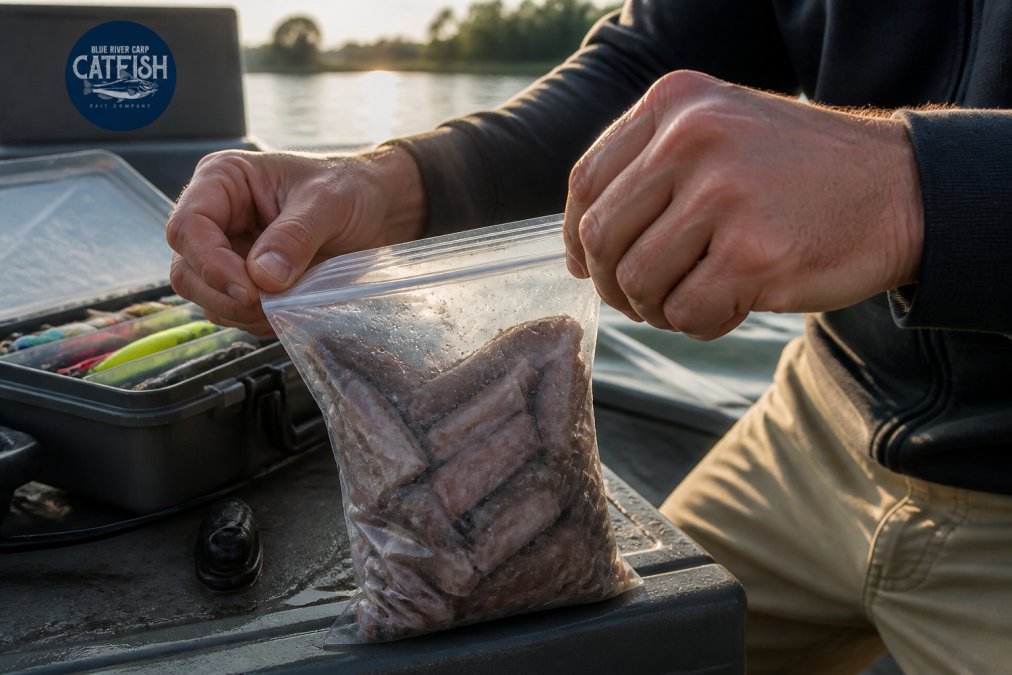
The Main Ingredients in Commercial Shelf Stable Catfish Bait
When asking what is shelf stable fishing bait made of, commercial catfish bait typically combines four ingredient groups: a protein base, a binder, a humectant, and a preservation agent. Each does a specific job, and removing any of them shortens the bait's usable life, food science, not marketing.
The protein base is usually ground fish, fish meal, or rendered fish oil. The binder, often flour or cornmeal, gives the bait its dough-like consistency so it stays on a hook through a cast. Glycerin holds moisture in so the bait doesn't dry into a crumbly brick, while salt and other preservation agents suppress bacterial growth and mold.
Cheaper commercial baits may lean heavily on flour and artificial scent. Preserved ground fish sold by Blue River Carp, Inc. uses real ground fish as the primary attractant and lets preservation do the rest of the work.
Salt, Glycerin, and Other Preservation Agents
Salt is the oldest preservation agent in fishing bait, and it works by pulling water out of the bait's tissue. Bacteria need moisture to multiply, so lowering water activity stalls spoilage. Coarse salt draws moisture faster than fine table salt.
The technical term is lowering water activity, the water available for microbial growth, not total moisture content (the FDA). A bait can feel damp and still be shelf stable if most of that water is bound by salt, glycerin, or sugar. That's why a salt-cured chunk sits in a bag for a year while a fresh fillet spoils in a day: the total water is similar, but the available water is not.
Glycerin is a humectant: it attracts and holds moisture, keeping the bait pliable instead of rock-hard. Too dry crumbles off the hook; too wet grows mold. Glycerin threads that needle and also lowers water activity slightly, so it doubles as a texture agent and mild preservative.
Other preservation agents include potassium sorbate (a mold and yeast inhibitor) and sodium benzoate (better against bacteria, best in acidic formulas), both common food-grade additives.
Binders and Bases: Flour, Cornmeal, and Dough
Flour and cornmeal form the structural backbone of dough baits, creating a moldable paste when mixed with water and a liquid attractant.
How Long Does Non Refrigerated Catfish Bait Last?
Non refrigerated catfish bait lasts 6 to 18 months when stored properly, depending on preservation method and packaging. Vacuum-sealed, salt-cured baits sit at the top of that range; dough baits in a loosely closed container sit at the bottom.
Three factors shorten shelf life faster than anything else:
Preserved Ground Fish — Furbearer →
- Heat: A bait stored in a hot truck cab or garage degrades faster than one kept in a cool closet.
- Air exposure: Every time you open the bag, moisture and oxygen get in. Reseal it tight.
- Contamination: Wet hands or a dirty hook introduced into the bag can seed mold.
How to Store Shelf Stable Bait So It Stays Fresh
Store shelf stable bait in a cool, dry place away from direct sunlight, and reseal the package completely after every use. No cooler, freezer, or special container required.
A few habits make a measurable difference:
- Squeeze the air out before resealing. Oxygen drives oxidation, which dulls the odor profile.
- Keep it out of the sun. UV light and heat break down the scent compounds that do the actual work.
- Use a dedicated bait box. Storing bait next to sunscreen, fuel, or cleaners transfers odors onto the bait.
- Don't double-dip. Never put a used hook or wet hand back into the bag.
- Label the bag with the open date. You'll know exactly how much shelf life is left.
Best Shelf Stable Catfish Bait Options
The best shelf stable catfish bait depends on how you fish. Rod-and-reel anglers targeting channel cats want pre-cut nuggets sized for a single hook. Trotline and limb line anglers want larger chunks that hold up under weight.
Here's how the main formats compare:
| Format | Typical Size | Best For | Shelf Life |
|---|---|---|---|
| Pre-cut nuggets | ~1" x 2" | Rod and reel, channel cats | 12+ months |
| Bait chunks | ~2" x 3" | Trotline, limb line, trophy fish | 12+ months |
| Ground fish base | Powder to 1/4" grind | Pack baits, dough, chum | 12+ months |
| Dough bait | Moldable paste | Still fishing, feeder rigs | 6-12 months |
Safety, Toxicity, and Species-Specific Effectiveness
Preserved fishing bait made from fish, salt, and food-grade preservatives is not hazardous to handle, but it is not food. Keep it away from kids and pets, wash your hands after rigging, and never store bait next to food. Blue River Carp, Inc. prints a "not for human consumption" warning on its Preserved Ground Fish product.

Which Shelf Stable Bait Works for Which Species
| Species | Best Shelf Stable Format | Scent Profile That Works | Notes |
|---|---|---|---|
| Channel catfish | Pre-cut nuggets, dough bait | Shad, garlic, blood | Least picky; the workhorse target for preserved bait |
| Blue catfish | Bait chunks, ground fish base | Shad, skipjack-style fish | Responds to cut fish more than dough; bigger chunks |
| Flathead catfish | Fresh-cut or live preferred | Natural fish | Preserved bait works |
| Bullhead | Nuggets, dough | Blood, natural | Small mouths; small nuggets fish better than chunks |
| Carp | Dough bait, pack bait | Corn, fruit, natural | Pack bait around a method feeder outperforms hook bait |
| Panfish (bluegill, crappie) | Small dough pieces, ground fish | Natural, mild | Heavy scent can spook them; go light |
| Striped bass (freshwater) | Cut chunks | Shad, blood | Cut bait is a primary tactic in reservoirs with shad |
If you're coming from chicken liver, the adjustment is mostly mental. Liver works, but it's messy, spoils fast, and flies off the hook on a hard cast. A preserved cut bait stays put.

Troubleshooting Spoilage and Bait Failure
Most bait failures trace back to storage, not the bait itself. Soft, mushy, or off-smelling preserved bait is almost always caused by heat, air exposure, or contamination.
Here's how to diagnose the common problems:
| Problem | Likely Cause | Fix |
|---|---|---|
| Bait feels mushy | Heat exposure or opened bag left unsealed | Store cooler, reseal tightly after each use |
| Bait crumbles off hook | Dried out from air exposure | Reseal immediately; add a drop of oil to rehydrate |
| Off or sour smell | Bacterial growth from contamination | Discard the bag; never re-bag used bait |
| Mold spots | Moisture introduced by wet hands or hooks | Use dry hands, dry hooks, dedicated bait box |
| Scent faded | Oxidation from long air exposure | Replace bait; store sealed and out of sunlight |
Frequently Asked Questions
How is shelf stable fishing bait preserved without refrigeration?
Shelf stable fishing bait stays fresh through a combination of salt-curing, dehydration, and moisture control. Coarse salt draws water out of the fish tissue, creating an environment where bacteria cannot grow. Glycerin and other preservation agents help maintain texture and prevent the bait from drying out completely. Vacuum sealing removes oxygen that would otherwise speed up spoilage. The result is a product with low water activity that can sit in a tackle box for months without refrigeration, staying firm and hook-ready.
Does shelf stable bait lose its scent over time?
Scent loss depends on packaging and storage. Sealed shelf stable bait holds its odor profile well past 12 months when kept in a resealable bag away from direct sunlight and heat. Once you open the bag, exposure to air gradually reduces the scent strength. Squeeze excess air out before resealing, and store the bag in a cool, dark place. If the bait still smells strongly of fish, blood, or garlic when you open it, the scent is intact and it will fish effectively.
Is shelf stable bait as effective as fresh bait for catfish?
For channel catfish, blue catfish, and bullhead, shelf stable bait can be effective because catfish hunt primarily by scent. The key difference is convenience and consistency: fresh bait spoils within hours in warm weather and turns mushy on the hook, while preserved bait stays firm and keeps releasing scent.
Can you make your own shelf stable fishing bait at home?
You can make shelf stable bait at home using coarse salt, cornmeal, flour, and fish or cheese as a base. The process involves mixing ingredients into a dough, working in enough salt to pull moisture out, and air-drying or vacuum sealing the finished bait. The challenge is consistency: getting the moisture content low enough to prevent bacterial growth without making the bait too hard to hook. Commercial options like preserved ground fish or pre-cut nuggets remove the guesswork and deliver a reliable 12+ month shelf life.