
How to Store Shelf Stable Bait: Keep It Fresh
Table of Contents
- Why Proper Storage Matters for Shelf Stable Bait
- How Long Does Non Refrigerated Catfish Bait Last?
- Best Storage Containers for Fishing Bait
- Preventing Bait Spoilage in Hot Weather
- Signs Your Bait Has Gone Bad
- Common Storage Mistakes to Avoid
- Keep Your Bait Ready for Every Trip
- Frequently Asked Questions
Last Updated: September 4, 2026
Why Proper Storage Matters for Shelf Stable Bait
Shelf stable bait is any fishing bait designed to remain usable for extended periods without refrigeration or freezing, relying on preservation methods like salt-curing, air-drying, or chemical treatment to halt spoilage. Getting storage right matters because even preserved bait degrades when exposed to heat, moisture, or air, which ruins its scent and texture. At Blue River Carp, Inc., we craft our bait from invasive carp with a 12+ month shelf life in the bag, but how you handle it between trips determines whether it stays effective.
The core principle is simple: manage moisture content and temperature. Bait that absorbs humidity becomes mushy, while bait left in direct sun can dry out or sweat inside its package. Proper storage protects the scent retention that makes cut bait so effective for catfish.
How Long Does Non Refrigerated Catfish Bait Last?
Non refrigerated catfish bait lasts anywhere from a few days to over a year depending on the preservation method. Fresh cut bait and prepared dough baits spoil within days at room temperature, while salt-cured, dehydrated, or chemically preserved baits remain shelf-stable for months.
The deciding factor is how the bait was processed. Salt-curing and air-drying remove the moisture bacteria need to thrive, extending shelf life dramatically. Vacuum sealing adds another layer of protection by blocking oxygen. A quality preserved bait like our 10oz chunks or 7oz nuggets stays fresh in its resealable bag for 12+ months with no refrigeration.


For comparison, here is what you can expect from common bait categories:
| Bait Type | Storage Method | Typical Shelf Life | Best Practice |
|---|---|---|---|
| Fresh cut bait | Refrigeration | 2-4 days | Use ice packs, drain fluids |
| Prepared dough bait | Sealed packaging | 1-3 months | Keep sealed, avoid heat |
| Salt-cured cut bait | Airtight container | 6-12 months | Store in cool, dry place |
| Chemically preserved bait | Resealable bag | 12+ months | Reseal after each use |
Best Storage Containers for Fishing Bait
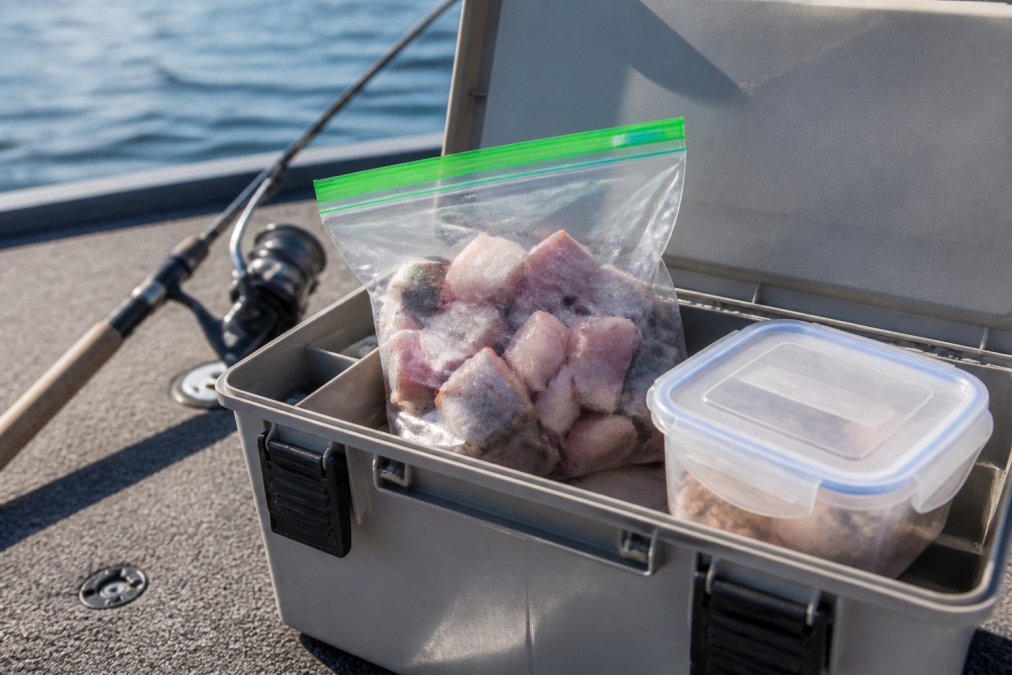
The best storage containers for fishing bait keep out air, lock in scent, and prevent moisture transfer. Airtight plastic containers with rubber gaskets, vacuum-sealed bags, and heavy-duty resealable pouches all perform well. Avoid thin ziploc bags for long-term storage because they allow air exchange and puncture easily.
Material Science: Why Container Choice Matters
The material of your container directly affects oxygen transmission rate (OTR) and moisture vapor transmission rate (MVTR). Standard polyethylene ziploc bags have a high OTR, allowing oxygen to slowly permeate the bag and oxidize the fats in your bait, which degrades scent. For long-term storage, look for polypropylene containers, which have a lower OTR, or multi-layer foil-lined pouches that block nearly all gas exchange.
Container Options Ranked by Performance
1. Vacuum-Sealed Foil Pouches (Best for Long-Term) These are the gold standard for shelf stable bait. The foil layer blocks light and oxygen completely, while the vacuum process removes air that carries moisture and bacteria. If you are repackaging bulk bait for a season-long supply, a home vacuum sealer with foil bags is your best investment. Bait stored this way retains its scent profile for an extended period.
2. Polypropylene Airtight Containers with Silicone Gaskets (Best for Daily Use) For bait you are actively fishing with, a rigid polypropylene container with a silicone gasket seal offers the best balance of accessibility and protection. Brands like Pelican and OtterBox make tackle-specific versions, but any food-grade container with a locking lid and rubber gasket works. The gasket creates a true hermetic seal that prevents both moisture loss and odor transfer.
3. Heavy-Duty Resealable Mylar Bags (Best for Portability) Mylar (boPET) bags offer superior barrier properties compared to polyethylene. They are lightweight, puncture-resistant, and can be heat-sealed for a permanent closure. Many commercial bait producers, including Blue River Carp, Inc., use mylar-lined resealable bags because they maintain a 12+ month shelf life without refrigeration.
4. Glass Jars with Metal Clamps (Best for Liquid Baits) For liquid or semi-liquid baits like blood-based pastes or brines, glass jars with wire-bail clamps and rubber gaskets (like Le Parfait or Weck jars) are ideal. Glass is completely impermeable to oxygen and does not absorb odors, and the rubber gasket prevents evaporation and contamination.
Original Packaging vs. Airtight Containers
Original packaging is often sufficient if it is resealable and undamaged. Our bait ships in a resealable mylar bag designed for repeated opening and closing, which keeps the pieces from drying out between trips. Transferring bait to an airtight container only becomes necessary if the original package tears or if you are mixing multiple scents in one box.
If you do transfer bait, choose a container you can clean thoroughly between batches. Residual oils from old bait can alter the scent profile of fresh bait, and catfish rely heavily on smell to locate food. For plastic containers, wash with hot soapy water, rinse with a 10% bleach solution, and air dry completely before adding new bait. Never use the same container for garlic-scented bait and shad-scented bait without a full cleaning cycle.
Container Sizing and Stacking Strategy
Choose containers that match your typical trip length. A 10oz bag of chunks fits comfortably in a small 4-cup container for a weekend trip, while a 7oz nugget bag works well in a 2-cup container for bank fishing. For boat storage, use rectangular containers that stack efficiently and do not roll around in tackle drawers. Square containers maximize space utilization versus round ones, and clear containers let you identify bait type without opening the lid.
Container Maintenance Between Trips
After each fishing trip, empty the container, discard any unused bait that was exposed to water or direct sunlight, and clean the container before storing the remaining bait. Bait that has been in a hot boat all day should not be returned to your main supply, it has already begun degrading. Keep a separate "field container" for bait you take on the water, and a "storage container" for your bulk supply that stays in a cool, dark place at home.
Preventing Bait Spoilage in Hot Weather
Hot weather accelerates spoilage faster than any other factor, even in preserved bait. When temperatures climb, residual moisture inside the package can cause condensation, which leads to texture degradation and bacterial growth. Keep bait out of direct sunlight and store it in the coolest part of your vehicle or tackle box.
For day trips in summer heat, use an aerated container or a small insulated bag to moderate temperature swings. Avoid leaving bait in a closed car trunk for hours. Carry only what you need for the session and leave the bulk of your supply at home in a cool closet. protecting against pests.
The Thermal Degradation Threshold
Preserved bait begins to degrade at temperatures above 90°F (32°C) (peer-reviewed research). At this threshold, the fats in fish-based bait begin to oxidize, producing free radicals that create off-flavors and rancid odors. The process is cumulative, even a few hours of exposure to extreme heat permanently damages the bait's scent profile, even if you cool it down afterward. The damage is not reversible.
Heat Management Strategies for Summer Fishing
1. The Two-Cooler System Keep your bulk bait supply in a dedicated cooler with ice packs, separate from your drink cooler. Drinks are opened frequently, letting cold air escape and warm air in. A dedicated bait cooler maintains a stable temperature between 40-50°F (4-10°C) without temperature swings. Use frozen gel packs rather than loose ice, melted ice introduces water that can seep into bait packaging and compromise the seal.
2. Shade and Insulation Layers When bait must stay in a vehicle, place it in the passenger compartment rather than the trunk. Trunk temperatures can exceed 140°F (60°C) on a sunny day (noaa.gov). Wrap the bait container in a towel or jacket to add insulation, and place it on the floor rather than the seat, floor-level temperatures are significantly cooler. Never leave bait on the dashboard or rear window shelf where direct sunlight hits it.
3. Pre-Cooling Before Transport If you are transporting bait from home to a fishing spot, cool it in the refrigerator for 2 hours before packing. Starting at a lower temperature gives you a longer thermal buffer before the bait reaches the danger zone. This simple step can add 2-3 hours of safe transport time in summer heat.
Chemical Preservation as a Heat Defense
While salt-curing and dehydration are the traditional preservation methods, food-grade chemical preservatives offer an additional layer of protection against heat-related spoilage. Sodium benzoate and potassium sorbate are FDA-approved preservatives that inhibit mold, yeast, and bacterial growth (the FDA). These compounds are effective at preventing microbial spoilage but do not stop fat oxidation, that requires oxygen barriers.
For anglers making their own shelf stable bait, adding chemical preservatives can extend the microbial shelf life of bait stored in warm conditions. However, chemical preservatives do not protect against texture degradation from heat, only temperature control does.
Recognizing Heat Damage Before It Ruins Your Trip
Heat-damaged bait shows specific warning signs. The first indicator is condensation inside the package, this means the bait has been through a temperature cycle that caused moisture to evaporate and re-condense. The second is a change in oil distribution; heat causes oils to migrate to the surface, making the bait appear glossy or greasy. The third is a softening of texture; preserved bait that was firm becomes pliable or tacky.
If you notice any of these signs, the bait has been heat-stressed. It may still catch fish, but its scent release will be diminished and it will not stay on the hook as well. Use it immediately or discard it, do not return it to your bulk supply.
The Emergency Field Kit
For extended summer trips, assemble a bait emergency kit: a small insulated lunch bag, two frozen gel packs, a digital thermometer, and a backup container. This kit prevents common heat-related bait failures. Check the temperature inside your bait container every 2 hours during summer outings, if it exceeds 85°F (29°C), take corrective action immediately by adding ice packs or moving the bait to shade.
Signs Your Bait Has Gone Bad
Spoiled bait announces itself through smell, texture, and color changes. A sharp ammonia odor, slimy or sticky surface, or dull gray discoloration all indicate that preservation has failed. Fresh preserved bait should smell strongly of its intended scent, whether that is blood, garlic, or shad, with no underlying sour note.
Texture is another reliable indicator. Good cut bait holds together when threaded onto a hook. Bait that crumbles, turns mushy, or feels excessively dry has lost its integrity. While slightly dry bait can sometimes be revived with a few drops of water, bait that has turned slimy should be discarded.
Common Storage Mistakes to Avoid
The most common storage mistake is leaving the package open between uses. Every time bait is exposed to air, it loses moisture and picks up ambient odors. Always press out excess air and reseal the bag immediately after removing pieces.
Other frequent errors include storing bait near fuel or chemicals, freezing bait that was not designed for freezing, and mixing old bait with new bait. Freezing can damage the cellular structure of preserved fish, causing it to become watery when thawed. The thawing process releases fluids that wash away scent and soften the bait.
Keep Your Bait Ready for Every Trip
Storing shelf stable bait correctly comes down to three habits: keep it sealed, keep it cool, and keep it dry. Follow those rules and your bait will remain ready whenever the mood to fish strikes, whether that is next weekend or six months from now. Rotating stock, using older packages first, prevents waste and ensures every trip starts with fresh bait.
For anglers who want bait that skips most of these worries, Blue River Carp, Inc. offers pre-cut, scent-infused chunks and nuggets made from invasive carp. Each package stays fresh for over a year without refrigeration, and the resealable bag keeps pieces firm on the hook trip after trip. Whether you prefer the larger 10oz chunks for trophy fish or the versatile 7oz nuggets for rod and reel setups, our bait is ready when you are.
Frequently Asked Questions
Does shelf stable bait need to be kept out of direct sunlight?
Yes. Even though shelf stable bait does not need refrigeration, direct sunlight generates heat that can degrade the oils and scents in the bait. Store your bait in a cool, dark place like a tackle box compartment or a garage shelf. High temperatures inside a closed car or truck bed can shorten the effective life of the bait, so keep it shaded and cool for the best results.
What is the best container for storing shelf stable bait in a tackle box?
The original resealable bag is the best option because it is designed for the bait. If you transfer the bait, use an airtight plastic container that seals completely. Avoid containers that let air circulate, since oxygen and moisture are the main causes of spoilage. Make sure the container is clean and dry before adding the bait, and always press out excess air before sealing.
How do you know if shelf stable bait has gone bad?
Trust your senses. Fresh shelf stable bait keeps its scent and a firm, meaty texture. If the bait smells sour, rancid, or like ammonia, it has spoiled. A slimy surface, mold growth, or a mushy texture that falls apart on the hook are also clear warning signs. When in doubt, throw it out and open a fresh package rather than risking a wasted fishing trip.
Is it better to store bait in its original packaging or a sealed container?
For Blue River Carp bait, keep it in the original resealable bag. The packaging is designed to lock in moisture and scent while keeping air out. If the bag tears or you want extra protection in a crowded tackle box, place the unopened or resealed bag inside a rigid airtight container. This double-layer approach keeps the bait fresh and prevents damage from other tackle.
Storing bait properly is the difference between a productive day on the water and a wasted one. Blue River Carp, Inc. takes the guesswork out of bait storage with preserved cut bait that requires no cooler, no freezer, and no last-minute runs to the tackle shop. Our veteran-owned, Indiana-made bait holds its scent and texture for 12+ months, so you can grab a bag and go. Get started with Blue River Carp, Inc. and keep your bait ready for every trip.
This article was written using GrandRanker