

How to Clean and Fillet Catfish: A Step-by-Step Guide
Last Updated: November 8, 2026
Quick Summary
To clean and fillet catfish, cut behind the gills down to the backbone, run the blade flat along the spine from head to tail, then skin the fillet and trim the ribs and pin bones. Filleting a channel catfish takes about five minutes per fish once you get the rhythm.
- Use a flexible 7- to 9-inch fillet knife, a plastic cutting board, and needle-nose pliers.
- Whole-clean fish under about 3 pounds; fillet anything larger, and bleed every fish either way.
- Keep fresh fish at or below 40°F and use it within a couple of days.
- An electric knife can suit larger fish, while a hand fillet knife gives finer control for trimming.
- Cut fillets into palm-sized chunks and pat them dry so coating holds.
Table of Contents
- Tools and Setup for Cleaning and Filleting Catfish
- How to Fillet a Channel Catfish Step by Step
- How to Clean Catfish Without Filleting
- How to Fillet a Catfish With an Electric Knife
- How to Clean Catfish for Frying
- Spine, Fin, and Food Safety Handling
- Troubleshooting Common Filleting Mistakes
- Stocking Up on Bait Before Your Next Catfish Trip
- Frequently Asked Questions
Tools and Setup for Cleaning and Filleting Catfish
Learning how to clean and fillet catfish starts with the right tools, and you don't need much to clean and fillet catfish.
Here's what to have ready before you make the first cut:
- Fillet knife: A flexible 7- to 9-inch blade. Sharp matters more than expensive.
- Electric knife: Optional, but it saves time on bigger fish.
- Cutting board: A large plastic board you can scrub and sanitize.
Watch out: a dull knife is the most common cause of torn fillets and cut hands.
Sanitation matters as much as sharpness. The USDA Food Safety and Inspection Service guidance on safe food handling recommends washing hands, tools, and surfaces with hot soapy water before and after handling raw fish.
One more setup tip: work outside or near a hose if you can. Catfish slime is real, and a hose makes cleanup fast.
How to Fillet a Channel Catfish Step by Step
Filleting a channel catfish takes about five minutes per fish once you get the rhythm. The method is simple: cut behind the head, follow the backbone, then remove the skin.
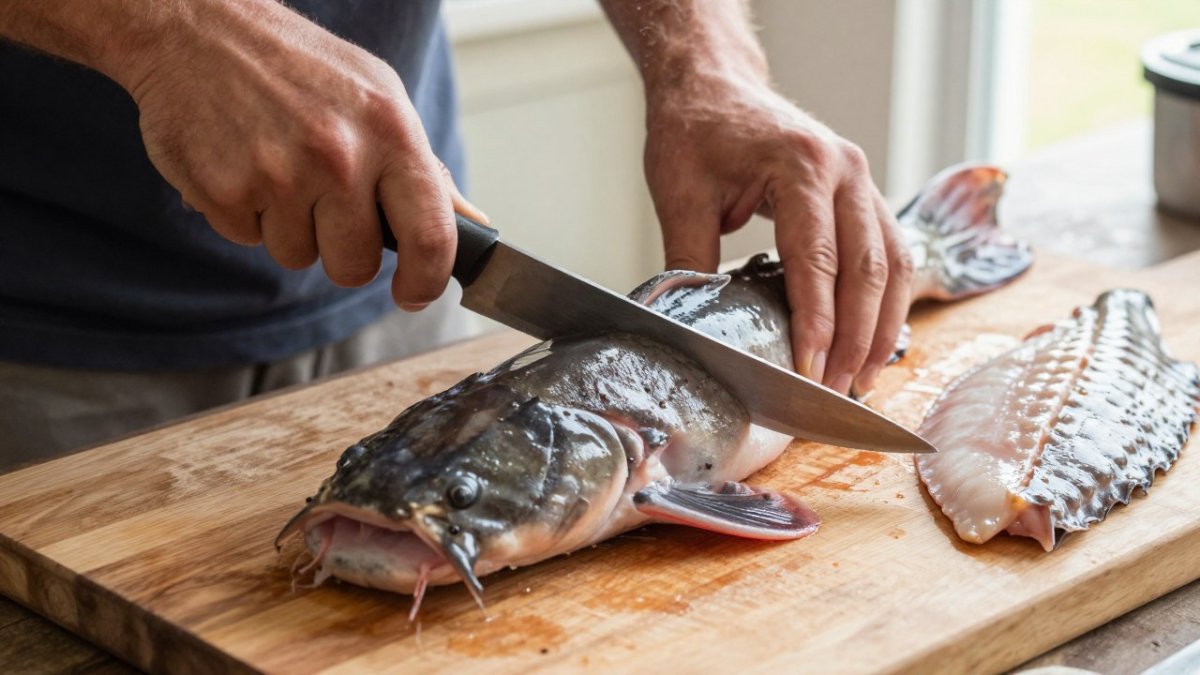
Making the Cut Behind the Gills
Start with a firm, angled cut just behind the gills and pectoral fin. Angle the blade down toward the backbone at roughly 90 degrees to the body.
Don't saw. Draw the knife through in one steady motion until you feel the blade touch bone. That contact tells you where the spine runs, and it sets up the next cut.
Cutting Along the Spine and Removing the Fillet
Turn the blade flat and run it parallel to the spine, from head to tail. Keep light pressure against the backbone so you don't cut into it.
Lift the fillet slightly as you go. You'll feel the ribs give way. Stop just before the tail and pull the fillet free, leaving it attached at the tail end if you plan to skin it next.
Skinning the Fillet and Trimming Ribs
Lay the fillet skin-side down. Pin the tail end with your fingers or a fork, then slide the knife between the meat and the skin at a shallow angle.
Use a gentle back-and-forth motion, not force. Once the skin separates, trim the rib section away with a thin slice and check for pin bones with your fingertips.
Filleting a channel catfish follows a short, repeatable sequence that takes about five minutes per fish.
| Step | What to do |
|---|---|
| Cut behind the gills | Angled cut behind gills and pectoral fin, down to backbone |
| Cut along the spine | Blade flat, parallel to spine, head to tail |
| Remove the fillet | Lift slightly, let ribs give way, pull free at tail |
| Skin the fillet | Skin-side down, shallow angle, gentle back-and-forth motion |
| Trim ribs and pin bones | Thin slice to remove rib section, check with fingertips |
How to Clean Catfish Without Filleting
Not every catfish needs to become a fillet. Cleaning a catfish without filleting means skinning and gutting the whole fish, and it is a good option for smaller fish, roughly 1 to 3 pounds, that you plan to fry or smoke whole. Larger fish are usually better filleted because the whole-fish method wastes more meat around the head and ribs.
Dispatch and Bleeding First
A clean-tasting catfish starts before the knife. Dispatch the fish quickly and humanely, then bleed it in a bucket of cold water. Bleeding removes blood from the flesh, which can affect flavor. Keep the fish cold during this step; a cooler with ice water works better than a warm bucket on a summer day.
The Whole-Fish Cleaning Sequence
- Bleed the fish in cold water right after dispatch, as above.
- Make a shallow cut around the head behind the pectoral fins, all the way around the body. Keep the blade shallow; this cut only needs to free the skin, not open the belly.
- Grip the skin with pliers at the cut edge and pull it off toward the tail. On most catfish the skin comes off in one piece. Work in short pulls rather than one long rip so the skin doesn't tear and leave patches.
- Split the belly with a shallow cut from the vent up to the head cut, then remove the guts. Watch out: nick the belly too deep and you'll cut into the intestines, which taints the meat and is hard to rinse away.
- Cut off the head just behind the pectoral fins and rinse the body cavity well with clean water, not lake water.
- Trim and inspect. Remove the dark red lateral-line strip and any remaining fin bases, then check the cavity for leftover kidney tissue along the spine; it is a dark line that rinses out with a thumb.
Skinning Mechanics That Actually Work
The skin pull fails when the cut around the head is too shallow or the pliers slip. Grip a folded paper towel or a dry rag with the pliers to get traction on the slimy skin, and pull parallel to the body rather than straight back. Once the skin is off, keep the fillet knife clean and your grip steady, especially when fishing the Mississippi River where a firm setup makes handling a catch easier.
Whole Fish vs. Fillets: Which to Choose
Whole cleaning keeps the frame intact for frying and gives you the collar and cheek meat that filleting leaves behind. Filleting is faster per pound on larger fish and gives you boneless pieces. A practical rule: whole-clean fish under about 3 pounds, fillet anything larger, and bleed every fish either way.
How to Fillet a Catfish With an Electric Knife
An electric knife can speed up catfish filleting on larger fish, with the reciprocating blades doing the sawing while you steer. The trade-off is control: the same motion that glides through rib bones will also chew through a fillet if you rush.
Picking the Right Electric Knife Setup
- Blade type: Use the longer, flexible fillet blades that ship with most electric carving knives, not the short serrated bread blades. A 7- to 9-inch blade reaches from head to tail on a channel catfish in one pass.
- Blade condition: Electric blades are thin and lose their bite quietly. Replace or sharpen them when the knife starts needing push instead of glide.
- Cord management: Route the cord behind you and away from the table edge. A cord draped across the cutting path is the single most common electric-knife accident.
The Electric-Knife Filleting Sequence
- Start behind the gills. Make the same angled cut you would with a hand knife, just behind the gills and pectoral fin, down to the backbone. Turn the knife off for this first placement so the blade doesn't jump.
- Ride the backbone. Turn the knife on, lay the blade flat against the spine, and let it walk head to tail. Use light steering pressure only; pressing hard drives the blade through ribs and into the fillet.
- Stop at the tail. Leave the fillet attached at the tail if you plan to skin it on the fish, or cut it free and skin it flat.
- Skin on the board. With the fillet skin-side down, start the blade between meat and skin at the tail and draw it forward at a shallow angle. The reciprocating motion separates skin faster than a hand blade, so slow your feed rate.
- Trim ribs and dark meat. Switch the knife off and use a hand fillet knife for the rib section and the red lateral-line strip; an electric blade is too aggressive for clean trim work.
Watch out: an electric knife will cut through the backbone and out the other side before you feel resistance, so keep your off hand behind the blade line, never in front of it.
When to Use Electric vs. Hand Blade
A common pattern among people who clean a lot of catfish is to keep both tools on the table. An electric knife can suit larger fish, while a hand fillet knife gives finer control for smaller fish, final trimming, and work near the belly cavity.
Clean the blade immediately after use. Fish residue hardens fast, dulls the edge, and is far easier to remove before it dries.
How to Clean Catfish for Frying
Frying prep is really about the fillet, not the whole fish.
That dark red strip along the lateral line carries the strongest "fishy" flavor. Cut fillets into palm-sized chunks so they cook evenly in hot oil.
Rinse the pieces in cold water, pat them dry, and keep them cold until breading. Wet fillets make batter slide off. Dry fillets hold coating.
If you're weighing whether to prep fresh fillets or buy prepared bait for your next trip, this comparison of prepared cut bait vs fresh cut bait breaks down the trade-offs.
Spine, Fin, and Food Safety Handling
Catfish have three spines that can hurt you: the dorsal fin on top and one pectoral spine on each side. All three are sharp and carry a mild venom.
Handle the fish with a wet towel or glove and keep your hands clear of the fins. If a spine pokes you, clean the wound right away and watch for swelling.
Cold-chain handling matters just as much. The FDA guidance on refrigerating and freezing seafood advises keeping fresh fish at or below 40°F and using it within a couple of days, or freezing it for longer storage.
A reliable routine:
- Fillets go on ice the moment they're cut.
- Rinse with clean water, never lake water.
- Sanitize the board and knife between fish.
If you're still learning to handle a live fish safely, this guide on how to safely unhook a catfish covers the grip and release steps that keep both you and the fish intact.
Troubleshooting Common Filleting Mistakes
Most bad fillets come from three mistakes, and all three are fixable.
Cutting too deep at the start. The first cut should stop at the backbone, not go through it.
Rushing the skin cut. The skin cut fails when the angle is too steep.
Skipping the rinse. Slime and blood left on the fillet affect taste.
A common mistake is filleting on a slippery board. Put a damp towel under it.
If you're new to the whole setup, our catfish fishing gear guide for beginners walks through rods, reels, line, and hooks so the cleaning stage isn't the first surprise of the day.
Stocking Up on Bait Before Your Next Catfish Trip
Clean fish and fresh bait belong to the same trip. Once the fillets are on ice, the next question is what goes on the hook.
Blue River Carp, Inc. makes shelf-stable cut bait from invasive carp, and it stays fresh for 12+ months with no cooler or freezer.
Our 10oz cut bait chunks come in scented varieties and won't turn mushy on the hook. For a deeper look at rigging and timing, read how to use cut bait for catfish.
Cleaning catfish gets easier every time you do it, and the payoff is a cooler full of fresh fillets instead of a messy cleanup.
Frequently Asked Questions
Should you skin catfish before filleting?
Skin the fillet after it comes off the frame, not before. Once the fillet is removed, lay it skin-side down, angle the knife at about 90 degrees, and slice between the flesh and skin while pulling the skin toward you. Removing skin first would make the fillet harder to control and increase the chance of cutting into the meat.
Can you clean catfish without filleting it?
Yes. For frying whole or in chunks, scale-free catfish can be gutted, headed, and cut into steaks or nuggets. Slit the belly from vent to gills, pull out the guts, remove the head behind the pectoral fins, then cut crosswise steaks or chunk the body. Rinse under cold running water and chill immediately.
What is the first thing you should remove when filleting a fish?
Make the first cut behind the head and pectoral fin, angling the blade down to the backbone. This severs the fillet from the head and gives you a starting point to run the knife parallel to the spine. Working tail-to-head in one steady slice produces a cleaner fillet than sawing back and forth.
How do you clean catfish fillets before cooking?
Rinse fillets under cold running water, pat dry with paper towels, and check for pin bones or stray rib fragments. If a dark red line of fat runs along the fillet, trim it off for a milder flavor. Keep fillets on ice until you bread or season them, and wash the cutting board, knife, and hands with hot water and antibacterial soap afterward.


