
7 Best River Fishing Tackle Picks for Beginners
Last Updated: October 24, 2026
Quick Summary
The best river fishing tackle for beginners is a medium-power spinning combo, 10-15 lb monofilament line, and a small kit of terminal tackle, because that setup handles current, casts easily, and costs the least to replace when you make mistakes. Build the box in three passes: essentials first, then tools, then extras.
- Choose a 6.5-7 ft medium-power spinning combo because it casts light rigs far and fights fish in current.
- Spool 10-15 lb monofilament line since it stretches, absorbs shock, and costs little to replace.
- Carry circle hooks in sizes 1/0 to 3/0 to reduce gut-hooking and make releases easier.
- A beginner can fish a river for under $100, with most money going to rod, reel, and line.
- Skip 300-piece terminal kits because most hooks and weights are sizes your river fish never see.
Table of Contents
- Quick Comparison: Best River Fishing Tackle for Beginners
- How We Picked the Best Rod and Reel for River Fishing Beginners
- Fishing Line for Beginners: Mono, Braid, and Test Strength
- Your Beginner Fishing Tackle Box Checklist
- River Fishing Bait for Beginners: Cut Bait, Lures, and Scents
- Matching Tackle to Current, Depth, and Target Species
- Budget Tiers: What a Beginner Setup Costs
- Safety, Access, and Responsible River Fishing
- Frequently Asked Questions
Quick Comparison: Best River Fishing Tackle for Beginners
The best river fishing tackle for beginners is a medium-power spinning combo, 10-15 lb monofilament line, and a small kit of terminal tackle, because that setup handles current, casts easily, and costs the least to replace when you make mistakes.
Rivers punish tackle that works fine on a pond. Current drags your line, snags eat your rigs, and a rod that feels great in the store can feel like a noodle when a channel cat turns sideways in the flow.
Quick Picks:
- Best all-around rod and reel: Medium-power spinning combo, 6.5-7 ft
- Best line for most beginners: 12 lb monofilament
- Best bait for catfish: Blue River Carp cut bait nuggets
| Item | What to Buy | Typical Spec | Why It Matters |
|---|---|---|---|
| Rod and reel | Spinning combo | 6.5-7 ft, medium power | Easiest to cast and control |
| Line | Monofilament | 10-15 lb test | Forgiving, cheap to respool |
| Hooks | Circle hooks | Sizes 1/0 to 3/0 | Fewer gut-hooks, better release |
| Sinkers | Egg or bank | 1/2 to 2 oz | Holds bait in current |
| Bait | Cut bait | Shelf-stable | Stays on the hook |
How We Picked the Best Rod and Reel for River Fishing Beginners
We picked spinning combos in the 6.5-7 foot range with medium power because they cast light rigs far, fight fish in current, and cost less than specialized setups. A beginner needs a rod that forgives a sloppy cast, not one that demands perfect timing.
Rod Power and Action: What Matters in Current
Rod power is how much weight it takes to bend the rod, and rod action is where along the blank that bend happens. In a river, medium power gives you enough backbone to turn a fish away from a snag while still casting a 1 oz sinker without strain.
A common mistake is buying a heavy rod for "big fish." Heavy rods cast light river rigs poorly, and most beginners are not hooking trophy fish on day one.
Spinning vs. Baitcasting for New Anglers
Spinning reels win for beginners. They cast light baits without backlash, tolerate wind, and take about ten minutes to learn. Baitcasters offer better control for heavy weights and long casts, but a backlash on a windy riverbank can eat your whole afternoon.
Our recommendation: start spinning, master it for a season, then add a baitcaster if you want one.
Fishing Line for Beginners: Mono, Braid, and Test Strength
Braid offers thin diameter and near-zero stretch, which helps in heavy current, but it is unforgiving on drag settings and cuts hands. Fluorocarbon leaders shine in clear water, though a beginner rarely needs one on a muddy river.
If you are still learning to tie, river fishing knots for beginners covers the connections between line, hook, and swivel that hold up in current.
Your Beginner Fishing Tackle Box Checklist
A beginner tackle box needs terminal tackle, a few tools, and nothing else. The mistake most new river anglers make is buying a 300-piece bargain kit where half the contents are sizes that never touch river water. Instead, build the box in three passes: the essentials you cannot fish without, the tools that save you time, and the extras you add only after you have lost a few rigs and know what you actually use.
Pass 1: The Essentials (Buy These First)
- Circle hooks, sizes 1/0 to 3/0, one pack each of 1/0 and 2/0 covers most river setups; add 3/0 when you target larger catfish
- Egg sinkers, 1/2 oz to 2 oz, buy a multi-pack so you can swap weight as current changes instead of guessing
- Barrel swivels, size 10-12, one small pack prevents line twist when you fish a sinker above a leader
Circle hooks matter most. They set in the corner of the mouth, which makes releasing fish easier and reduces gut-hooking. A common pattern among river anglers is to carry more hooks than sinkers, because hooks dull and bend while sinkers usually come home.
Pass 2: Tools That Save the Trip
- Hook remover or needle-nose pliers, the single most-used tool in the box
- Nail clippers or line cutters, dull scissors fray mono and cost you fish
- Small towel, wet hands and cut bait make everything else slippery
Pass 3: Extras to Add Later
- A spare spool of 12 lb mono, line scuffs on rock and you will respool mid-season
- A few 1/4 oz split shot for finicky, low-water days
- A small float stop or two if you fish slip bobbers often
What Beginners Can Skip
- 300-piece terminal kits, most of the hooks and weights are sizes no river fish in your area will see
- Specialty catfish rigs and wire leaders, unnecessary until you are chasing big flatheads around heavy cover
- A second rod and reel, master one spinning combo for a season before adding gear
Once your box is stocked, DIY river fishing rigs for catfish shows four proven setups that use exactly these components.
River Fishing Bait for Beginners: Cut Bait, Lures, and Scents
Cut bait is the simplest river bait for beginners because it stays on the hook, casts well, and targets catfish and other predators.
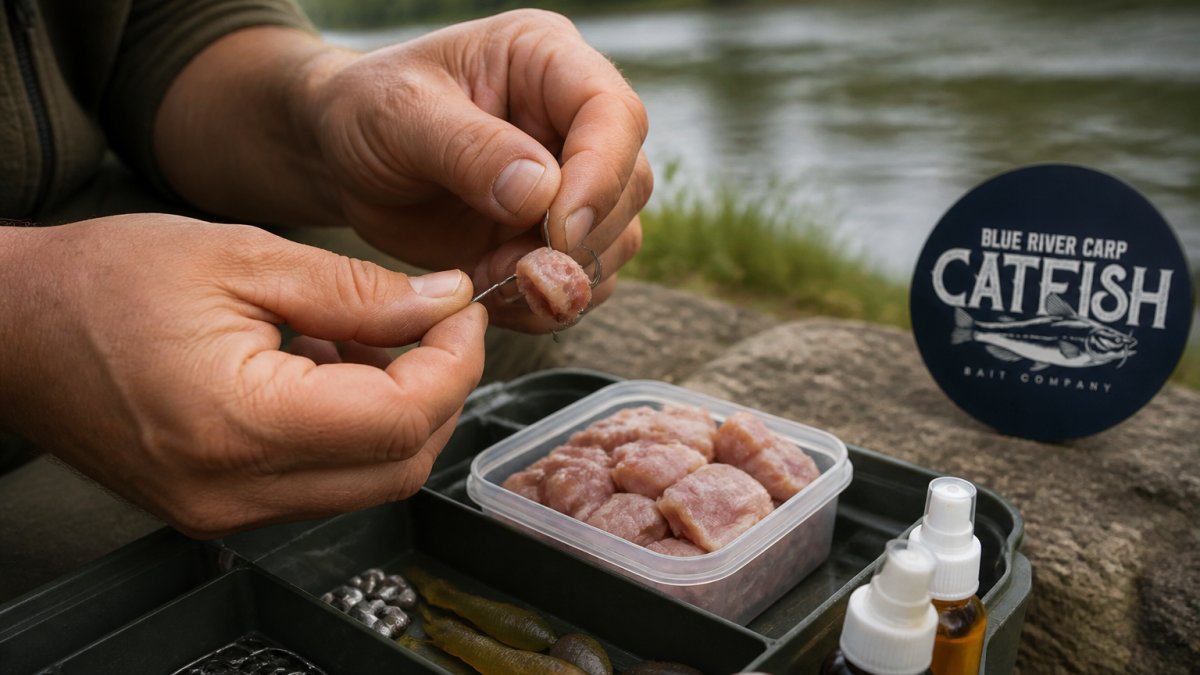
This is where storage becomes the real decision. Our 7oz Catfish Cut Bait Nuggets are preserved real fish cut into roughly 1 x 2 inch pieces, priced at $11.00, and they need no cooler or freezer. For bigger targets, the 10oz chunks run $12.00.


Watch out: chicken liver works, but it tears off on a hard cast. If you want a bait that survives the cast and the current, shelf-stable cut bait solves that problem directly.
7oz Catfish Cut Bait Nuggets – Preserved Real Fish, 6 Scents →
For species-specific picks, bait for river fishing by species narrows the choice further.
Matching Tackle to Current, Depth, and Target Species
Match tackle to the water in front of you: fast current calls for heavier sinkers and stronger line, deep pools call for bait fished near the bottom, and species dictate hook size.
Use this decision framework:
| River Condition | Sinker | Line | Hook |
|---|---|---|---|
| Slow, shallow | 1/2 oz | 10 lb | 1/0 |
| Moderate flow | 1 oz | 12 lb | 2/0 |
| Fast, deep | 2 oz | 15 lb | 3/0 |
Flatheads prefer live bait near structure, channel cats take cut bait in current seams, and blue cats run deep. Adjust before you blame the fish.
When the flow is genuinely heavy, anchoring bait in high flow rivers walks through rig and weight choices in detail.
Budget Tiers: What a Beginner Setup Costs
A beginner can fish a river for under $100, and the smartest money goes to the rod, reel, and line rather than a giant tackle box. The tiers below show where the money goes at each level. Prices vary by retailer and season, so treat these as planning ranges rather than quotes, and check current listings before you buy.
| Tier | What It Covers | Typical Cost Range | Approach |
|---|---|---|---|
| Minimal | Rod and reel combo, 12 lb mono, circle hooks, egg sinkers, swivels | $50-$80 | Buy a combo, skip extras, fish the water you have |
| Standard | Minimal plus shelf-stable bait, hook remover, clippers, small towel | $90-$130 | Add the tools and bait that keep a trip from ending early |
| Upgraded | Standard plus spare spool, leaders, split shot, slip bobbers | $140-$200 | Add as you learn the water and know what you use |
Where the Money Actually Goes
The rod and reel combo is the largest single line item, and it is also the piece you will keep longest. A medium-power spinning combo in the 6.5-7 ft range is the right first purchase; spending more here pays off in smoother drag and fewer tangles. Line is cheap and should be replaced often, so budget for a spare spool rather than premium line.
The Upgrade That Pays Off Fastest
Bait that does not spoil saves money and trips. Our 7oz Catfish Cut Bait Nuggets are preserved real fish cut into roughly 1 x 2 inch pieces, priced at $11.00, and they need no cooler or freezer. For bigger targets, the 10oz chunks run $12.00.
If you want a single purchase that covers a weekend, our Catfish Weekend Kit bundles four 7oz nuggets across Blood, Garlic, Shad, and Natural scents plus a 4oz blood attractant for $41.00, with free shipping, versus $47 bought separately.

For species-specific picks, bait for river fishing by species narrows the choice further.
Safety, Access, and Responsible River Fishing
River safety starts before the first cast: check flow and weather, wear a life jacket near deep water, and tell someone where you are going. Moving water is stronger than it looks, and slick bank rock is the most common way anglers get hurt.
- Fish with a buddy when possible
- Wear studded boots on algae-covered rock
- Keep a safe distance from dams and low-head structures
Check your state wildlife agency's current regulations before you fish, since limits and seasons change. For bank-specific technique, shore fishing fast moving rivers covers safe access and positioning.
Frequently Asked Questions
What size rod is best for river fishing?
A 6-foot 6-inch to 7-foot medium or medium-heavy spinning rod covers most beginner river situations. The shorter length casts accurately around overhanging trees, while the heavier power lets you steer fish away from current and snags. Pair it with a 2500 or 3000 size spinning reel spooled with 10 to 15 pound line. If you fish wide, fast rivers for catfish, step up to a 7-foot medium-heavy rod so you can cast heavier sinkers and hold bottom.
What is a good fishing line for beginners on a river?
Monofilament in 8 to 12 pound test is the easiest starting point. It is forgiving on the cast, cheap to replace, and stretches enough to absorb the surge of a hooked fish in current. Braided line in 20 to 30 pound test is worth adding once you are chasing bigger catfish, because its thin diameter cuts through current and gives better feel on the bottom. Many beginners run braid as the main line with a short monofilament leader.
What tackle do you need to start river fishing?
The minimum is a spinning rod and reel combo, monofilament line, a pack of circle hooks in sizes 1 to 2/0, split-shot or bank sinkers, barrel swivels, a couple of bobbers, and a small tackle box. Add a landing net, needle-nose pliers, and a pair of line cutters. Bait rounds it out. A preserved cut bait like Blue River Carp nuggets keeps in the bag for 12 or more months with no cooler, which suits beginners who fish on short notice.
What bait works well for beginner river anglers?
Cut bait is the most forgiving option for catfish and most river predators. It stays on the hook through casts and current, and it works without any special technique. Blue River Carp 7oz Catfish Cut Bait Nuggets are pre-cut to about 1 by 2 inches, so you rig them straight from the bag at $11.00. For panfish and trout, small soft plastics and inline spinners are easier to cast than live bait. Carry a scent oil such as the $4.99 Scents and Oils to boost a slow bite.
How much should a beginner spend on river fishing tackle?
A workable starter setup runs roughly $80 to $150 for rod, reel, line, hooks, sinkers, and a small box, depending on how much you spend on the combo. Bait adds little: a 7oz bag of Blue River Carp nuggets is $11.00 and the Catfish Weekend Kit is $41.00 with free shipping, covering four scents plus a blood attractant. Buy the rod and reel new, but do not overspend on terminal tackle, since hooks and sinkers are the cheapest items to replace.
Rivers reward preparation more than gear. Build a simple spinning setup, keep your terminal tackle small and organized, and choose bait that survives the cast, the current, and a month in the truck. Blue River Carp, Inc. makes shelf-stable cut bait with a 12+ month shelf life, no refrigeration required, and firm pieces that stay on the hook. Get started with Blue River Carp, Inc. and spend less time re-baiting and more time watching the rod tip.


