
Vacuum Bags vs Hard Freezer Containers for Frozen Bait
Last Updated: November 9, 2026
Quick Summary
The best containers for storing frozen bait depend on holding time: rigid polypropylene tubs with locking lids suit storage under a month, while vacuum-sealed bags are the only method that reliably prevents freezer burn on frozen bait held past two months. Most serious anglers use both, splitting by how long the bait sits.
- Vacuum bags win on freezer burn and space; hard containers win on durability and reuse.
- Look for locking or gasketed lids, stackable square tubs, and sizes matched to your trip.
- Double-seal seams on bony cut bait, since one puncture undoes the whole vacuum seal.
- In the fridge, use a sealed glass or rigid plastic container with a gasket for odor containment.
- Pack coolers with ice on the bottom, sealed bait in the middle, and ice on top.
Table of Contents
- Vacuum Bags vs Hard Containers: The Frozen Bait Storage Decision
- Best Containers for Storing Frozen Bait in the Freezer
- Best Containers for Storing Frozen Bait in the Fridge
- How Long Bait Lasts in the Freezer
- Frozen Bait Transport: Coolers, Ice Packs, and Leak-Proof Bags
- Chemical Leaching, Food Safety, and Bait-Specific Storage Rules
- Eco-Friendly Storage and DIY Freezer Organization
- Stocking Your Bait Supply the Low-Mess Way
- Frequently Asked Questions
Vacuum Bags vs Hard Containers: The Frozen Bait Storage Decision
The best containers for storing frozen bait solve one problem: keeping bait firm, cold, and free of freezer burn until you need it. This is a comparison of container types, not a recommendation of any one brand.
Here is the short version. Vacuum bags win on freezer burn and space. Hard containers win on durability and reuse. Most serious anglers end up using both, and the split is usually about how long the bait sits.
What Each Option Actually Protects Against
Vacuum-sealed bags strip air from the package. That matters because freezer burn is dehydration, and dehydration happens when cold, dry air pulls moisture off the bait's surface. No air contact, no burn.
Hard containers protect against a different enemy: physical damage. A polypropylene tub with a locking lid shrugs off being dropped, stepped on, or buried under a cooler.
Neither option fixes a wet bait going in. Pat the pieces dry before freezing. If you are weighing containers against other spoilage factors, our complete storage guide covers containers, freshness, and what actually causes bait to turn.
Best Containers for Storing Frozen Bait in the Freezer
For freezer storage, match the container to the holding time. Under a month, a rigid tub with a tight lid is enough. Past two months, vacuum sealing is the only method that reliably prevents burn on natural bait.
Rigid Polypropylene Tubs and Stackable Trays
Polypropylene is a common material for freezer storage. It stays flexible at freezer temperatures, and it is generally considered a food-contact plastic.
Look for these features:
- Locking or gasketed lids. Snap lids loosen as the plastic contracts in cold.
- Stackable design. Square tubs use freezer space far better than round ones.
- Sized to your trip. A 1-quart tub holds roughly a session's worth of cut chunks.
Compartmentalization is the underrated trick. Small tubs let you pull one bag without exposing the rest of your supply to thaw cycles. Every time a full container comes out and goes back in, the whole contents warm and refreeze, and that cycle degrades bait integrity fast.
Vacuum-Sealed Bags and Airtight Lids
Vacuum-sealed bags are a strong moisture barrier for home storage. Portion the bait into meal-sized packs, seal, and freeze flat.
The trade-offs are real. Bags puncture. Sharp bone edges in cut bait can poke a hole, and one hole undoes the whole seal. Double-seal the seams on bony pieces, or wrap them once in plastic before sealing.
Airtight lids on rigid containers offer a middle path. For shelf-stable products, our guide to storing shelf stable bait covers scent retention and hot-weather handling in more detail.
| Feature | Vacuum-Sealed Bags | Rigid Polypropylene Tubs |
|---|---|---|
| Freezer burn protection | Excellent | Good short-term |
| Impact resistance | Poor | Excellent |
| Space efficiency | Excellent | Good |
| Reusable | Limited | Yes, many seasons |
| Liquid attractant safe | Moderate | Excellent |
| Best for | Long-term freezing | Frequent access, transport |
Best Containers for Storing Frozen Bait in the Fridge
Fridge storage is a different job. You are holding bait for days, not months, and the enemy is odor, not burn.
Use a sealed glass or rigid plastic container with a gasket. A zip-top bag inside a tub gives you two odor containment layers. Label it, and keep it away from anything you plan to eat. Bait preservation in a shared fridge depends on separation, not temperature alone.
One mistake we see: bait stored in the fridge door. Door shelves swing through the widest temperature range in the unit, and that fluctuation speeds spoilage.
How Long Bait Lasts in the Freezer
Three things shorten the clock:
- Air exposure. Any gap in the seal starts dehydration.
- Slow freezing. A deep, fast freeze forms smaller ice crystals and does less cell damage.
- Thaw-refreeze cycles. Each one costs you firmness.
Date every package. A strip of masking tape and a marker takes five seconds and saves you from guessing. For a full breakdown of timelines by bait type, see our guide on how to store prepared catfish bait.
Frozen Bait Transport: Coolers, Ice Packs, and Leak-Proof Bags
Transport comes down to cold chain control. Keeping bait frozen during transport depends on the same steady cold-chain habits that 5L Meat Shop emphasizes when handling meat.
Hard-Sided vs. Soft-Sided Coolers
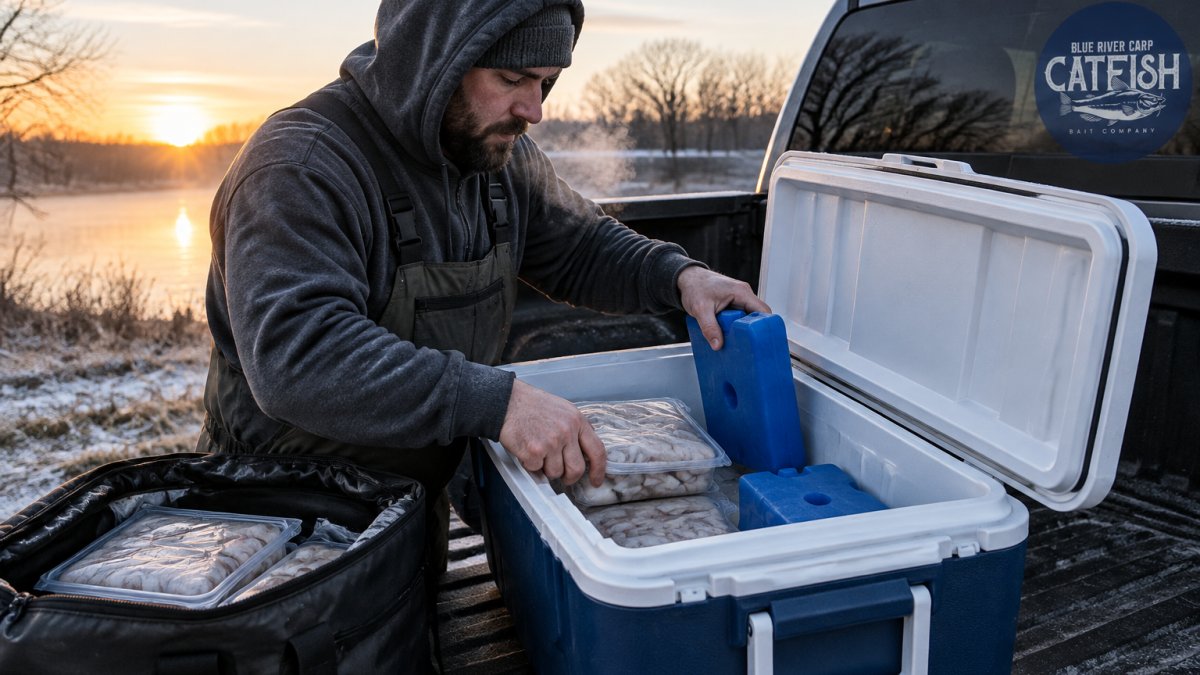
Hard-sided rotomolded coolers hold cold far longer and shrug off being sat on in a boat, but they are heavy and eat trunk space. Soft-sided coolers are lighter and cheaper, and they work fine for a half-day trip if you pre-chill them and pack them full. The rule of thumb most practitioners use: match cooler size to trip length, not to how much bait you own. An oversized cooler full of air warms faster than a small cooler packed tight.
Ice Packs, Block Ice, and Ratios
Skip loose cubes. Meltwater is the enemy of every seal in the cooler, and cubes melt fast. Use sealed ice packs or a block of ice instead.
Pack in this order: ice on the bottom, bait in sealed bags in the middle, ice on top. Cold air sinks, so top ice keeps the whole load colder.
Leak-Proof Inner Bags
Even a good cooler collects meltwater. Put every bait package inside a leak-proof outer bag, a heavy zip-top or a dry bag, so thaw drip cannot soak the rest of the load or leak into the truck bed. Double-bag anything with liquid attractant, and keep the attractant bottle upright in its own sealed container.
Watch out: bait thawed on the road and refrozen at home loses firmness, and soft bait will not stay on a hook. If you know the day will be warm, pack the bait you plan to use and leave the rest home.
Chemical Leaching, Food Safety, and Bait-Specific Storage Rules
Not every plastic is safe for bait that touches your hands and your hooks. This is the part most storage guides skip, and it is where a cheap tub can quietly cost you.
What Leaching Actually Means
Plastics are not inert. Over time, and faster with heat, fat contact, or repeated washing, some resins release additives, plasticizers, stabilizers, residual monomers, into whatever they touch. Bait is a fatty, moist material held for months, which is close to a worst case for leaching. The practical concern is twofold: compounds migrating into bait that you then handle bare-handed, and off-odor or off-taste that can change how fish respond to a bait they have smelled before.
Reading the Resin Code
Flip the container over and look for the recycling triangle. Food-grade plastic for bait storage generally means resin code 5 (polypropylene, PP) or code 2 (high-density polyethylene, HDPE). Both are the standard choices for freezer tubs and are made to food-contact standards. Code 1 (PET) is fine for a single short hold but gets brittle in a freezer. Avoid code 3 (PVC), code 6 (polystyrene), and code 7 (other/PC) for anything that will hold bait long-term.
Bait-Specific Storage Rules
Different baits have different needs, and one container does not serve all of them:
- Soft plastic baits. Keep them in their original bags or a dedicated soft-plastic box. They are oil-based and will soften or melt cheap plastic over time, and they can react with natural bait if stored together. Keep them out of direct sun and away from heat.
- Natural organic bait (cut fish, shrimp, squid). Freeze dry and portioned, in food-grade PP or HDPE, vacuum-sealed for anything past a month. This is the category where leaching and freezer burn both bite hardest.
- Live bait. Needs ventilation and water, not a sealed tub. A bait bucket with a lid and aerator is a different tool entirely; do not try to freeze or seal live bait in a food container.
A few rules worth keeping:
- Never reuse a container that held chemicals, oil, or cleaners.
- Keep bait containers out of reach of pets and children.
- Do not store bait in the same container you use for food, even after washing.
- Wash tubs with hot water and mild soap, then air-dry fully before refilling.
Synthetic and preserved baits have their own storage needs. Check the maker's label rather than assuming a freezer is right. Some preserved baits, including ours, are shelf-stable and lose quality in a freezer.
Eco-Friendly Storage and DIY Freezer Organization
Two things you can do here cost little and pay off all season.
Reusable beats disposable. Rigid tubs and silicone bags can be washed and used for years.
Organize by trip, not by type. A freezer organization system that groups bait by session means you grab one bin and go. Keep a running inventory taped to the freezer door.
Tackle management applies in the freezer too. Our guide to mess-free catfish bait options covers handling and cleanup from the angler's side.
Stocking Your Bait Supply the Low-Mess Way
The best container is the one you do not need.
Our preserved cut bait is built around that idea. It is real fish, cut and infused with scent, and it holds a 12+ month shelf life in the resealable bag with no refrigeration.
For anglers who want a freezer backup, our 10oz cut bait chunks at $12.00 and 7oz nuggets at $11.00 freeze well in vacuum bags when you portion them first. The Catfish Weekend Kit at $41.00 ships free and needs no cooler at all.


Buy a few good tubs, seal what you freeze, and keep a shelf-stable backup in the truck. That combination covers every trip, planned or not.
If your freezer is already full of bait you will not use before it turns, the simpler fix is to stop freezing so much of it. Stock the full lineup and keep your cooler space for ice.
Frequently Asked Questions
How long can bait stay in the freezer?
Frozen bait storage life depends on the bait type and how it is packaged. Label each container with the date you froze it and use the oldest first. Our preserved cut bait is shelf-stable with a 12+ month shelf life and requires no refrigeration or freezing.
What is the best container to store frozen bait in the freezer?
Rigid polypropylene tubs with airtight lids are one common option for freezer storage. Vacuum-sealed bags are another option for reducing air contact. Many anglers double up: vacuum-seal the bait, then drop the bags into a stackable tub for organization and leak protection. Match the container to how long you plan to store.
Can you store frozen bait in a regular food container?
You can, but check the plastic first. Not every food container is rated for freezer temperatures, and thin walls crack when bait freezes and expands. Look for food-grade polypropylene with a tight-sealing lid. Keep bait containers separate from food to avoid mixing. A dedicated bait tub costs little and keeps the kitchen freezer usable.
How should you transport frozen bait while traveling?
Use a portable cooler with a tight lid, line the bottom with ice packs rather than loose ice, and keep bait in leak-proof containers so meltwater stays away from it. Pre-chill the cooler before loading. For day trips, a small cooler with two ice packs keeps frozen bait solid for hours. If you want to skip the cooler entirely, preserved cut bait with a 12+ month shelf life travels in a tackle bag with no ice at all.
Which containers help prevent bait leaks and odors?
Airtight lids are one feature to consider when choosing a container for bait storage. Avoid thin snap-lid containers, which pop open in a crowded cooler. Store bait away from food and gear you handle often, and wash containers between uses with hot water and mild soap.


