
How to Store Prepared Catfish Bait: A Complete Guide
Table of Contents
- Why Proper Storage Matters for Catfish Bait
- Preparing Your Bait Before Storage
- How Long Does Catfish Bait Last: Storage Timelines
- How to Freeze Bait for Catfish
- Best Containers for Fishing Bait Storage
- How to Store Cut Bait Without Refrigeration
- Thawing and Using Frozen Bait
- Common Storage Mistakes to Avoid
- Frequently Asked Questions
Last Updated: October 12, 2026
Why Proper Storage Matters for Catfish Bait
Storing prepared catfish bait correctly makes the difference between a successful trip and wasted money. Poor storage ruins texture, kills scent, and leaves mushy pieces that won't stay on the hook.
Anglers who neglect storage end up replacing bait mid-trip or cutting the outing short. Proper storage keeps bait fishing-ready for months. This guide covers every step of how to store prepared catfish bait.
Proper storage keeps bait fresh, maintains scent potency, and prevents contamination. Whether you freeze bait or keep it shelf-stable, the method determines how long it stays effective.
Preparing Your Bait Before Storage
Before you freeze or seal bait away, preparation is critical. Wet bait spoils faster and develops off-odors that repel fish. Drying separates anglers who get consistent results from those who don't.
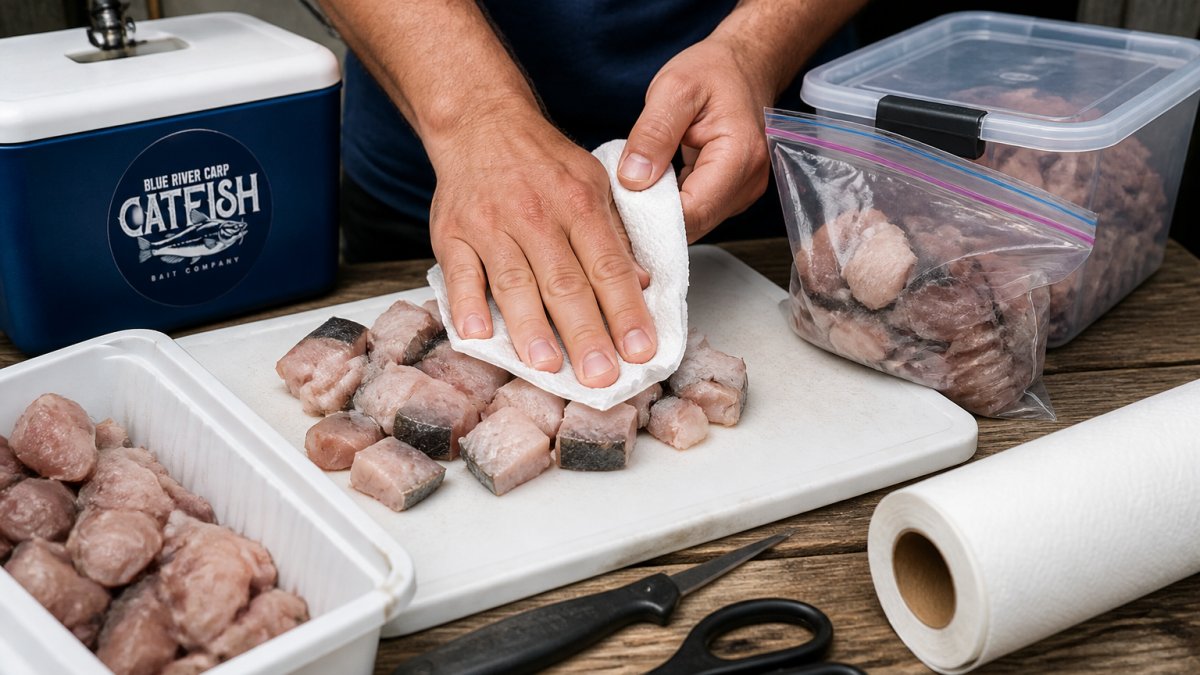
Drying bait before freezing
Moisture is the enemy of bait longevity. Wet bait freezes with ice crystals that puncture cell walls, turning pieces to mush when thawed. Pat bait completely dry with clean paper towels before storage.
Lay bait on a clean, dry surface and press gently with fresh paper towels until no surface moisture remains. This takes five minutes but extends shelf life significantly.
For cut bait, moisture causes freezer burn and clumping; drying prevents both. If you're not freezing, drying matters even more since moisture accelerates decay.

Bagging and sealing bait
Once dry, move bait into airtight containers or bags immediately. Air oxidizes bait and fades scent; proper sealing locks in freshness and prevents odor transfer.
Resealable freezer bags work for most anglers. Fill them three-quarters full, remove excess air, and seal. Vacuum-seal bags offer maximum protection if you own a sealer.
Label every bag with bait type and storage date so you can rotate stock and know which bait to use first.
Portion bait into single-use amounts matching your typical trip needs, so you open only one bag per outing and leave the rest undisturbed.
How Long Does Catfish Bait Last: Storage Timelines
Storage life depends on three variables: temperature, moisture, and bait composition. A vacuum-sealed chunk of cut shad at 0°F behaves nothing like dough bait on an 80°F garage shelf. Use the ranges below as planning windows, then verify with your eyes and nose before every trip.
Frozen storage (0°F or below)
| Bait type | Realistic window | Notes |
|---|---|---|
| Cut fish (shad, skipjack, bluegill) | 6-12 months | Oily fish hold scent longest; lean fish dry out faster |
| Prepared dough / punch bait | 4-6 months | Soft binders break down and turn crumbly after repeated freeze-thaw |
| Dip bait (blood / cheese-based) | 3-6 months | High moisture content makes it the first to degrade |
| Stink bait in sealed tubs | 6-9 months | Odor compounds stay potent; texture is the limiting factor |
A steady 0°F freezer essentially pauses bacterial activity, but most home freezers cycle between -5°F and +10°F every time the door opens, chipping away at texture. That is why the same bag of cut bait can be fine at month eight in one freezer and mushy at month four in another.

Refrigerated storage (35-40°F)
Refrigeration slows spoilage but does not stop it. Plan on:
- Cut fish: 2-4 days. Beyond that, surface slime and a sharp ammonia smell signal spoilage.
- Dough and punch bait: 5-7 days in an airtight container. The binders stay workable but mold can appear by day ten.
- Dip bait: 1-2 weeks if the lid stays sealed and no water is introduced.
- Brined bait: 2-3 weeks. The salt itself suppresses bacterial growth, which is why brining is a legitimate short-term storage method, not just a toughening step.
Shelf-stable storage (room temperature)
Properly dried, salted, or commercially preserved bait holds 12 months or more in a cool, dark cabinet. The failure modes are moisture re-entry and heat: a garage hitting 95°F in July cuts that window roughly in half.
How to tell bait has gone bad
Do not rely on the calendar alone. Check for:
- Ammonia or sulfur smell that lingers after you open the bag, discard.
- Visible mold (white, green, or black fuzz) on dough or shelf-stable bait, discard the whole container, not just the fuzzy piece.
- Slimy, tacky surface on cut bait that was previously dry, discard.
- Freezer burn (dry, white, leathery patches), bait is safe but scent and texture are compromised; use it as chum rather than on the hook.
- Off color, cut bait that has shifted from pink/red to gray-brown has oxidized past usefulness.
Matching the method to your fishing schedule
- Fishing this weekend? Refrigerate. Do not freeze bait you will use in three days, the freeze-thaw cycle costs you texture for no benefit.
- Fishing next month? Freeze in single-trip portions.
- Fishing whenever the mood strikes? Keep a shelf-stable supply in the tackle box and a frozen reserve at home.
That decision, not the specific number of months, separates anglers who always have good bait from those always thawing something questionable in a cooler.
How to Freeze Bait for Catfish
Freezing is the most common storage method for bulk bait prep. Done correctly, it preserves quality for months; done poorly, it ruins texture and scent.
Freezing prepared bait
Start with dry bait in airtight bags or containers. Place bags flat on a freezer shelf rather than upright, so stacking pressure doesn't crush delicate pieces.
Set your freezer to 0°F or colder. Above 0°F, slow freezing damages cell structure; fast freezing preserves bait integrity.
Avoid the freezer door, where temperature fluctuates with every opening and creates thaw-refreeze cycles. Use interior shelves for stable, cold conditions.
Arranging bait in a freezer
Arrange frozen bait by type and storage date: oldest to the front, newest to the back.
Group all bait in a small cooler or plastic bin inside the freezer to keep it separate from food and prevent it getting buried.
Stack bags in single layers rather than piling them high, which crushes lower bags and damages pieces.
Best Containers for Fishing Bait Storage
The right container keeps bait fresher longer. Different containers suit different storage methods and bait types.
Resealable freezer bags are affordable, space-efficient, and seal out air.
Vacuum-seal bags provide maximum protection against freezer burn and oxidation, removing nearly all air and extending bait life significantly.
DIY Dried Cut Bait – Add Your Own Scent →
Airtight plastic containers with locking lids suit refrigerated or shelf-stable bait. They stack neatly and let you see inside without opening.
Glass jars with tight lids suit shelf-stable bait at room temperature.
For shelf-stable bait like Blue River Carp, Inc. products, simple resealable bags are sufficient since they're already preserved and dried.
How to Store Cut Bait Without Refrigeration
Cut bait, chunks of shad, skipjack, bluegill, or carp, is the workhorse bait for channel and blue catfish, and the most perishable form of prepared bait because it is raw fish. Making it shelf-stable means removing the water and oxygen spoilage organisms need.
The three preservation methods that actually work
1. Drying. Cut bait into hook-size chunks, then air-dry on a wire rack or paper-towel-lined tray in front of a fan for 12-24 hours until the surface feels leathery.
2. Salting (dry brine). Layer cut bait in a non-reactive container (glass or food-grade plastic, never bare aluminum) with coarse non-iodized salt, roughly one part salt to four parts bait by volume. Refrigerate 24-48 hours, drain the liquid, then pat dry.
3. Wet brining. Dissolve about one cup of non-iodized salt per gallon of cold water, submerge cut bait, and refrigerate 12-24 hours.
Packaging shelf-stable cut bait
Once dried or salted, cut bait still needs protection from air, moisture, and odor transfer:
- Vacuum-seal in single-trip portions; removing air is the biggest factor in shelf life.
- Double-bag without a sealer: a heavy-duty freezer bag with air pressed out, inside a second bag, inside an airtight container.
- Add a desiccant packet to absorb residual moisture.
- Label with bait type, preservation method, and date. Salted shad and brined skipjack look nearly identical after a month.
Where to store it
A cool, dark cabinet or tackle box in a climate-controlled space below 75°F is ideal. Avoid garages and sheds that swing with outdoor temperatures, boats and truck beds in direct sun, and anywhere near gasoline, oil, or cleaning chemicals, cut bait absorbs odors aggressively.
Odor and cross-contamination control
Raw fish carries bacteria that contaminates whatever it touches. Keep shelf-stable cut bait in its own sealed container, separate from food, and wash any container that held raw meat with hot soapy water before reuse. On the boat, wash your hands before eating or handling tackle. Discard bait with visible mold, a slimy coating, or an ammonia smell, do not try to 'save' it by re-salting.
Shelf-stable vs. frozen: which to choose
Shelf-stable cut bait wins on convenience, grab it and go, no thawing or cooler space. Frozen cut bait wins on scent retention and texture for long-term storage. Many serious anglers keep both: a vacuum-sealed frozen reserve at home and a small shelf-stable supply in the tackle box. Match the method to how you actually fish.
Thawing and Using Frozen Bait
Thawing frozen bait correctly preserves texture and scent; improper thawing wastes your preparation effort.
Slow thawing is best. Move frozen bait to the refrigerator the night before your trip and let it thaw gradually at cold temperatures, preventing surface moisture.
Never thaw bait at room temperature. Rapid thawing creates condensation and lets bacteria multiply quickly.
Never thaw bait in warm water. Heat damages cell structure and kills scent compounds. Cold water thawing works in a pinch, but refrigerator thawing is superior.
Once thawed, use bait immediately. Don't refreeze thawed bait. Each freeze-thaw cycle damages texture further.
Common Storage Mistakes to Avoid
These errors ruin bait and waste money.
Storing wet bait. This creates freezer burn and ice crystals that turn bait mushy. Always dry bait completely before storage.
Overstuffing containers. Cramming too much bait into one bag crushes pieces and traps moisture.
Storing bait near odorous foods. Bait absorbs odors from strong-smelling items.
Ignoring temperature fluctuations. Repeated freezer openings cause thaw-refreeze cycles that degrade bait.
Forgetting to label storage. After weeks pass you won't remember what bait is what.
Using old bait. Expired bait catches fewer fish. Check dates before trips. When in doubt, replace old bait with fresh stock.
Proper storage of prepared catfish bait transforms your fishing experience.
Frequently Asked Questions
Can you freeze prepared catfish bait?
Freezing can be a way to store some prepared catfish bait long-term. Pat bait dry with paper towels before freezing to prevent freezer burn, then place it in airtight bags or containers. Many anglers freeze bait in single layers on a tray first, then transfer to bags once solid to prevent clumping and make portioning easier for future trips.
How long does prepared catfish bait last in the refrigerator?
Some prepared catfish bait stored in the refrigerator lasts 1-2 weeks maximum, depending on the bait type and storage conditions. Cut bait deteriorates faster than whole bait due to increased surface area exposed to air and bacteria. For longer storage, freezing is superior. If you plan to use bait within a week, refrigeration works, but ensure it stays in an airtight, sealed container to prevent odor transfer and keep the bait from drying out.
Does prepared catfish bait need to be refrigerated?
Not all prepared catfish bait requires refrigeration. Shelf-stable, preserved bait like Blue River Carp's cut bait and ground fish products stay fresh for months without refrigeration or freezing, making them ideal for anglers who want convenient storage without cooler hassle. However, fresh-cut or homemade bait does require refrigeration or freezing. Check your bait's packaging or preparation method, preserved products are specifically treated to remain stable at room temperature, while fresh preparations need cold storage.
What is the best container for storing catfish bait?
Airtight containers are essential for any catfish bait storage method. For refrigerated storage, glass or plastic containers with tight-fitting lids prevent odor transfer and keep bait from drying out. Resealable bags work well for portioning, label each with the bait type and date so you can track freshness. Avoid paper or cardboard, which absorb moisture and allow air circulation that degrades bait quality.


