
7 Ways to Read Water for Bank Fishing Success
Last Updated: October 27, 2026
Quick Summary
To read water for bank fishing, start with the surface: flat glassy patches indicate deep, slow water, riffles indicate shallow rock or gravel, and foam lines mark current seams where fast water meets slow. Then check water color, current seams, bends, and surface boils to find depth changes and cover.
- Watch a foam line for a full minute to confirm the current seam.
- In clear water stay back from the edge; in stained water fish move shallow near structure.
- The outer bank of a river bend is scoured deep, while the inner bank is a shallow point bar.
- Run the six-step scouting sequence to pick where to stand and cast in about ten minutes.
- If nothing happens in about fifteen minutes, move along the bank instead of changing baits.
Table of Contents
- How to Read Water for Bank Fishing: Start With the Surface
- How to Read a River for Fishing: Current, Seams, and Bends
- Where to Fish in a River from the Bank
- How to Find Underwater Structure Without Electronics
- Best Places to Catch Catfish from Shore
- Still Water vs. Moving Water: A Scouting Sequence for Beginners
- Turn Your Water Reading into a Casting Plan
- Frequently Asked Questions
How to Read Water for Bank Fishing: Start With the Surface
Learning how to read water for bank fishing starts with the surface. The top of the water can offer clues about the bottom, current, and where fish may be holding.
Here is the core idea: water is a mirror of the ground beneath it. A flat, glassy patch can indicate deep, slow water. A riffle can indicate shallow rock or gravel. A foam line can indicate a boundary between currents. Read those clues and you can find fish without a boat or a fish finder.
Below, we break down seven ways to read water, starting with the surface and working down to the bottom.
Surface Waves, Ripples, and Foam Lines
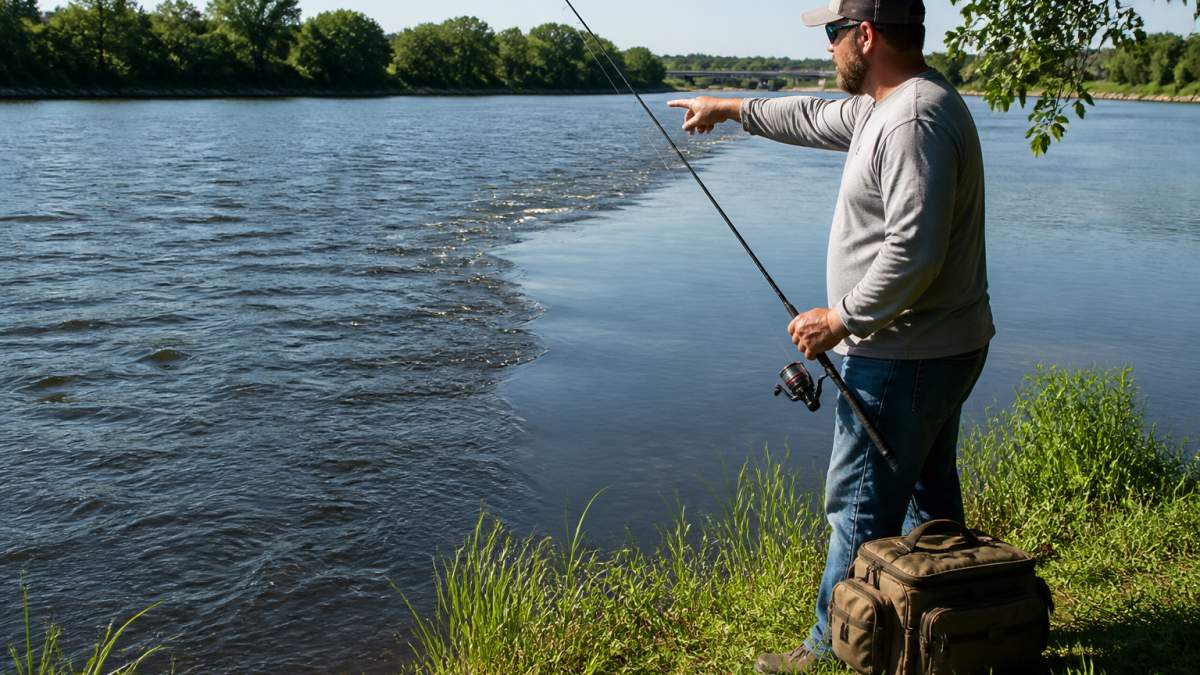
Surface waves and ripples are your first and cheapest clue. A steady riffle over a broad area usually means shallow rock or gravel. Calm, glassy water usually means depth. Foam that collects in a line and drifts slowly marks a current seam, where fast water meets slow water.
Watch the foam for a full minute.
Water Color and Clarity Clues
- Clear water: fish see you first, so stay back from the edge
- Stained or muddy water: fish move shallow and hold near structure
The U.S. Geological Survey water quality resources explain how suspended sediment changes clarity, which matters when you pick bait and casting distance.
How to Read a River for Fishing: Current, Seams, and Bends
Reading a river for fishing comes down to three things: current speed, current seams, and bends. Rivers are not uniform. Every bend, rock, and bridge piling changes where fish sit.
Fast Water vs. Slow Water and the Seams Between
A current seam is the visible boundary where fast water meets slow water. It often shows as a line of foam, a color change, or a subtle ripple pattern.
For bank anglers working fast flows, our guide on shore fishing fast moving rivers covers the specific casts and positions that work from the edge.
River Bends: Inner Bank vs. Outer Bank
River bends split into two very different fishing spots. The outer bank is the cut bank, where current scours the bottom and creates a deep drop-off. The inner bank is the point bar, shallow and slow.
Where to Fish in a River from the Bank
Walk the bank and look for:
- Foam lines holding steady against a rock or log
- A visible color change showing a depth drop
- Bridge pilings or fallen trees that break current
- The deep outside edge of a bend
Once you pick a spot in strong flow, anchoring bait so it stays put becomes the next problem. Our guide on how to anchor bait in high flow rivers walks through the rigs and weights that hold bottom.
How to Find Underwater Structure Without Electronics
You can find underwater structure without electronics by watching the surface, the shoreline, and the current.
Structure shows itself in small ways. A boil on the surface can indicate a rock or stump below. A slick patch can indicate slower water over a hole. A break in the ripple pattern can indicate a depth change.
Reading Bottom Contours and Drop-Offs from Shore
A drop-off is where the bottom falls away quickly into deeper water.
Look for these signs:
- A color change from light to dark water
- A line of foam that holds in one place
- A sudden calm patch next to choppy water
Estimating Depth and Bottom Composition Without a Fish Finder
The U.S. Fish and Wildlife Service fishing resources offer background on fish habitat and how structure affects where fish hold.
Best Places to Catch Catfish from Shore
Target these spots:
- Deep holes below riffles
- Outside bends with a visible drop-off
- Behind bridge pilings and fallen trees
- Channel edges where the bottom changes
Bait choice matters too. Our cut bait requires no refrigeration or freezing.
Still Water vs. Moving Water: A Scouting Sequence for Beginners
Most water-reading advice is written for rivers, then applied to lakes and ponds without changes. That is a mistake. Still water and moving water hold fish in different places, and the visible clues point to different things. The sequence below is built for bank anglers who need to decide where to stand and where to cast in about ten minutes, with no boat and no electronics.
Run the sequence in this order
- Stand back and scan the whole bank. Before you walk to the edge, look left and right for color changes, foam lines, surface breaks, and weed edges. Standing back keeps you from spooking shallow fish and gives you a wider view.
- Check the wind. Wind pushes bait and plankton into the upwind shore, and it also stacks warmer or cooler surface water. On still water, the windward bank is usually the feeding edge. On a river, wind matters less than current, so do not over-weight it.
- Find the depth change. Look for the line where light-colored shallow water meets dark deep water.
- Locate cover. Logs, rocks, weed clumps, pilings, and shade hold fish on both still and moving water.
- Pick two spots. One for a quick cast-and-cover pass, one to soak bait while you watch.
- Cast, watch, and move. If nothing happens in about fifteen minutes, move along the bank rather than changing baits repeatedly.
What changes on still water
Read these cues:
- Color and clarity: a green tint usually means healthy visibility; muddy water pushes fish shallow and tight to cover.
What changes on moving water
On a river or stream, current does the work of delivering food, so fish face into it and hold where the flow slows. Read these cues:
- Seams: the boundary between fast and slow water, sometimes marked by a foam line or color change.
- Bends: the outer bank can be scoured deep; the inner bank can form a shallow point bar.
Bank-positioning notes that apply to both
- Stay back from clear water and cast long; get closer in stained water.
- Walk the bank quietly and avoid skylining yourself on an open shore.
- Pick casting angles that let you work a seam or weed edge parallel to the bank rather than straight out and back.
If you are still building your setup, our picks for river fishing tackle for beginners cover the rods, reels, and terminal gear that make this sequence easier to execute.
Run this six-step scouting sequence in order to pick where to stand and cast in about ten minutes.
| Step | What to do |
|---|---|
| 1 | Stand back and scan the whole bank |
| 2 | Check the wind |
| 3 | Find the depth change |
| 4 | Locate cover |
| 5 | Pick two spots |
| 6 | Cast, watch, and move |
Turn Your Water Reading into a Casting Plan
If you are still building your setup, our picks for river fishing tackle for beginners cover the rods, reels, and terminal gear that make this plan easier to execute.
Our catfish bait is cut bait made from invasive carp. It requires no refrigeration or freezing, has a 12+ month shelf life, and is designed not to get mushy on the hook.
For more on how fish use current and cover, the NOAA fisheries habitat information is a solid reference.
At Blue River Carp, Inc., we make cut bait with a 12+ month shelf life that requires no refrigeration or freezing. Get started with Blue River Carp, Inc.
Frequently Asked Questions
How do you read water when bank fishing?
Start at the surface and work outward. Look for changes in ripple patterns, color shifts, foam lines, and floating debris that reveal depth changes and current seams. Polarized glasses help you see bottom contours and structure below the surface. Then connect what you see to where fish likely hold: ambush points, drop-offs, and current breaks. A consistent scan from shallow to deep, and from calm to fast water, gives you a repeatable way to read water for bank fishing.
Where should you cast when fishing from the bank?
Cast to edges, not the middle of open water. Target current seams, the outer edge of a river bend, points where shallow flats drop into deeper water, and shadows from trees or rocks. These are natural ambush zones where catfish and other species wait for food. If you are fishing a river, aim just upstream of structure and let the current carry your bait into the strike zone. On still water, cast parallel to the bank along depth changes.
How can you tell how deep the water is from shore?
Watch for color changes: darker water usually means deeper water, while lighter or greener patches indicate shallows. Foam lines and debris often collect over drop-offs. You can also use a weighted lure or a depth sounder cast to feel the bottom, counting seconds as it sinks. On clear days, polarized glasses let you see bottom contours directly. Combine these clues with a few test casts to map depth changes along the bank before you settle on a spot.
Where do catfish hide in rivers and lakes?
Catfish seek cover and current breaks. In rivers, they hold behind rocks, bridge pilings, fallen trees, and along the outer bank of bends where the current scours deeper holes. In lakes, they relate to drop-offs, submerged timber, and channel edges. At night, they often move shallow to feed. Bank anglers should focus on structure within casting range, especially where deep water meets shallow flats. A scent-infused bait that stays on the hook lets you keep a bait in these zones longer.


