
How to Catch River Carp with Dough Bait?
Last Updated: October 25, 2026
Quick Summary
How to catch river carp with dough bait involves mixing cornmeal and flour with water and molasses, then adjusting firmness based on current speed. Cast upstream and across into slack water pockets or along drop-offs, recast every 10-15 minutes, and watch for line straightening or rod tip movement to set the hook.
- Start with a 1-to-1 ratio of cornmeal and flour, then add water and molasses until the dough pulls away from the bowl
- Use 1.5-2 oz ledger weight in fast current and 1 oz in slower water to keep bait anchored on the bottom
- Recast every 10 minutes in fast current and every 15 minutes in slack water to refresh the scent cloud
- Fish slack water pockets downstream of rocks or bridge piers, inside bends, or along the margin where the bottom drops
- Avoid midday heat in summer when carp move to deeper water and feed less actively
Table of Contents
- Why Dough Bait Works for River Carp
- How to Make Carp Dough Bait: A Simple Recipe
- Best Bait for River Carp: Dough vs. Paste
- Carp Fishing Rigs for Rivers and Hook Presentation
- Finding Carp and Pre-Baiting Your Swim
- What Time Do Carp Bite the Most?
- Casting and Presenting Dough Bait in Current
- Reading Bites and Landing Your Catch
- Frequently Asked Questions
Why Dough Bait Works for River Carp
Learning how to catch river carp with dough bait involves combining visibility, scent, and moldability. River carp respond to the particle cloud that forms when dough breaks down in current, plus whatever sweet or savory flavors you build in.
Dough also lets you control consistency: firmer for fast current, softer for faster scent release in slack water. You can adjust your approach without changing locations.
How to Make Carp Dough Bait: A Simple Recipe
This recipe is built around a reproducible texture test and a few adjustments so you can tune one base for fast riffles, slow glides, and everything between.
Mixing Your Base Ingredients
Start with a 1-to-1 ratio of cornmeal and flour by volume. Keep the base simple and adjust with small additions.
Dry base:
- 1 cup cornmeal (or Cornmeal - 2.2lbs or 1kg for bulk)
- 1 cup all-purpose flour
- ½ cup wheat meal or crushed wheat cereal (optional)
- 2 tablespoons Cottonseed Meal - 2.2lbs or 1kg (optional)
Liquid binder:
- ½ to ¾ cup water (start with ½ cup; you can always add more)
- 2 tablespoons Liquid Molasses
- 1 teaspoon vanilla extract (optional)
Mix the dry ingredients thoroughly before adding any liquid. Add water and molasses a little at a time, stirring until the mixture pulls away from the bowl and forms a wet dough that sticks together but doesn't run down the spoon.
Kneading for Hook-Holding Consistency
The dough should feel like soft bread dough, pliable but not sticky. If it is too wet, work in flour a tablespoon at a time. If it is too dry and crumbly, add water a few drops at a time.
The Texture Test (Do This Before You Fish)
This test is the most useful step in the recipe because it simulates the two forces that ruin dough in rivers: current shear and water absorption.
Adjusting the Same Base for Conditions
- Fast current: add 1-2 tablespoons of extra flour and knead longer. A firmer ball stays on the hook through the cast and resists the current long enough for carp to find it.
- Slack water or warm conditions: use the softer end of the water range and add a little more molasses. A softer bait breaks down faster and releases a larger scent cloud.
- Cool water: keep the bait firmer and smaller. Carp are less aggressive in cold water, and a compact bait is easier for them to mouth.
- Nuisance fish: if small fish strip the bait, firm up the mix and use a slightly larger ball so it lasts longer between casts.
Best Bait for River Carp: Dough vs. Paste
Start with dough when learning how to catch river carp with dough bait. If you're not getting bites within 30 minutes, switch to a softer consistency or add more molasses to increase scent release.
Carp Fishing Rigs for Rivers and Hook Presentation
For hook presentation in current, keep tension on your line but allow slight movement. The bait should sit on the bottom or just above it, not suspended. Carp feed along the riverbed, and dough that's out of reach won't get bitten.
Finding Carp and Pre-Baiting Your Swim
Pre-baiting works because it mimics natural food drift. Carp recognize the pattern and move toward the source.
What Time Do Carp Bite the Most?
Avoid fishing during midday heat in summer if possible. Carp move to deeper, cooler water and feed less actively. Your morning or evening session will outproduce a midday attempt.
Casting and Presenting Dough Bait in Current
Proper presentation separates consistent catches from frustration. Learn specific techniques for casting and presenting dough bait in fast-moving rivers. In a river, current is both delivery system and enemy: it carries scent to carp but drags bait off the spot and bows your line, hiding bites. Read the current before you cast, then place the bait so the flow works for you.
Read the Current Before You Cast
- The slack water pocket just downstream of a current break such as a rock, bridge pier, or fallen tree. A pocket 20-30 feet downstream of the break is a classic holding spot.
- The inside of a bend, where the current slows and deposits food.
- The margin along the bank, especially where the bottom drops from shallow to deep. The edge of that drop is a natural feeding line.
- The tail of a pool where the current accelerates into the next riffle. Carp sit just below the fast water and pick off food that tumbles down.
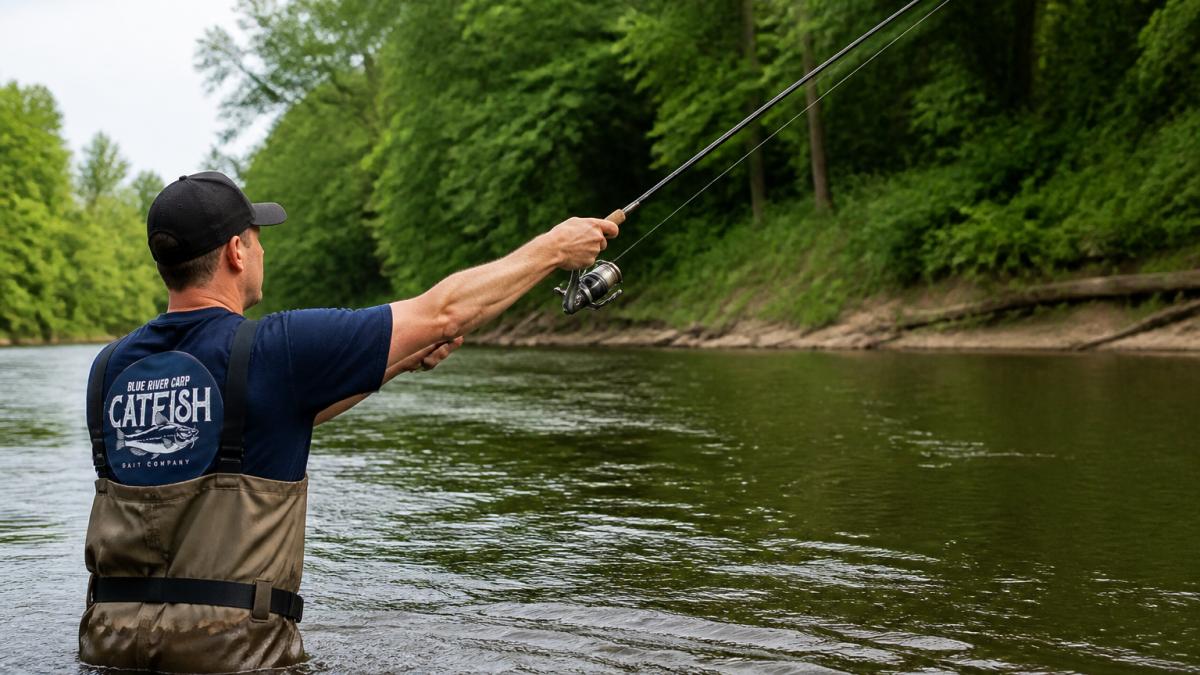
Cast Upstream and Across
In fast current, use a heavier ledger weight, 1.5-2 oz, to anchor the bait. In slower water, 1 oz is usually enough. If the bait keeps moving, add weight rather than casting harder; a hard cast with soft dough knocks the bait off the hook.
Control the Line, Not Just the Bait
A common pattern in moving water is for carp to pick up the bait and move upstream or across the current. Watch for the line to straighten or for the rod tip to nod, then set the hook with a firm, steady pull.
Recast on a Schedule
Recast every 10-15 minutes without bites; fresh bait and a new scent cloud can trigger strikes from carp that ignored the original cast. Check more often in fast current, which breaks bait down faster, and less in slack water.
Adjust your ledger weight and recasting frequency based on current speed and bait breakdown rate.
| Condition | Ledger Weight | Recast Frequency | Reason |
|---|---|---|---|
| Fast current | 1.5-2 oz | Every 10 minutes | Anchor bait; current breaks it down faster |
| Slow water | 1 oz | Every 15 minutes | Less weight needed; bait lasts longer |
| Slack water | 1 oz | Every 15 minutes | Minimal current; slower scent release |
Reading Bites and Landing Your Catch
Start with our Cornmeal - 2.2lbs or 1kg, Wheat Meal - 2.2lbs or 1kg, and Liquid Molasses.
Frequently Asked Questions
Can I use bread to catch carp in a river?
Yes, bread works for carp, but dough bait holds together better in current and stays on the hook longer. Plain bread dissolves quickly in moving water, while a kneaded dough mixture with flour or cornmeal resists the flow. For river fishing, dough bait is more reliable because it maintains its shape and scent release over time.
How do you make fishing dough for carp?
Mix wheat meal or cornmeal with water until you reach a stiff, putty-like consistency. Start with 1 cup wheat meal, add water gradually while kneading, and incorporate a flavor enhancer like molasses or vanilla. Knead until the dough holds together firmly and doesn't stick to your hands. Test it in the water first to ensure it stays on the hook for several minutes.
What is the best way to keep dough bait on a hook in a river?
Knead your dough to a firm, clay-like texture so it grips the hook shank. Use a treble hook or a size 8-10 single hook, pinching the dough around the bend and shank. The tighter the dough and the stronger the current, the more durable your bait needs to be. Replace your bait every 5-10 minutes to maintain scent release and hook security.
What time do carp bite the most in a river?
River carp feed most actively during early morning (dawn to mid-morning) and late afternoon into dusk. They also bite well at night, especially in warm water. Avoid midday heat unless water temperatures drop due to heavy cloud cover. Water temperature matters more than time, carp feed aggressively when water is 60-75°F, so adjust your schedule based on seasonal conditions.


