
Catfish Bait for Warm Water: Best Baits & Techniques
Table of Contents
- Why Catfish Bait Selection Changes in Warm Water
- Best Baits for Channel Catfish in Warm Water
- Best Baits for Flathead Catfish in Warm Water
- Best Bait for Bank Fishing in Summer Heat
- How to Store Cut Bait in High Heat
- Rigging and Presentation for Warm Water Success
- Night vs. Day Bait Strategies in Summer
- Conclusion
Last Updated: August 17, 2026
Why Catfish Bait Selection Changes in Warm Water
Water temperature fundamentally changes how catfish hunt and what they'll strike. When water warms above 75 degrees, catfish metabolism accelerates dramatically. They become more active, more aggressive, and more selective about what they eat. This isn't just a minor shift, it's a complete change in feeding behavior that demands a different bait strategy.
The reason is biological. Warm water holds less dissolved oxygen, forcing catfish to work harder for every meal. They need food that delivers immediate, unmistakable signals through scent and taste. They also move faster and cover more water, which means your bait needs to create a scent trail strong enough to pull them in from distance.
Cold-water baits often fail in summer. Live bait that works perfectly in spring becomes sluggish and less effective. Baits that rely on subtle scent get lost in warm water where decomposition accelerates. The channel catfish and flathead catfish that dominate warm-water fisheries have completely different feeding preferences than their cooler-season counterparts.
This is where understanding seasonal transitions becomes critical. Many anglers stick with whatever worked last month, then wonder why their catch rates dropped. The shift to warm water demands oily baits, fresh-cut presentations, and aggressive scent infusion. Blue River Carp, Inc. specializes in bait formulated specifically for these warm-water conditions, pre-cut, scent-infused, and designed to stay effective when temperatures spike.
Best Baits for Channel Catfish in Warm Water
Channel catfish in warm water respond best to strong-scented, oily baits that create immediate attraction. Cut bait is the gold standard for this species in summer conditions. The exposed flesh releases oils and amino acids that channel catfish detect from considerable distance, triggering aggressive strikes even when fish are scattered across deeper structure.
Shad is the premier choice for warm-water channel catfish. Fresh-cut shad releases oils that create a visible scent trail in warm water. The key is freshness, shad that's been sitting deteriorates quickly in heat, losing potency. Pre-cut shad from Blue River Carp, Inc. solves this problem with a 12+ month shelf life that requires no refrigeration, meaning your bait stays fresh and effective regardless of how long it sits in your tackle box.
Bluegill and sunfish work well as secondary options. These panfish species are part of the natural forage base that channel catfish hunt. Warm-water channel catfish actively pursue sunfish, so cut bluegill triggers predatory responses. The smaller size also means you can use multiple pieces on a single rig, increasing your strike zone coverage.
Chicken skin deserves specific mention for warm-water fishing. Many anglers overlook it, but chicken skin releases oils when soaked and stays on the hook better than softer baits. In warm water where baits break down quickly, chicken skin holds together longer while still delivering scent. Pair it with garlic powder or blood-based attractants to amplify the signal.
The mistake most anglers make is using the same bait presentation year-round. Warm-water channel catfish demand fresher, oilier baits than their cold-water counterparts. They also feed more aggressively, so larger bait chunks work better than small pieces. A 2-3 inch chunk of cut shad or carp outperforms a 1-inch nugget in warm water because it creates stronger scent dispersal.
Best Baits for Flathead Catfish in Warm Water
Flathead catfish are predatory hunters that prefer live or freshly-killed bait over cut offerings. In warm water, this preference becomes even more pronounced. Flatheads rely heavily on vibration and movement to locate prey, making live baitfish the most effective option. However, when live bait isn't practical, fresh-cut presentations work if they're presented correctly.
Live bluegill and sunfish are the top choices for flathead catfish in warm water. These species match the natural forage that flatheads actively hunt. The advantage is behavioral, flatheads strike live bait with predatory aggression, not cautious sampling. In warm water where flatheads are most active, live bait triggers immediate response.
When live bait isn't available or practical, fresh-cut shad becomes the flathead alternative. The critical difference from channel catfish fishing is bait size and freshness. Flatheads prefer substantial meals. A 3-4 inch chunk of fresh shad works better than smaller pieces. The bait must be genuinely fresh, flatheads detect decay and often reject aged cut bait, especially in warm water where decomposition happens rapidly.

Skipjack herring is an underutilized option for warm-water flatheads. This species has a stronger scent profile than shad and triggers aggressive strikes. Skipjack also tends to stay fresher longer because of its oil content, making it practical for extended fishing sessions in summer heat.
The behavioral difference between channel catfish and flatheads matters in warm water. Channels are opportunistic feeders that respond to scent trails and will investigate baits from distance. Flatheads are ambush predators that want active, struggling prey or fresh-killed offerings that suggest recent kills. In warm water, this distinction sharpens. Flatheads become more selective about presentation quality and bait freshness.
Best Bait for Bank Fishing in Summer Heat
Bank fishing in summer heat presents a specific challenge: your bait must withstand hours of direct sun exposure while remaining effective. This rules out many traditional options that deteriorate rapidly when exposed to heat.
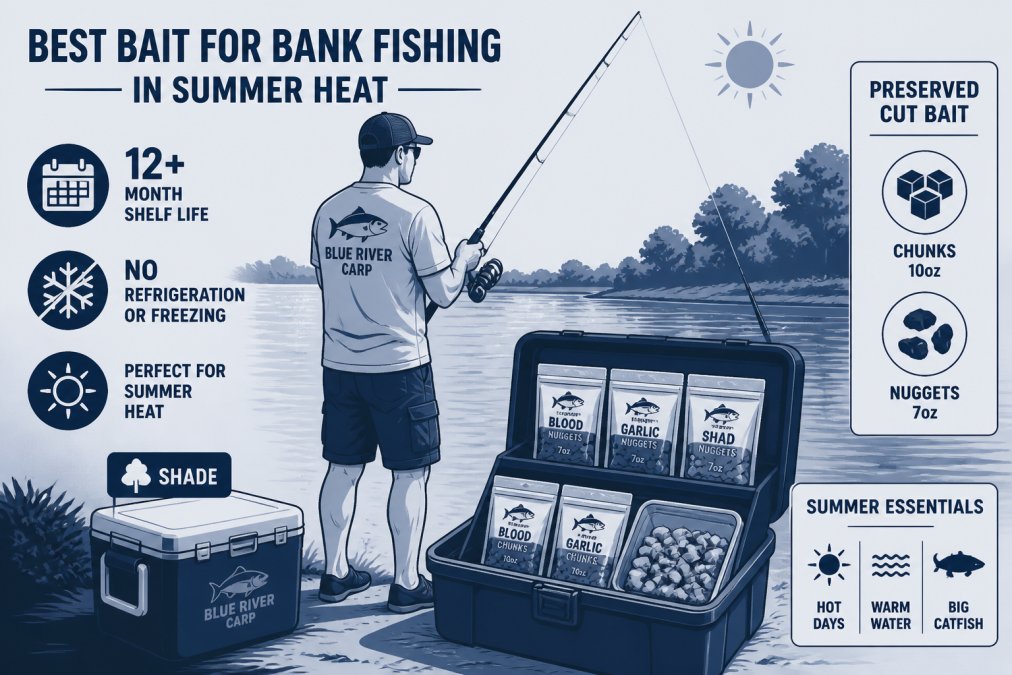
Pre-cut, shelf-stable bait becomes essential for bank fishing in summer. Traditional live bait dies quickly in heat. Fresh-cut bait deteriorates and becomes mushy, falling off the hook before catfish strike. Blue River Carp, Inc. bait solves this problem directly. The preserved cut bait maintains structural integrity throughout long summer sessions, staying firm on the hook even after hours in direct sun.
The practical advantage is significant. You don't need to carry a cooler or ice. Your bait stays ready to fish for the entire day without degradation. This matters because bank fishing often means stationary positions where you're casting to the same spot repeatedly. Fresh bait on every cast increases strike frequency compared to mushy bait that's been sitting in heat for two hours.
Chicken skin combined with garlic powder is an excellent bank-fishing combination for summer. Chicken skin holds together in heat, and garlic powder's scent intensifies as the bait warms. This creates a self-amplifying attractant, the hotter the day, the stronger the scent signal. Many bank anglers overlook this pairing, but it consistently outperforms softer baits in direct sun.
Size matters for bank fishing. Larger chunks (2-3 inches) work better than small pieces because they're visible to catfish at distance and create stronger scent trails. In warm water, catfish range widely looking for food, so a bait that sends a clear signal across the strike zone gets more attention than subtle presentations.
The storage advantage of preserved bait can't be overstated for bank fishing. You cast, wait, and re-cast. Each cast is fresher than the last because your bait isn't degrading in heat. This consistency translates directly to more strikes and more fish landed.
How to Store Cut Bait in High Heat
High heat accelerates decomposition, turning fresh bait mushy and ineffective within hours. Proper storage becomes critical for maintaining bait quality throughout summer fishing sessions.
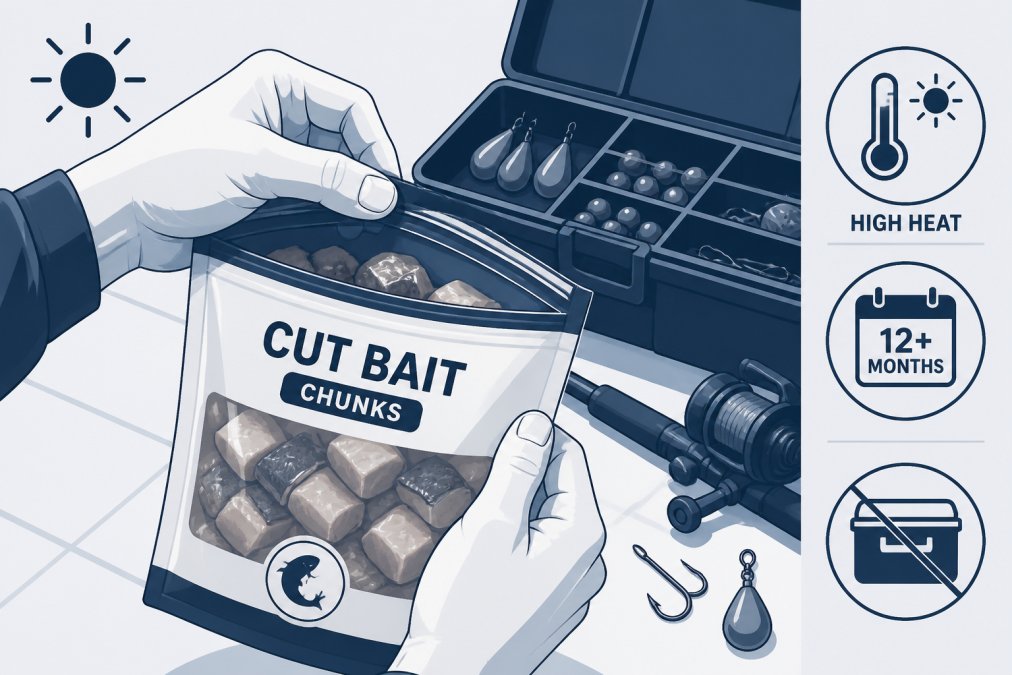
Resealable bags are your first defense against heat degradation. Once you open a bait package, heat and air exposure begin breaking down the bait's structural integrity. A proper resealable bag minimizes air contact and slows deterioration. Blue River Carp, Inc.'s resealable packaging is designed specifically for this, the seal keeps air out while allowing you to access bait without exposing the entire package.
Keep your bait in the shadiest location available. Direct sun accelerates decomposition exponentially. If you're fishing from a boat, store bait in a covered compartment. Bank fishing? Position your tackle box in shade, even if it means moving it as the sun shifts. The temperature difference between sun-exposed and shaded bait is dramatic, sometimes 15-20 degrees, and that difference determines how long your bait stays effective.
Ventilation matters more than most anglers realize. Bait stored in completely sealed containers can develop anaerobic conditions that accelerate spoilage. A resealable bag that allows minimal air exchange is better than a completely sealed container. This is why Blue River Carp, Inc. bait comes in resealable bags rather than vacuum-sealed packages, the slight air exchange maintains bait quality longer.
Never leave bait sitting in direct contact with ice if you're using a cooler. Ice melt creates standing water that accelerates decomposition. Instead, place bait packages on a shelf above ice, allowing cold air to circulate without direct water contact. This keeps bait cool without the mushy deterioration that ice-water contact causes.
The preservation advantage of shelf-stable bait becomes obvious in high heat. Bait that requires no refrigeration or freezing eliminates storage complexity entirely. You pack it, it stays ready to fish, and it maintains effectiveness throughout the day. No cooler, no ice, no degradation from water contact.
Rigging and Presentation for Warm Water Success
Warm-water catfish demand specific rigging approaches that maximize bait visibility and scent dispersal. The way you present your bait determines how effectively it attracts fish from distance.
Bottom fishing is the standard approach for warm-water catfish. Use a simple three-way rig with your main line, a weight on one branch, and your bait hook on another. This keeps your bait near the bottom where catfish hunt while allowing the weight to anchor against current. In warm water, catfish spend more time on structure, drop-offs, submerged logs, channel ledges, so bottom presentation keeps your bait in the strike zone.
Hook size should match your bait size. For 2-3 inch chunks of cut bait, use a 4/0 to 6/0 hook. Larger hooks penetrate better with bigger baits and improve hookup rates. Smaller hooks on large baits result in missed strikes because the hook doesn't set properly when the catfish strikes aggressively.
Terminal tackle choices matter in warm water. Catfish in summer are more aggressive and less cautious, so they'll hit harder. Use heavier line (20-30 pound test) to handle strikes without breakoffs. Lighter line works in cold water where strikes are softer, but warm-water catfish hit with force that demands adequate line strength.
Scent dispersal increases with bait movement. Even slight current allows your bait to create scent trails. If you're fishing still water, consider using a three-way rig that keeps your bait slightly elevated from bottom, allowing it to move with any water movement and create better scent distribution.
Multiple hook rigs work well in warm water. Using two hooks on a single line allows you to present different bait types simultaneously, perhaps shad on one hook and chicken skin on another. This gives catfish options and increases your strike probability. Warm-water catfish are aggressive enough to pursue multiple presentations simultaneously.
Night vs. Day Bait Strategies in Summer
Summer fishing conditions change dramatically between day and night. Successful warm-water catfish anglers adjust their bait strategy based on time of day.
Daytime summer fishing requires stronger scent profiles and larger bait chunks. The sun's heat accelerates water stratification, pushing many catfish into deeper, cooler zones. Bait that creates visible scent trails becomes more important because catfish are hunting from greater distances. Oily baits like shad and carp work better during daylight because they send clearer signals through warm water.
Nighttime fishing allows more subtle presentations. Catfish move shallower at night, becoming more active in areas they avoid during day heat. Night-feeding catfish are less dependent on scent and more responsive to vibration and movement. This means live bait becomes more effective at night, and cut bait can be slightly smaller because catfish are closer and more aggressive.
Water temperature patterns influence timing. In extreme summer heat, catfish often stop feeding during peak afternoon hours (11 AM to 4 PM). They move deep, become lethargic, and ignore most baits. Early morning (before 9 AM) and evening (after 7 PM) produce better results. Adjust your bait strategy to match these windows, use fresh, strong-scented baits during prime feeding times and save less aggressive presentations for marginal hours.
Moon phases affect summer catfish behavior. Full moon nights produce excellent fishing because catfish feed throughout the night. New moon nights often produce better daytime fishing because catfish are forced to hunt during daylight. Adjust your bait freshness and scent intensity based on these patterns. Full moon nights can use slightly older bait because catfish are actively hunting. New moon days demand fresher, stronger-scented options.
Seasonal transition periods within summer also matter. Early summer (May-June) differs from mid-summer (July-August). Early summer catfish haven't fully adapted to warm water and still respond to some spring-pattern baits. Mid-summer catfish demand full warm-water presentations. Late summer (August-September) sees the beginning of the transition back toward fall patterns, so bait selection starts shifting again.
Warm-water catfish fishing demands bait that performs under demanding conditions. You need presentations that stay fresh in heat, create strong scent signals, and hold together through hours of fishing. Blue River Carp, Inc. bait is engineered for exactly these conditions. Our preserved cut bait stays firm on the hook, maintains scent intensity in warm water, and requires no refrigeration or freezing, meaning you're always ready to fish with bait that actually works. Whether you're bank fishing in summer heat or targeting flatheads at night, having reliable bait that doesn't degrade eliminates one major variable. Start with our 10oz Package of Chunks for larger baits or 7oz Package of Nuggets for versatile presentations, and experience the difference that genuine warm-water bait engineering delivers.


Frequently Asked Questions
What is irresistible to catfish in warm water?
Cut bait with strong scent trails works best for warm water catfish. Oily baits like shad, bluegill, and preserved carp chunks release scent quickly in higher water temperatures, triggering feeding responses. Scent-infused baits amplify this effect. Channel catfish rely heavily on smell when metabolism increases in warm water, making oily, fragrant options far more effective than live bait alone.
Does water temperature affect catfish feeding habits?
Yes. Catfish metabolism accelerates as water temperature rises, increasing their feeding frequency and appetite. In warm water above 75°F, catfish feed more aggressively and roam wider strike zones. However, extreme heat (above 85°F) can reduce daytime activity as fish seek deeper, cooler water. This is why bait selection and timing matter: you need stronger scent trails and strategic rigging to reach fish in their preferred zones.
How do I keep bait on the hook in warm water?
Use firm, preserved cut bait instead of soft live bait or chicken liver, which deteriorate quickly in heat. Preserved carp chunks stay intact longer on the hook because they maintain structural integrity without refrigeration. Pair this with proper rigging: use appropriate hook size for your bait chunks, secure the bait firmly through the thickest part, and check your rig frequently. Shelf-stable bait prevents the mushy texture that causes bait to slip off during casts or when catfish strike.
Why does cut bait work better than live bait in summer?
Cut bait releases a scent trail that travels farther and faster in warm water, reaching catfish from greater distances. Live bait works through movement, which is less effective when fish are sluggish in extreme heat or seeking deeper, cooler zones. Cut bait also stays on the hook longer in warm conditions, allowing you to fish longer without re-baiting. Preserved cut bait combines the scent advantage with durability, no refrigeration needed, so it's always ready for spontaneous trips.
This article was written using GrandRanker


