
Best Bait for Bank Fishing: 2026 Guide
Table of Contents
- The Best Bait for Bank Fishing: Top Options Ranked
- Live Bait vs Artificial Lures for Bank Fishing
- Best Rigs for Bank Fishing
- Seasonal Bait Selection: What Works When
- Bank Fishing Tips for Beginners
- Budget-Friendly Bait Kits and Essential Tackle Box Items
- Conclusion
Last Updated: August 10, 2026
The Best Bait for Bank Fishing: Top Options Ranked
The best bait for bank fishing depends on your target species, season, and how much gear you want to carry. At Blue River Carp, Inc., we work directly with catfish anglers across the country and hear the same frustration: too many bait options, not enough honest guidance on what actually works from the bank.
Below, we rank the top bait options for bank fishing, from natural cut baits to artificial lures, with practical notes on when and why each one earns its place in your tackle box.
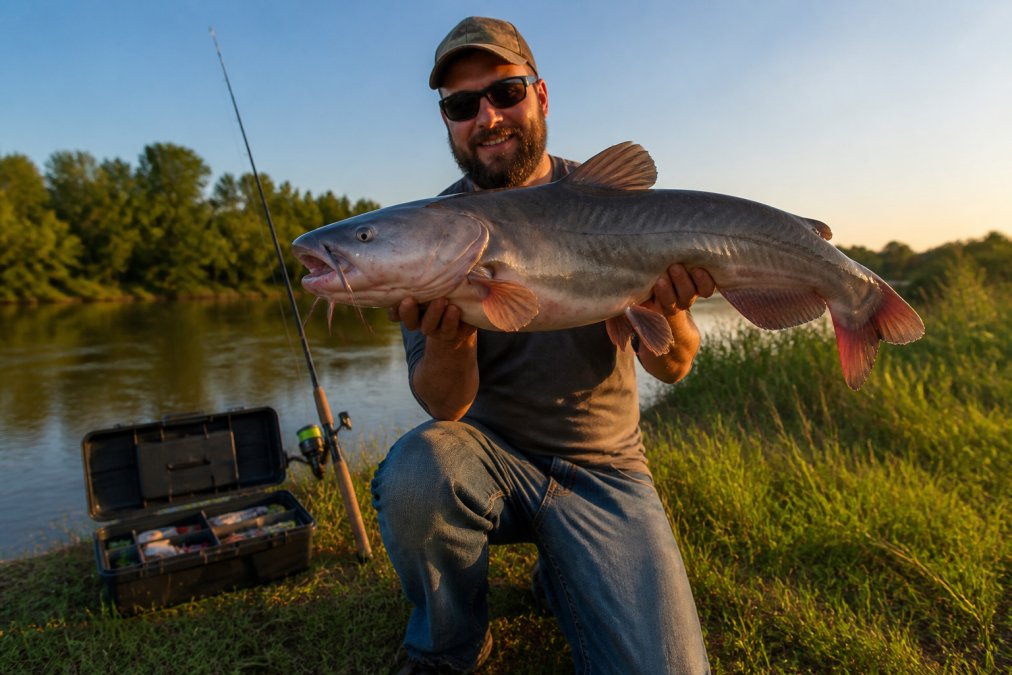
An angler holding a large catfish caught from a grassy riverbank, fishing rod and open tackle box visible behind them in warm afternoon sunlight
Quick Picks:
- Best overall for catfish: Preserved cut bait (carp-based), shelf-stable, scent-heavy, stays on the hook
- Best live bait: Nightcrawlers, works for nearly every freshwater species
- Best artificial for covering water: Spinnerbaits, fast retrieve, weedless, effective in murky water
- Best finesse option: Soft plastics on a drop shot or Texas rig
- Best topwater thrill: Walking baits and buzzbaits along the shoreline
1. Cut Bait (Carp-Based Preserved Bait)
Cut bait is the single most effective option for catfish anglers fishing from the bank. The natural scent dispersal from cut fish draws catfish from a wide area, which matters when you're locked to one spot on the shoreline.
Traditional cut bait gets mushy, falls off the hook, and requires a cooler. Blue River Carp, Inc. solves this with preserved, scent-infused cut bait made from invasive Asian carp. It carries a 12+ month shelf life with no refrigeration required and holds firm on the hook. The bait comes in chunk and nugget sizes: the 10oz chunk packages suit larger catfish, while the 7oz nugget packages work for smaller hooks. Available in Blood, Garlic, and Shad scents.


Using invasive carp as bait supports removal efforts. According to the U.S. Fish and Wildlife Service's invasive carp program, managing Asian carp populations is a federal priority given their impact on native aquatic ecosystems.
Best for: Catfish from the bank, especially channel cats and flatheads. Works day or night.
2. Nightcrawlers and Live Worms
Nightcrawlers are the most versatile bank fishing bait. They catch bass, catfish, panfish, trout, and carp. If you carry only one natural bait, this is it.
The limitation is storage. Live worms need to stay cool or they die quickly in summer heat. Purchase a fresh container at the tackle shop the morning of your trip and use them within a few hours. For catfish, thread a full nightcrawler on a size 2/0 hook with a slip sinker rig, letting it hang naturally in the current. Another great rig is a float setup or bobber rig.
Best for: All-species bank fishing, especially panfish, bass, and channel catfish.
3. Soft Plastics and Finesse Rigs
Soft plastics are the most adaptable artificial option for bank fishing. A single bag of creature baits, stick baits, or finesse worms covers multiple presentations depending on how you rig them.
The Gary Yamamoto Senko (my son’s favorite) stands out for its high salt content and slow, quivering fall that triggers strikes from bass near structure. Rig it wacky-style or weightless Texas-style and let it sink along submerged timber or rock edges. A common mistake: fishing soft plastics too fast. The lure profile needs time to work, especially in colder water.
Best for: Bass and larger panfish. Particularly effective around cover and structure within casting distance of the bank.
4. Spinnerbaits and Moving Baits
Spinnerbaits are the best search tool for bank anglers. The combination of flash and vibration triggers reaction strikes, and the weedless design lets you throw into heavy cover without constant snagging.
Work parallel to the shoreline rather than casting straight out. This keeps the lure in the productive zone along the edge where fish hold. Use a Colorado blade in murky water for maximum vibration, and a willowleaf blade in clearer water where visual flash matters more. Buzzbaits also work well, running along the surface and creating a distinct churning sound that pulls bass out of dense vegetation during early morning and late evening.
Best for: Active bass in stained or murky water. Excellent for covering ground when scouting a new bank.
5. Topwater Baits for Bank Fishing
Topwater fishing from the bank is one of the most productive strategies beginners consistently underuse. Walking baits, poppers, and buzzbaits all work, and the visual strike is immediately addictive.
Walking baits like the Heddon Zara Spook require a rhythmic rod-tip-down retrieve with slack-line twitches to produce the side-to-side "walk the dog" action. Poppers work best near structure: fallen trees, dock pilings, or rocky points. Cast past the target, let the rings settle, then work the bait back with short, sharp pops. The pause between pops is often when the strike comes.
Best for: Bass in warm months, especially early morning and dusk. Works best in water with at least moderate clarity.
6. Lipless Crankbaits for Search Fishing
A lipless crankbait is arguably the most underrated lure in a bank angler's arsenal. It casts far, sinks fast, and produces tight vibration that fish detect through their lateral line even in low-visibility conditions.
Depth control is what makes it particularly useful from the bank. Count the lure down to different depths on successive casts to locate where fish are holding, then repeat that count on every cast. A faster retrieve keeps the bait higher in the water column; a slow, ripping retrieve with pauses lets it yo-yo near the bottom, especially effective in cooler months when bass are lethargic.
Best for: Bass and crappie. Exceptional in late winter and early spring when fish transition between deep and shallow water.
Live Bait vs Artificial Lures for Bank Fishing
Live bait versus artificial lures is a genuine trade-off, not a clear winner. The right choice depends on your species target, season, and how much setup time you want at the water's edge.
Live bait produces more consistent results for catfish, panfish, and carp because natural scent and movement trigger feeding responses that artificial lures can't fully replicate. The downside is logistics: keeping bait alive requires a bucket, aerator, or cooler, and fresh bait deteriorates quickly in summer heat.
Artificial lures require more angler skill but offer greater versatility. A single spinnerbait or soft plastic can cover dozens of presentations across a session. They're also significantly more durable.
Factor |
Live Bait |
Artificial Lures |
|---|---|---|
Best species |
Catfish, panfish, carp |
Bass, pike, crappie |
Storage hassle |
High (cooler or aerator needed) |
None |
Skill required |
Low |
Moderate to high |
Cost per trip |
Low to moderate |
Higher upfront, lower per trip |
Versatility |
Limited to species that feed on it |
High, multiple presentations |
Shelf life |
Hours to days |
Indefinite |
Most experienced bank anglers carry both. Natural or preserved bait on a bottom rig handles one rod while an artificial covers active searching with the other.
Best Rigs for Bank Fishing
The best rigs for bank fishing are simple, snag-resistant, and easy to retie quickly. Three rigs cover the vast majority of situations.
Carolina Rig and Texas Rig for Bottom Contact
Both rigs keep your bait near the bottom, where catfish, bass, and carp spend most of their time. The Texas rig uses a bullet weight pegged directly above the hook, making it nearly weedless through heavy cover. The Carolina rig places the weight 12-24 inches up the line from the hook on a leader, allowing the bait to float and move more naturally above the bottom.
Use a Texas rig when fishing through dense weeds or submerged brush. Use a Carolina rig on open sandy or rocky bottoms where bottom contact and natural bait movement matter more than snag avoidance.
Drop Shot for Finesse Presentations
The drop shot rig suspends a soft plastic at a fixed depth above a bottom weight, keeping the lure in the strike zone without moving it. From the bank, it works best when you can position the bait near visible structure: a dock piling, submerged log, or channel edge. Let it sit and twitch the rod tip occasionally.
Simple Slip Sinker Rig for Catfish
The slip sinker rig is the default setup for bank catfishing. Thread a 1-2 oz egg sinker onto your main line, tie on a barrel swivel, add 18-24 inches of leader, and finish with a 2/0 to 5/0 circle hook.
The slip sinker lets the fish pick up the bait and run without feeling resistance, producing better hook sets on cautious catfish. Pair it with cut bait or preserved carp chunks and cast to deeper water or channel edges where catfish hold during daylight hours.
Seasonal Bait Selection: What Works When
Seasonal patterns are the single biggest variable in bank fishing success. Fish location and feeding behavior shift with water temperature.
Spring: Fish move shallow as water warms. Topwater baits and spinnerbaits produce well because bass are active and aggressive near spawning areas. Live nightcrawlers and soft plastics work on beds in shallow water. Cut bait on bottom rigs picks up catfish staging before their spawn.
Summer: Early morning and late evening are the productive windows. Topwater baits work during low-light periods. Midday heat pushes fish deep, making lipless crankbaits and drop shot rigs more effective. Catfish feed actively at night; a bottom rig with scent-heavy cut bait left to soak is the most reliable summer catfish approach.
Fall: One of the best seasons for bank fishing. Baitfish schools push shallow, and bass follow aggressively. Lipless crankbaits and jerkbaits matched to local baitfish size produce well. Catfish continue feeding heavily before winter, making fall a prime cut bait season.
Winter: Slow down everything. Finesse rigs, drop shots, and lipless crankbaits worked slowly near the bottom are your best options. Catfish remain catchable on cut bait in deeper holes where water temperature stays consistent.
Bank Fishing Tips for Beginners
Bank fishing success comes down to reading the water and managing your gear efficiently. Most beginners focus on bait selection and ignore both.
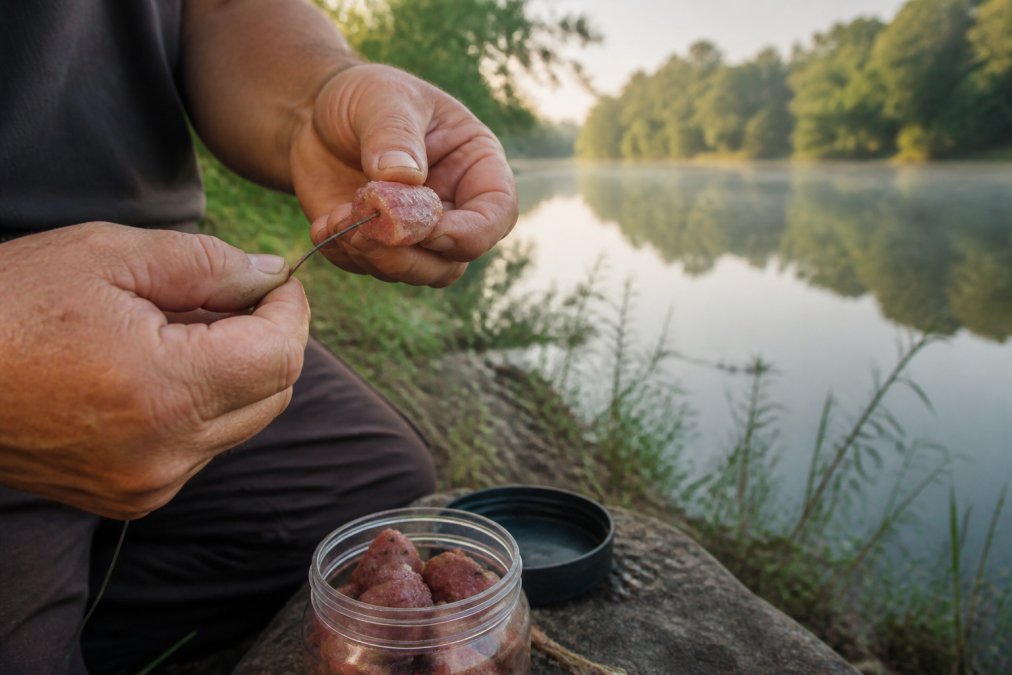
Close-up of a hand threading a chunk of cut bait onto a fishing hook at the edge of a river, green vegetation and calm water visible in the background in soft morning light
Reading Shoreline Structure and Cover
Fish hold near structure and cover: submerged timber, rock piles, depth changes, points, and weed edges. Your job is to identify these features and position your bait where fish are likely to be.
A depth change is often the most productive bank feature. Where shallow water drops into a deeper channel, fish use the edge as a travel corridor. Cast your bait to that transition zone and let it sit. Current seams, where fast and slow water meet, are equally productive. Many bank fishing spots hold fish within 20-30 feet of shore, especially early morning and evening. Using apps like Garmin Boating or GoogleMaps can enhance you change in finding good locations.
Bank-Specific Gear Management
Bank anglers face a gear problem that boat fishermen don't: everything you bring, you carry. Preserved cut bait eliminates the cooler entirely. A bag of Blue River Carp, Inc. chunks or nuggets fits in a jacket pocket and doesn't require ice.
A practical bank fishing kit:
- 2-3 pre-rigged rods (slip sinker, Texas rig, and a lure rod)
- Small tackle box with terminal tackle: hooks, weights, swivels, leaders
- Preserved cut bait (no cooler required)
- One bag of soft plastics in natural colors
- One spinnerbait and one topwater lure
- Needle-nose pliers and a hook remover
- Polarized sunglasses for reading water
Keep it simple. The angler who hikes in light and fishes multiple presentations beats the one who sets up a full camp but only fishes one spot.
Budget-Friendly Bait Kits and Essential Tackle Box Items
Bank fishing doesn't require an expensive setup. The most effective approach costs less than most people assume, especially when you choose bait that doesn't spoil between trips.
A practical starter kit:
Item |
Purpose |
Notes |
|---|---|---|
Preserved cut bait (chunks or nuggets) |
Catfish and bottom fishing |
No cooler needed, 12+ month shelf life |
Nightcrawlers (fresh, day-of) |
All-species live bait |
Buy day-of to avoid storage hassle |
Soft plastic worms or creature baits |
Bass and panfish |
One pack covers many sessions |
Spinnerbait (1/4 oz to 3/8 oz) |
Active bass searching |
Weedless, versatile retrieve |
Slip sinker rig components |
Bottom fishing setup |
Egg sinkers, barrel swivels, circle hooks |
Topwater popper or walking bait |
Surface presentations |
One lure covers both morning and evening |
For catfish-focused bank anglers, the Best 3 Bundle from Blue River Carp, Inc. ($25.50 for three 10oz packages in Blood, Garlic, and Shad scents) covers an entire season of casual fishing without worrying about spoilage. For anglers who prefer smaller pieces, the 7oz Nugget Bundle offers the same three scents at the same price point.

Best 3 - 10oz Chunks Bundle - Blood/Garlic/Shad each
The Fish Attack Strips ($6.00) are worth keeping in the kit as a supplement; they add scent to any lure or bait and fit in a shirt pocket. A few drops of Blue River Carp scent oil ($4.00) applied to a soft plastic or artificial lure adds natural fish scent that triggers feeding in catfish and other bottom feeders.
According to the American Sportfishing Association's recreational fishing participation data, bank fishing remains one of the most accessible and widely practiced forms of recreational fishing, making smart, affordable gear choices more important than ever for the millions of anglers who fish without a boat.
Bait Type |
Best Species |
Skill Level |
Storage Requirement |
Cost Range |
|---|---|---|---|---|
Preserved cut bait (carp) |
Catfish |
Beginner |
None (shelf-stable) |
$10 per package |
Nightcrawlers |
All species |
Beginner |
Cool storage, day-of |
Low |
Soft plastics |
Bass, panfish |
Beginner-intermediate |
None |
Low per session |
Spinnerbaits |
Bass |
Intermediate |
None |
Moderate upfront |
Topwater baits |
Bass |
Intermediate |
None |
Moderate upfront |
Lipless crankbaits |
Bass, crappie |
Intermediate |
None |
Moderate upfront |
Bank fishing is one of the most accessible forms of freshwater fishing, but the right bait makes the difference between a productive session and a frustrating one. The biggest challenge most bank anglers face is having bait that's ready when they are, not bait that's gone mushy in the cooler or expired in the tackle box. Blue River Carp, Inc. builds preserved cut bait specifically for this problem: shelf-stable, scent-infused, and designed to stay on the hook from first cast to last. Explore the full lineup at bluerivercarp.com and go into your next bank session prepared.
Frequently Asked Questions
What is the best rig for bank fishing?
A slip sinker rig is the most versatile starting point for bank fishing, especially for catfish. Thread a 1- to 2-ounce egg sinker onto your main line, tie a barrel swivel, then attach an 18- to 24-inch leader to a 2/0 or 3/0 hook. This setup keeps your bait near the bottom while letting fish pick it up without feeling resistance. For bass and panfish, a Texas rig with a soft plastic creature bait covers most bank fishing situations effectively.
Does live bait work better than artificial lures for bank fishing?
Live bait consistently outperforms artificials for catfish and panfish from the bank because scent draws fish in low-visibility or slow-current conditions where reaction strikes are rare. Preserved cut bait, such as carp-based chunks, offers the same scent-driven advantage without the hassle of keeping bait alive. Artificial lures win for covering water fast and targeting active bass, especially with topwater, spinnerbaits, or lipless crankbaits along shoreline structure.
What bait attracts the most fish from the bank?
No single bait catches every species, but scent-heavy natural baits attract the widest variety. Nightcrawlers work for bass, catfish, and panfish. Cut bait made from oily fish like carp produces strong scent trails that pull catfish from a distance, even in murky water. For anglers who want one bait that covers multiple species without refrigeration, preserved cut bait in blood, garlic, or shad scent is a practical all-around choice for bank fishing.
How do I keep bait fresh during a long bank fishing session?
Live bait requires a cooler with ice or a bait bucket with an aerator, which adds gear you have to carry. Preserved cut bait eliminates that problem entirely. Products with a 12-plus month shelf life stay fresh in a resealable bag at room temperature, meaning no cooler, no melted ice, and no mushy bait sliding off the hook mid-cast. For bank anglers who walk to their spots, that reduction in gear weight makes a real difference.
What are the best lures for beginners fishing from the shore?
Three lures cover most beginner bank fishing situations: a 3/8-ounce spinnerbait for covering water and triggering reaction strikes, a weightless soft plastic stickbait for working slower along cover, and a lipless crankbait for searching deeper structure. All three cast well from the bank, stay relatively weedless, and produce enough vibration or action to attract fish without requiring advanced technique. Start with natural colors in clear water and brighter options in stained or murky conditions.
This article was written using GrandRanker