
How to Catch More Catfish: The Ultimate Guide
Table of Contents
- Best Catfish Bait: What Actually Works
- Catfish Scent Attractants and Why They Matter
- Catfish Fishing Rigs That Catch More Fish
- How to Catch More Catfish: Reading Water and Structure
- Seasonal Patterns, Night Fishing, and Bank Fishing Tactics
- Catfish Fishing Tips for Beginners
- Trophy Catfish, Ethical Handling, and Gear Maintenance
- Conclusion
Last Updated: August 10, 2026
Catfish are one of the most pursued freshwater species in the United States because they're widespread, grow large, and respond well to accessible techniques. At Blue River Carp, Inc., we've helped anglers of all experience levels improve their catch rates by focusing on fundamentals that move the needle. This guide covers bait selection, rig setup, reading water, seasonal timing, and ethical handling, the specific decisions that separate productive catfish anglers from those who go home empty-handed.

Best Catfish Bait: What Actually Works
The single most important decision on any catfish trip is what you put on the hook. Catfish locate food primarily through smell, which means bait scent matters more than appearance.
Cut Bait vs. Live Bait vs. Prepared Bait
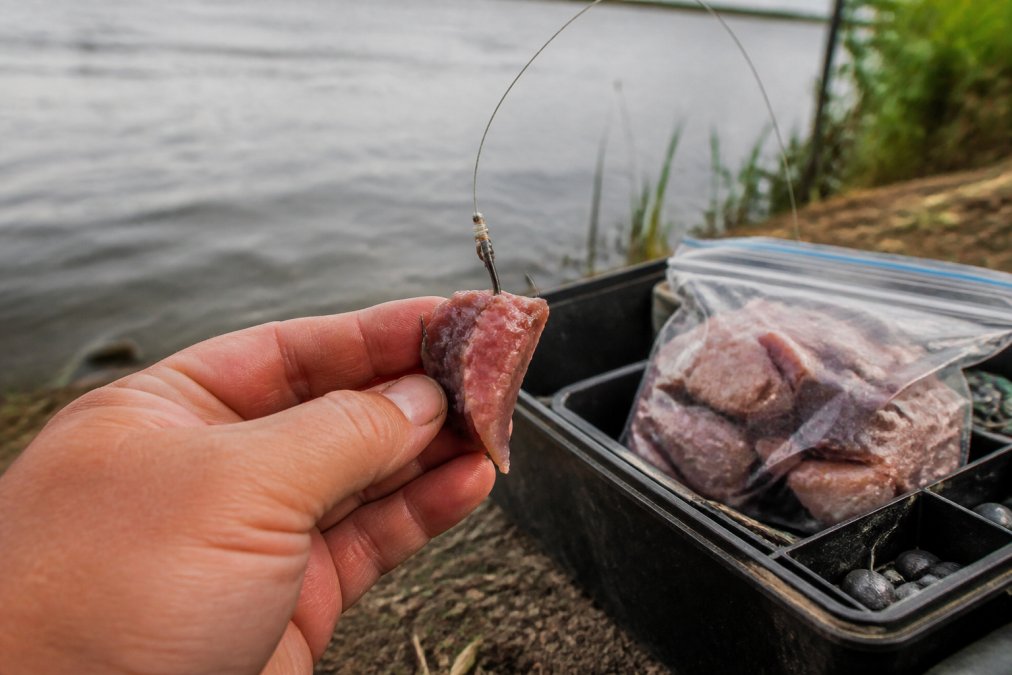
Cut bait is raw fish cut into chunks or strips. It releases oils and blood into the current, creating a scent trail that draws catfish from a distance. Shad, skipjack, carp, and bluegill are most commonly used and work across all three major catfish species.
Live bait is most effective for flathead catfish, which strongly prefer moving prey. Small bluegill, creek chubs, and sunfish are reliable choices, though keeping bait alive requires an aerated bucket and regular water changes.
Prepared bait ranges from dip baits and dough baits to shelf-stable preserved cuts. Blue River Carp, Inc. produces preserved cut bait made from invasive Asian carp, infused with blood, garlic, shad, or various other scents. It ships in resealable bags, requires no refrigeration, and holds a 12+ month shelf life. The bait holds its structure on the hook and doesn't turn mushy in warm weather, solving a real problem with chicken liver and soft dip baits.

Matching Bait to Species: Channel, Blue, and Flathead
Species |
Top Bait Choice |
Why It Works |
|---|---|---|
Channel catfish |
Cut bait, prepared bait, chicken liver |
Scavengers; respond strongly to scent |
Blue catfish |
Fresh cut shad, skipjack |
Prefer fresh-cut oily fish |
Flathead catfish |
Live bream, live chubs |
Ambush predators; prefer live prey |
Channel catfish are the most forgiving and will eat almost anything that smells strong, making them ideal for beginners using prepared bait. Blue catfish favor fresh-cut oily fish and are often found in deeper river channels and reservoirs. Flathead catfish are ambush predators, not scavengers, and almost always prefer live bait over dead or prepared options.
Catfish Scent Attractants and Why They Matter
Catfish have an extraordinary sense of smell, with scent receptors distributed across their entire body, including their whisker-like barbels. A scent attractant enhances or replaces the natural odor of your bait, creating a scent cloud that pulls fish toward your hook from upstream or across a lake basin. According to U.S. Fish & Wildlife Service catfish biology resources, catfish use chemoreception to detect food in low-visibility environments, which explains why scent-heavy bait consistently outperforms visual lures in murky water.
Blue River Carp, Inc. offers dedicated scent oils in blood, shad, and natural formulas at $4.00 each. Blood oil is thick and releases strong odor in slower current. Shad oil disperses quickly in moving water, making it better for river fishing. Add a few drops to your bait immediately before casting, or work it into cut bait chunks before you leave. Reapply every 20-30 minutes if you're not getting bites. You may also soak your choice bait but use caution.
Catfish Fishing Rigs That Catch More Fish
Rig selection directly affects how your bait sits in the water and how a catfish feels resistance when it picks up the hook.
Hook Size, Gap, and Snell Knot Basics
Match hook size to bait size, not fish size. A 2/0 to 5/0 circle hook handles most channel and blue catfish situations. For large flatheads or trophy blues, go up to 7/0 or 8/0 for most conditions, but don’t be afraid to try up to a 12/0 to match you bait.
Circle hooks are the standard for catfish. They set in the corner of the mouth on a tight line without requiring a hard hookset, reducing gut-hooking and making catch-and-release more practical.
The snell knot is the strongest connection between line and hook. To tie it: thread the line through the hook eye from the front, loop the tag end around the hook shank 7-8 times, pass the tag end back through the hook eye from the back, then wet and pull tight against the shank. A well-tied snell knot retains close to full line strength when fighting large fish near structure.

Sinker, Line, and Leader Setup
A slip sinker rig (Carolina rig) is the most effective bottom fishing setup. The sinker slides freely on the main line above a swivel, with a 12-18 inch leader running to the hook. This lets a catfish pick up the bait and move without feeling resistance immediately, reducing dropped strikes.
Line recommendations:
- Main line: 20-50 lb braided line for sensitivity, strength, and no memory. However, if you are fishing rocks or heavy cover, use monofilament.
- Leader: 20-30 lb monofilament or fluorocarbon for abrasion resistance for channels and 60 -100 lbs for blues and flatheads.
Braided line has virtually no stretch, improving bite detection at distance. For bank fishing in heavy current, use 2-4 oz sinkers to keep bait stationary. In slower water or lakes, 1-2 oz is usually sufficient.
How to Catch More Catfish: Reading Water and Structure
Most catfish anglers fish the wrong spots. The fish sit in specific structural features that provide ambush cover, current breaks, and access to food.
River Fishing: Current, Brush Piles, and Log Jams
Catfish position themselves where they can hold without fighting current while staying close to food sources. Most productive river locations include outside bends where current carves deeper holes, brush piles and log jams that create current breaks and attract baitfish, confluences where tributaries meet the main river, and tailwaters below dams where disoriented baitfish create easy feeding opportunities.
Cast upstream of structure and let your bait drift into the target zone. In heavy current, position your rig just downstream of a log jam where catfish wait for food.
Lake Fishing: Depth, Bottom Structure, and Sonar
Lake catfishing rewards anglers who use electronics. A depth finder with bottom mapping lets you identify channel edges, submerged humps, and hard bottom transitions without making dozens of exploratory casts. Look for hard bottom returns indicating gravel or rock, identify depth transitions where bottom drops significantly, and locate suspended baitfish clouds to position your bait below them. According to National Oceanic and Atmospheric Administration fisheries habitat guides, bottom structure complexity directly correlates with predator fish density. Catfish are most active between 70-85°F; in summer, they move deeper during midday heat and shallower at dawn and dusk.
Seasonal Patterns, Night Fishing, and Bank Fishing Tactics
Catfish behavior changes with the seasons, and anglers who track those patterns consistently out-produce those who don't.
Water Temperature and Spawning Season Timing
Catfish follow a predictable seasonal calendar tied to water temperature:
- Spring (55-65°F): Pre-spawn feeding intensifies. Channel and blue catfish move to shallower flats and feed aggressively. This is one of the most productive periods.
- Spawning season (70-75°F): Channel catfish typically spawn in late May through July. Males guard nests and become less interested in feeding. Target non-spawning fish in deeper adjacent water.
- Summer: Catfish feed most actively at night. Midday fishing in deep, cool water can still produce, but dawn-to-dusk productivity drops significantly.
- Fall: As water cools back through 65-75°F, catfish enter a second aggressive feeding period before winter, rivaling spring in productivity.
- Winter: Catfish slow down but don't stop feeding. Target the deepest available water with smaller bait presentations.
Night Fishing Strategies That Produce Results
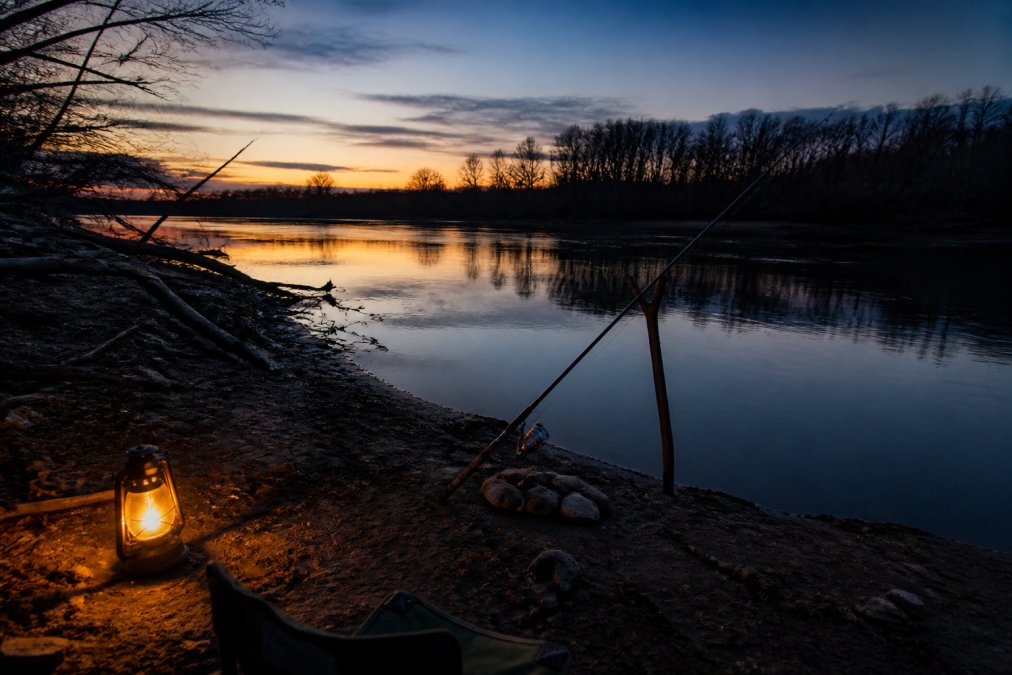
Night fishing for catfish is a genuine tactical advantage. Catfish rely on scent and lateral line detection more than vision, making them less cautious in darkness. They move into shallower water to feed, putting them within reach of bank anglers.
Effective night fishing setup: arrive before dark and set up your rods, bait, and landing gear while you can still see; use rod holders or forked sticks to keep multiple lines in the water simultaneously; attach bite alarms or bells to rod tips to detect strikes; focus on areas with nearby deep water; and refresh bait every 45-60 minutes to maintain a fresh scent trail. Bank fishing at night with multiple rods spread across different depths and distances is one of the most productive catfish tactics available to anglers without a boat.
Channel Catfish Fishing Tips for Beginners
Beginners tend to overcomplicate catfish fishing. The species is forgiving, and the core approach is simple: put a smelly bait on a strong hook, get it to the bottom near structure, and wait.
Here's the practical beginner setup that works:
- Rod and reel: A medium-heavy 7-foot 6-inch rod with a 6500-series spinning reel or baitcaster
- Line: 20 lb braided main line with a 20 lb monofilament leader
- Rig: Slip sinker Carolina rig with a 3/0 circle hook
- Bait: Preserved cut bait is the best starting point because it's ready to use, stays on the hook, and requires no preparation or refrigeration, use small 1”x2” size.
The most common beginner mistake is fishing open water with no structure nearby. Catfish concentrate around cover. Find the nearest deep hole, brush pile, or channel edge and fish there first. A second mistake is setting the hook too hard with circle hooks. Circle hooks work by rotating into the corner of the mouth as the fish swims away. Use a slow, steady reel-in rather than a sharp hookset.
According to American Fisheries Society resources on recreational fishing practices, proper technique and catch handling significantly improve both catch rates and fish survival for released fish.
Trophy Catfish, Ethical Handling, and Gear Maintenance
Trophy catfish require a different mindset. Fish that reach 30, 50, or 100+ pounds hold in the deepest, most inaccessible structure available. In rivers, that means the deepest holes in the channel, directly adjacent to current breaks. In lakes, it means the deepest points along channel edges, often in 30-50 feet of water.
Bait size scales with target size. For trophy blue catfish, use larger cut bait chunks rather than small nuggets. The 10oz Chunk Bundles from Blue River Carp, Inc. (approximately 2" x 3" pieces, around 4-5 per package) are sized specifically for this application. Larger presentations reduce interest from smaller fish and give big catfish a meal worth committing to, if you are not getting any takers, cut the size in half. The best trophy catfish fishing typically occurs during the pre-spawn period in spring and the fall feeding period, when large fish move aggressively before temperature-driven behavioral changes. If you are fishing river, fish the rising water and the crest.
Catch-and-Release Best Practices
Ethical handling keeps the fishery healthy for future anglers. Large catfish are slow-growing fish; a 50-pound blue catfish may be 20 years old. Harvesting catfish under 10-pounds is a good and ethical weight.
Best practices for catch-and-release: keep the fish in the water as much as possible during hook removal; use needle-nose pliers to back circle hooks out without tearing tissue; support large fish horizontally with both hands; minimize air exposure to under 30 seconds if possible; revive the fish in the water by moving it gently forward and back until it swims away under its own power; and avoid fishing in extremely warm water (above 85°F) if you intend to release, as heat stress significantly reduces survival rates.
Knot Strength, Rod Maintenance, and Gear Longevity
Gear failure at the wrong moment is avoidable. Retie your hook connection every 2-3 fishing sessions, or any time you feel roughness on the leader. Rinse rod guides with fresh water after fishing in silty rivers, as grit cuts braided line over time. Apply a drop of reel oil to the main shaft and handle knob once per season, and back off drag washers when storing to prevent compression. Inspect the first 10 feet of braid after every trip for fraying or abrasion. Frayed braid near the hook is the most common point of failure on large fish.
Catching more catfish consistently comes down to a few decisions made correctly: the right bait with real scent, a rig that presents it naturally near structure, and the patience to fish the right locations at the right times. Blue River Carp, Inc. makes the bait side of that equation simpler with shelf-stable, scent-infused cut bait that's ready whenever you are, with no cooler required and a 12+ month shelf life. The 7oz Nugget Bundles and 10oz Chunk Bundles are available in blood, garlic, and shad scents to match your target species and conditions. Get started with Blue River Carp, Inc. and put a bait in the water that actually works.
Frequently Asked Questions
What bait catches the most catfish?
Cut bait from oily fish like shad or carp consistently produces the most catfish across all three major species — channel catfish, blue catfish, and flathead. The strong scent trail these baits release in current draws fish from a distance. Preserved cut bait, like Blue River Carp's carp chunks, delivers the same scent performance as fresh bait without the mess or need for a cooler, making it a practical choice for anglers who want reliable results on every trip.
What time of day is best for catfishing?
Night fishing produces the most consistent results for catfish, especially during summer. Catfish are highly sensitive to light and become far more aggressive feeders after dark, moving out of deep structure to hunt along shallower flats and banks. Early morning — roughly one hour before sunrise to two hours after — is the second-best window. Midday fishing in summer is the least productive unless you target deep, shaded structure where catfish hold during warmer water temperatures.
Does scent really help catch more catfish?
Yes. Catfish locate food almost entirely through scent and lateral-line vibration, not vision. A strong scent trail in current or still water draws fish to your bait before they can see it. Fish attractant oils and scent-infused cut bait increase the size of that scent plume. Blue River Carp's bait is infused with blood, garlic, or shad scents that disperse steadily in water, giving your presentation a longer effective range than plain or lightly scented bait.
How do you find catfish in a river or lake?
In rivers, focus on current breaks — the slack water behind brush piles, log jams, and outside bends where catfish hold without fighting the flow. In lakes, bottom structure like submerged points, channel edges, and deep flats near shallow feeding areas hold fish. A depth finder or sonar unit helps you mark these spots quickly rather than guessing. Water temperature also guides location: in cold water, catfish stack in the deepest available holes; in warm water, they spread out and feed aggressively.
What is the best gear setup for trophy catfish?
For trophy blue or flathead catfish, use a medium-heavy to heavy rod paired with a baitcasting or spinning reel spooled with 50- to 80-pound braided line. Connect a 40- to 60-pound monofilament or fluorocarbon leader using a snell knot for maximum hook-set strength. Hook size matters: a 6/0 to 10/0 circle hook gives you a wide enough hook gap to handle large bait chunks and still find purchase in a big fish's mouth. Bottom fishing with a slip sinker rig keeps your bait in the strike zone.
Are there specific regulations for catfishing in the U.S.?
Yes. Catfishing regulations vary by state and sometimes by specific water body. Rules cover minimum size limits, daily bag limits, and legal gear types. Some states also have special regulations for trophy or spawning fish. Always check your state fish and wildlife agency's current regulations before heading out — in Indiana, for example, that's the Indiana Department of Natural Resources. Regulations change annually, so verify them each season rather than relying on prior-year information.
I only fish once or twice a month — will preserved bait go bad before I use it all?
No. Blue River Carp's preserved cut bait carries a 12-month-plus shelf life and requires no refrigeration or freezing. You can store it in your tackle box or garage between trips without it spoiling. The resealable bag keeps unused pieces fresh after you open it. For anglers who fish occasionally, this eliminates the waste and frustration of buying fresh bait that goes bad before the next trip.
This article was written using GrandRanker