
Best Bait for Channel Catfish: Top Picks That Work
Table of Contents
- The Best Bait for Channel Catfish: Quick Rankings
- Natural Baits That Channel Catfish Can't Resist
- Punch Bait, Dip Bait, and Prepared Dough Baits
- Seasonal Bait Selection for Channel Catfish
- Best Time to Catch Channel Catfish and How Bait Choice Changes
- Best Catfish Rigs for Channel Cats and Bait Presentation
- Bait Storage, Preservation, and Cost Breakdown
- Conclusion
The Best Bait for Channel Catfish: Quick Rankings
The best bait for channel catfish depends on conditions, season, and your preference for convenience.
Quick Picks:
- Best Overall Cut Bait: Blue River Carp, Inc. carp cut bait, shelf-stable, scent-infused, stays on the hook
- Best Natural Bait: Fresh gizzard shad or bluegill cut bait
- Best for Beginners: Nightcrawlers or chicken liver
- Best Prepared/Punch Bait: CJ's Punch Bait (fibrous formula holds in current)
- Best Dip Bait: Team Catfish Secret-7 (award-winning sticky formula)
- Best Budget Option: Chicken liver from the grocery store
Channel catfish are bottom feeders with an extraordinary sense of smell. Their feeding habits are driven almost entirely by odor, which means your bait selection and scent trail matter more than presentation finesse.
| Bait Type | Best Conditions | Hook Style | Shelf Stability | Mess Level |
|---|---|---|---|---|
| Cut bait (carp/shad) | Rivers, current | Circle hook | High (prepared) | Low |
| Chicken liver | Ponds, still water | Treble hook | Low (refrigerate) | High |
| Nightcrawlers | All conditions | Single bait hook | Low (refrigerate) | Low |
| Punch bait | Rivers, moving water | Treble hook | High | Medium |
| Dip bait | Lakes, ponds | Dip worm/sponge | High | High |
| Fresh cut shad | Flowing rivers | Circle hook | None (use fresh) | Medium |
Natural Baits That Channel Catfish Can't Resist
Natural bait is the foundation of catfish fishing. Channel catfish locate food primarily through scent, and natural baits release the oils, amino acids, and blood that catfish have evolved to detect.
Cut Bait: Gizzard Shad, Bluegill, and Carp
Cut bait is the top choice for serious channel catfish anglers, particularly in rivers and moving water. Gizzard shad is widely considered the gold standard, it's oily, bloody, and releases a scent trail that travels far downstream. Bluegill works well in lakes and ponds near structure. Carp, especially invasive Asian carp species, produces an excellent scent profile and is increasingly used by anglers seeking a sustainable option.
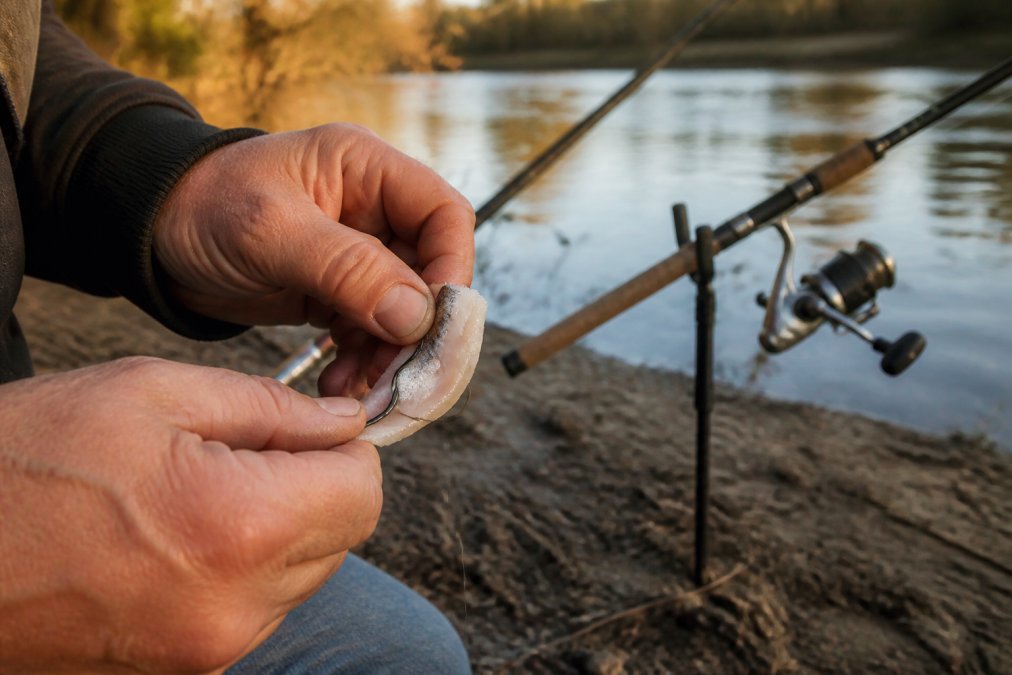
The practical problem with fresh cut bait is logistics. You need ice, a cooler, and usually a cast net or bait shop nearby. Bait goes soft quickly in warm weather, sliding off the hook at the worst moment. Prepared cut bait, like what Blue River Carp, Inc. produces from invasive carp, solves this problem. The bait is scent-infused, stays firm on the hook, and requires no refrigeration. A 12+ month shelf life means it's ready whenever you are. For hooking, thread the hook through the bait twice to secure it, or use a circle hook pushed through the skin side for better penetration.
Nightcrawlers and Chicken Liver
Nightcrawlers are the most forgiving bait on this list. They work across all seasons and water types. Thread a full nightcrawler onto a size 2 or 1/0 bait hook, leaving a tail section to wiggle freely. In slow current or still water, a single crawler on a slip sinker rig catches fish consistently.
Chicken liver is the classic budget option and genuinely works. The strong, bloody odor is hard for channel catfish to ignore. The problem: liver is soft and slippery, falling off the hook constantly, especially in warm water or current. Freezing liver before your trip firms it up slightly. Wrapping it in nylon mesh or using a treble hook helps retention.
Punch Bait, Dip Bait, and Prepared Dough Baits
Prepared baits have earned their place in serious catfish fishing. The best formulas are engineered around the same scent triggers that make natural bait work, concentrated and stabilized for convenience.
Punch bait is the most practical option for moving water. CJ's Punch Bait uses a fibrous formula that grips treble hooks and holds through current that would strip softer baits clean. You punch the treble hook into the bait container, pull it out coated, and drop it in.
Dip baits like Team Catfish Secret-7 and Catfish Charlie are designed for dip worms or sponge hooks. Team Catfish Secret-7 has won Bait of the Year at Bass Pro Shops Big Cat Quest twice, tournament validation, not marketing. Catfish Charlie is widely available at retail starting around $4.29 for a 12 oz tub.
Dough baits and chunk baits like Berkley PowerBait Catfish Chunks are pre-formed and easy to rig without getting your hands coated. The chunk format stays on the hook better than loose dough and works well for anglers who want minimal prep time.
Prepared baits work best for channel catfish specifically. Flathead catfish strongly prefer live bait and will largely ignore prepared formulas.
Seasonal Bait Selection for Channel Catfish
Channel catfish feeding habits shift with water temperature, and your bait selection should follow. According to U.S. Fish and Wildlife Service guidance on catfish biology, channel catfish are most active feeders when water temperatures fall between 75°F and 85°F.
Spring (water temps 55°F-70°F): Channel catfish become increasingly active as water warms. Fresh cut bait and nightcrawlers work well.
Summer (water temps 75°F-85°F): Peak feeding season. Channel catfish are most active at night. Strong-scented baits perform best, punch bait, dip bait, and oily cut bait all produce well.
Fall (water temps 55°F-70°F): Fish are feeding heavily to build reserves before winter. Cut bait and chicken liver produce well. Fish deeper structure as surface temps drop.
Winter (water temps below 50°F): Catfish slow down significantly. Small, natural baits like nightcrawlers fished very slowly near the bottom are more effective than large chunks.
Best Time to Catch Channel Catfish and How Bait Choice Changes
The best time to catch channel catfish is after sunset through the early morning hours, particularly during summer months. Channel catfish are primarily nocturnal feeders, using their extraordinary sensory systems to locate food in complete darkness. Night fishing with strong-scented bait fished on the bottom is the most consistently productive approach.
Catfish do feed during the day, especially in low-visibility water with heavy tannin staining, overcast conditions, or when water temperatures are cooler. In rivers, feeding activity often spikes during and after rainfall events when runoff carries food into the water column.
How bait choice shifts by time of day:
- Night fishing: Strong-scented prepared baits and cut bait perform at their peak. Punch bait and dip bait are particularly effective because they release a continuous scent trail.
- Early morning: Natural baits like nightcrawlers and fresh cut bait work well as fish move from deep nighttime holding areas toward shallower feeding zones.
- Midday: Stick to deep structure, shaded areas, and river channel edges. Cut bait with heavy scent loading is your best option.
As noted by National Oceanic and Atmospheric Administration freshwater fish behavior resources, water temperature and light penetration are the primary drivers of feeding activity in freshwater species.
Best Catfish Rigs for Channel Cats and Bait Presentation
The best catfish rigs for channel cats are simple by design. Channel catfish feed on the bottom, so your terminal tackle needs to keep bait at or near the substrate while allowing the fish to take it without immediately feeling resistance.
Slip Sinker Rig for Bottom Fishing
The slip sinker rig, also called a Carolina rig or running sinker rig, is the most versatile setup for channel catfish across both lakes and rivers. Here's how to build one:
- Thread a 1-3 oz egg sinker or no-roll sinker onto your main line
- Slide a plastic bead below the sinker to protect your knot
- Tie a barrel swivel to your main line
- Attach an 18-24 inch fluorocarbon leader (17-20 lb test) to the swivel
- Tie your hook to the leader end
The sinker rests on the bottom while the leader and bait float slightly above, presenting naturally in the current. When a catfish picks up the bait, the line slides through the sinker freely, and the fish feels no resistance before the hook set.
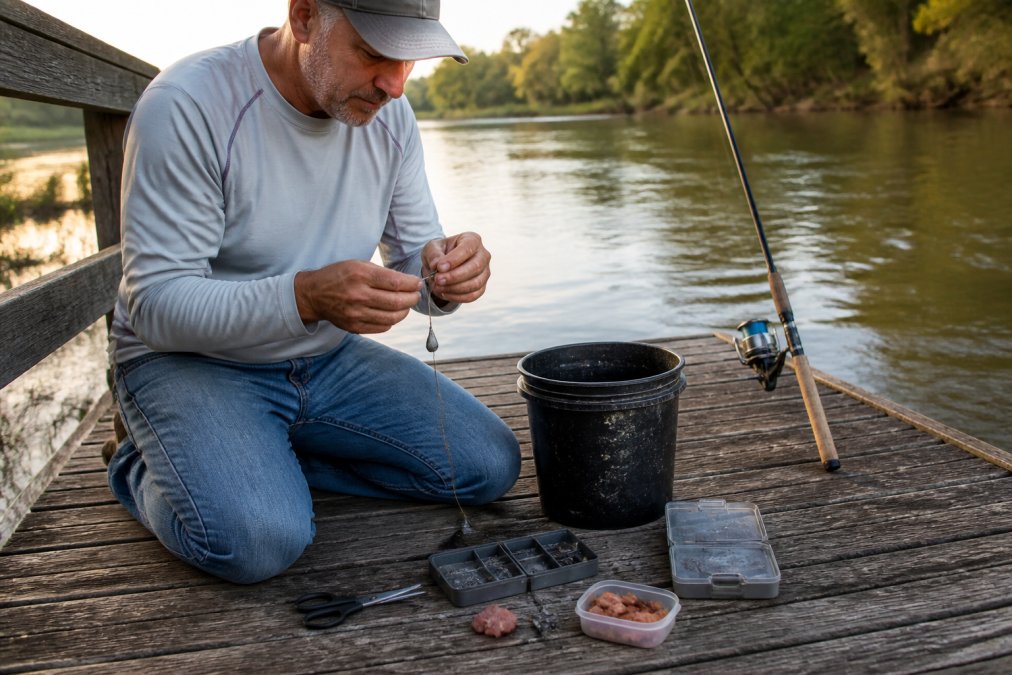
For rivers with significant current, switch to a three-way swivel rig: attach a dropper line with your sinker to one eye, your main line to the second, and your leader and bait to the third.
Hook Size and Bait-to-Hook Matching
Hook selection matters more than most beginners realize. The wrong hook size means missed hook sets, lost bait, and frustrated evenings.
| Bait Type | Recommended Hook | Hook Size | Why It Works |
|---|---|---|---|
| Cut bait chunks | Circle hook | 5/0 - 7/0 | Self-sets on corner of mouth |
| Chicken liver | Treble hook | #4 - #2 | Multiple points grip soft bait |
| Nightcrawlers | Single bait hook | #2 - 1/0 | Allows natural worm movement |
| Punch bait | Treble hook | #4 - #2 | Fibers wrap around all three points |
| Dip bait | Dip worm/sponge | N/A (carrier) | Sponge absorbs and releases bait |
| Large cut shad | Circle hook | 7/0 - 9/0 | Handles large bait chunks securely |
Circle hooks are strongly recommended for cut bait fishing. They dramatically reduce gut-hooking and maintain hook penetration in the corner of the mouth where the hook set is most secure. According to American Fisheries Society guidelines on circle hook use, circle hooks reduce deep hooking by a significant margin compared to J-hooks across multiple freshwater species studies.
Bait Storage, Preservation, and Cost Breakdown
Most catfish guides stop at "what to use" and never address what happens between fishing trips.
Fresh and natural baits have the shortest window. Chicken liver and fresh cut shad need to stay refrigerated and should be used within 2-3 days of purchase. Nightcrawlers stay alive for 1-2 weeks in a cool, ventilated worm container at 50°F-60°F with moist bedding.
Prepared and punch baits store far better. Most dip bait and punch bait products stay effective for a full fishing season when stored in a cool, dry location away from direct sunlight. Once opened, keep lids sealed tightly.
Shelf-stable cut bait is the category most anglers overlook. Blue River Carp, Inc. produces scent-infused carp cut bait with a 12+ month shelf life that requires no refrigeration or freezing. For anglers who fish once or twice a month, this eliminates the biggest frustration with cut bait: it's always ready, it won't go mushy, and it won't fill your freezer with fish parts. It's made in Indiana from invasive Asian carp, a species that damages native freshwater ecosystems, which means using it is genuinely better for local fisheries.
Cost comparison across bait types:
| Bait Type | Approximate Cost | Shelf Life | Convenience |
|---|---|---|---|
| Chicken liver | A few dollars/lb | 2-3 days refrigerated | Low |
| Nightcrawlers | A few dollars/dozen | 1-2 weeks refrigerated | Medium |
| Dip bait (12 oz) | $4-$10 per jar | 1 season (opened) | Medium |
| Punch bait (14 oz) | $9-$23 per container | 1 season (opened) | Medium-High |
| Prepared cut bait | Visit bluerivercarp.com | 12+ months | High |
Note: Prices for third-party products reflect publicly available retail pricing. Blue River Carp, Inc. pricing is available at their website.
The real cost of cheap bait isn't always the sticker price. Factor in the cooler, the ice, the wasted bait after a cancelled trip, and the time spent re-baiting every 15 minutes when liver slides off the hook. Shelf-stable, mess-reduced options often deliver better value per fishing hour.
For anyone new to catfishing, the U.S. Fish and Wildlife Service's guide to freshwater fishing regulations by state is worth bookmarking. Regulations on which species can be used as bait vary by state and water body.
Catfish fishing is genuinely accessible, but the gap between a frustrating trip and a productive one often comes down to bait quality and preparation. If you're tired of re-baiting every few minutes, losing bait to current, or making last-minute bait shop runs, Blue River Carp, Inc. offers a practical solution: premium scent-infused carp cut bait with a 12+ month shelf life, no refrigeration required, and a firm texture that stays on the hook. It's veteran-owned, made in Indiana, and built specifically for anglers who want to spend more time fishing and less time managing their bait. Visit bluerivercarp.com to see current availability and pricing.
Frequently Asked Questions
Does stink bait really work better for channel catfish than natural bait?
Stink bait and punch bait are highly effective for channel catfish because these fish locate food primarily through scent. Prepared baits release a concentrated odor cloud that draws catfish from a distance, often outperforming natural bait in still or slow-moving water. That said, fresh cut bait like gizzard shad produces its own strong scent trail through natural oils and blood, making it equally effective in rivers with current. The best choice depends on water conditions and how you're rigging.
What is the best time of day to fish for channel catfish?
Channel catfish feed most aggressively after sunset and before sunrise. Nighttime is consistently the most productive window, especially in summer when water temperatures peak during the day and catfish move shallow to feed under cover of darkness. Early morning, roughly an hour before and after dawn, is the next best window. Midday fishing can still produce results in spring and fall when water temperatures stay cooler and catfish remain active throughout the day.
What is the best rig for channel catfish?
The slip sinker rig, also called a Carolina rig, is the most reliable setup for channel catfish. It uses an egg sinker threaded onto the main line above a barrel swivel, followed by an 18-to-24-inch leader and a circle hook in size 2/0 to 5/0. This rig lets the catfish pick up the bait and move without feeling resistance, which improves hook set rates significantly. Pair it with cut bait or punch bait for best results in most freshwater fishing situations.
How deep should you fish for channel catfish?
Channel catfish spend most of their time near the bottom, so bottom fishing is almost always the right approach. In lakes, target depths between 8 and 20 feet near structure like submerged timber, channel edges, or drop-offs. In rivers, focus on deep holes adjacent to current breaks, typically 6 to 15 feet deep. Water temperature drives depth: in summer, catfish push deeper during midday heat and move shallower at night. In spring and fall, shallower depths near spawning structure hold more fish.
Can you use hot dogs as bait for channel catfish?
Hot dogs catch channel catfish, but they are far from the most effective option. They stay on the hook reasonably well and can be enhanced by soaking in garlic powder or fish oil to boost scent. The main limitation is that hot dogs lack the natural oils and amino acids found in fish-based baits, so they produce a weaker scent trail. They work best as a backup when other baits aren't available. For consistent results, cut bait, punch bait, or scent-infused prepared baits outperform hot dogs.
This article was written using GrandRanker