
Buying Long Lasting Catfish Bait: What Actually Works
Table of Contents
- Why Most Catfish Bait Falls Apart Before the Fish Bites
- Key Factors in Buying Long Lasting Catfish Bait
- How Long Does Non Refrigerated Catfish Bait Last in Storage?
- Comparing Bait Types: Shelf-Stable Cut Bait vs. Dough and Punch Bait
- What Makes the Best Shelf Stable Catfish Bait?
- Scent Infused Cut Bait Benefits: Why Scent Trail and Hook Retention Matter
- Troubleshooting Bait Loss: Rigging and Casting Tips
- Conclusion: Match the Bait to the Conditions
- Frequently Asked Questions
Last Updated: September 7, 2026
Nothing kills a catfish trip faster than bait that dissolves into a gray smear before the fish even find it. Most anglers have watched a perfect chunk of liver turn to mush after ten minutes in warm water, leaving nothing but a bare hook and a wasted spot. Buying long lasting catfish bait comes down to understanding how bait physically behaves on the hook and in the water, not just which scent smells strongest in the package. At Blue River Carp, Inc., we produce shelf-stable cut bait from invasive carp. Below, we will break down the exact factors that separate bait that lasts from bait that fails, so you can buy with confidence and fish longer.

Why Most Catfish Bait Falls Apart Before the Fish Bites
The biggest mistake anglers make is confusing strong scent with structural integrity. A bait can smell incredible in the package yet dissolve within minutes of hitting the water, and that does you no good when fishing a river current or waiting out a slow bite.
Most fresh baits like chicken liver, shad, and homemade dough recipes share one fatal flaw: they are water-soluble. The same moisture that keeps them fresh also makes them break down quickly. When you cast, the water begins pulling at the bait immediately. Soft baits shed particles fast, which creates a strong scent trail but leaves you re-rigging every fifteen minutes.
A common mistake is assuming that "fresh" always means "better." Fresh bait goes mushy, slides off the hook during casting, and requires constant attention. The real question is whether the bait maintains its form long enough for catfish to locate it and commit to the strike. Long lasting catfish bait options that are preserved or cured solve this by removing the excess moisture that causes rapid breakdown.
Key Factors in Buying Long Lasting Catfish Bait
When you are evaluating catfish bait for longevity, four factors determine how long it will stay on your hook: water solubility, hook adherence, current resistance, and casting durability. A bait that scores well on all four will outfish softer options over a full session.
Water solubility is the rate at which the bait dissolves. Low solubility means the bait holds its shape. Hook adherence describes how well the bait stays threaded onto the hook during a cast and while sitting on the bottom. Current resistance matters if you fish moving water, where soft baits get stripped away quickly. Casting durability is how well the bait survives the force of your cast without flying off.
The physical form of the bait matters more than most guides admit. A firm, dense piece of cut bait with a skin or membrane holds up far better than a loose paste. This is why preserved cut bait outperforms many dough options for anglers who want to leave a line out and check back later.
Water Temperature and Bait Solubility
Water temperature directly controls how fast any bait breaks down. Warm summer water accelerates the dissolution process, meaning a bait that lasts an hour in 55-degree spring water might only survive twenty minutes in 80-degree August conditions (peer-reviewed research). This is a physical property of how water interacts with organic material, not a flaw in any particular bait.
When water is warm, catfish are also more active and feeding aggressively, so they find bait faster. But the faster breakdown means you need tougher bait to stay present when the fish arrive. In cold water, the opposite is true: bait lasts longer, but catfish are sluggish and need more scent to locate it. Matching bait durability to water temperature is one of the most overlooked skills in catfishing.
Hook Selection for Specific Bait Types
The hook you choose affects bait retention as much as the bait itself. A thin wire hook will tear through soft bait during the cast, while a thicker gauge hook holds firmer bait more securely. For dough and punch bait, many anglers use treble hooks or specialized bait-holding hooks with coils or wire guards that grip the soft material.

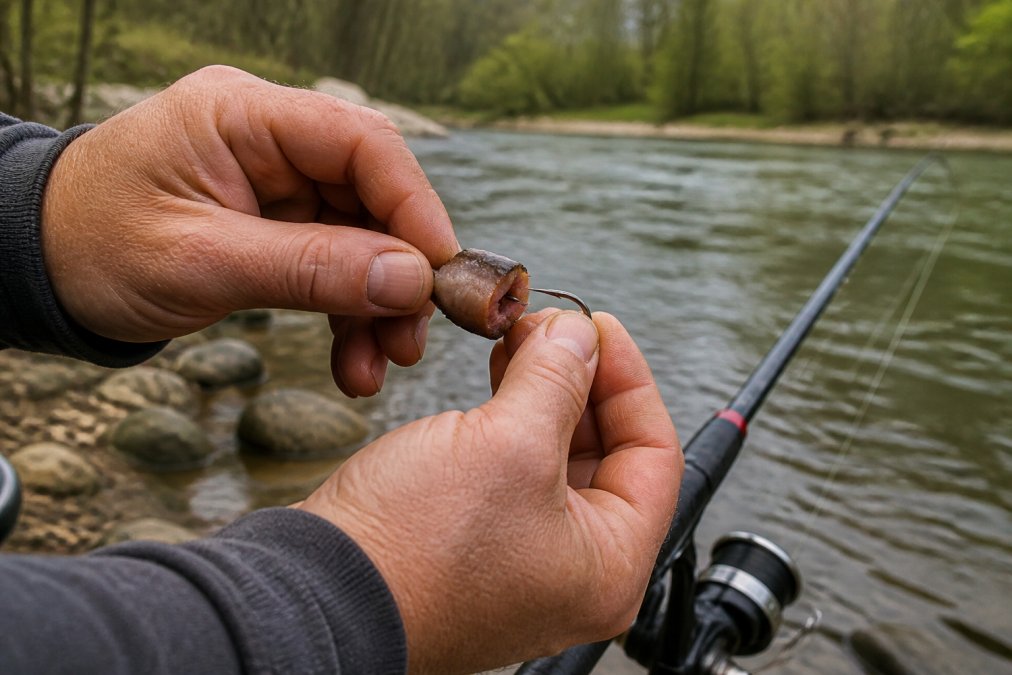
For cut bait and chunks, a large circle hook in the 5/0 to 8/0 range works best (peer-reviewed research). The key is to thread the hook through the thickest, toughest part of the bait, usually the skin or the densest section of flesh. This keeps the bait anchored even when fish nip at the edges. If you are using nuggets around 1 x 2 inches or larger chunks, match the hook size to the bait piece so the point stays exposed for a solid hookset.
How Long Does Non Refrigerated Catfish Bait Last in Storage?
Shelf-stable catfish bait is designed to last months without refrigeration, but the exact duration depends on the preservation method. Quality preserved cut baits typically offer a shelf life of 12 or more months when stored in a cool, dry place and kept sealed between uses (the FDA).
The key distinction is between baits that are simply dried and baits that are preserved with salts, oils, or other agents. A truly shelf-stable product does not rely on cold storage to prevent spoilage. Once you open the package, resealable bags help maintain freshness, but you should still use the bait within a reasonable window. Most anglers fishing once or twice a month will use an open package long before it goes bad.
Comparing Bait Types: Shelf-Stable Cut Bait vs. Dough and Punch Bait
Two main categories dominate the long-lasting bait market: preserved cut bait and dough or punch bait. Each has a distinct purpose, and choosing between them depends on how you fish.
Shelf-stable cut bait consists of real fish pieces that have been preserved and scent-infused. It offers the texture and natural profile that big catfish prefer, especially mature blue and flathead catfish. It holds up well on the hook, survives casting, and works for both bank fishing and rod setups. The tradeoff is that you need to rig it properly.
Dough and punch bait are soft, moldable pastes that you press onto a treble hook. They release scent quickly and work exceptionally well for channel catfish, which are aggressive feeders that home in on scent trails. However, dough bait washes off faster in current and needs frequent reapplication. Punch bait is messier to handle and can be frustrating in warm water.
| Bait Type | Best For | Hook Retention | Scent Release | Storage |
|---|---|---|---|---|
| Shelf-Stable Cut Bait | Blue, flathead, trophy channel | Excellent | Slow, steady | 12+ months, no fridge |
| Dough / Punch Bait | Channel catfish, still water | Fair | Fast, strong | Weeks to months |
| Fresh Cut Bait | All species | Poor to fair | Fast | Days, requires ice |
Best Baits for Channel, Blue, and Flathead Catfish
Species preference matters when choosing a bait format. Channel catfish are the most opportunistic feeders and respond well to both dough bait and cut bait. They rely heavily on scent, so a bait with a strong attractant works well. Blue catfish, especially larger ones, prefer substantial pieces of fish, making cut bait chunks the better choice. Flathead catfish are primarily live-fish predators, but they will hit fresh cut bait and preserved chunks, particularly larger offerings.
A practical approach is to carry both formats. Use dough or punch bait for active channel catfish fishing in still water, and switch to preserved cut bait chunks when targeting bigger fish or fishing deeper structure. This covers more scenarios without forcing you to choose one bait for every situation.

What Makes the Best Shelf Stable Catfish Bait?
The best shelf stable catfish bait combines three qualities: a firm texture that resists water breakdown, a strong scent infusion that creates a lasting attractant trail, and a preservation method that keeps the bait fresh without refrigeration. A bait that nails all three will outperform softer alternatives over a full fishing session.
Texture is the most important factor. The bait must be dense enough to stay on the hook through a cast and hold up against current, yet soft enough for catfish to bite and swallow. Preserved cut bait achieves this by using real fish flesh that retains its structural integrity. Blood-based and cheese-based baits each have their place, but for pure durability, real fish cut into chunks or nuggets is hard to beat.
Scent infusion matters just as much as texture. A bait that sits on the bottom for an hour needs to keep releasing attractant the entire time. This is where scent infused cut bait benefits become clear: the scent is locked into the flesh rather than coating the surface, so it disperses gradually instead of washing off in the first few minutes.
Scent Infused Cut Bait Benefits: Why Scent Trail and Hook Retention Matter
Scent infused cut bait benefits come down to two mechanics: how the bait builds a scent trail and how long it stays on the hook. Unlike surface-coated baits that lose their attractant quickly, infused baits have scent distributed throughout the flesh. As the outer layer slowly breaks down, it releases fresh attractant, creating a sustained scent trail that draws catfish from a distance.
Hook retention is the second half of the equation. A firm piece of infused cut bait stays threaded on the hook through repeated casts and current flow. This means fewer re-rigs, more time with bait in the water, and a higher chance of being present when a catfish moves through your spot. For bank fishing where you might have multiple rods out, this durability is essential.
The practical result is simple: bait that stays on the hook catches more fish. Aggressive feeding catfish will hit a stationary bait, but only if it is still there when they arrive. Scent infusion and hook retention work together to keep your presentation effective for the full duration of a soak.
Troubleshooting Bait Loss: Rigging and Casting Tips
If you are losing bait on the cast or finding bare hooks when you check your line, the problem is usually rigging technique, not the bait itself. Here is a step-by-step fix for common bait loss issues.
- Thread the hook through the thickest part of the bait, ideally through skin or dense flesh, so the bait is anchored rather than just pierced.
- Use a snell knot or a loop knot for circle hooks, which allows the hook to rotate and set properly without tearing through the bait.
- Cast gently with a smooth lob, not a hard snap, to reduce the force pulling the bait off the hook.
- Check your drag and rod setup; a stiff rod with heavy line can strip bait during a powerful cast.
- If you are fishing current, position your rig upstream of the target structure so the bait settles naturally instead of being tumbled along the bottom.
Conclusion: Match the Bait to the Conditions
Buying long lasting catfish bait is not about finding one magic product. It is about matching the bait's durability, scent release, and texture to the water temperature, current, and species you are targeting. Warm water demands tougher bait. Bigger fish demand bigger, firmer pieces. Moving water demands strong hook retention. When you evaluate bait through these lenses, the choice becomes clear.
For anglers who want a shelf-stable option that stays fresh for 12+ months without refrigeration, Blue River Carp, Inc. offers scent-infused cut bait made from invasive carp. Our 10oz chunk packages and 7oz nugget packages come in Blood, Garlic, and Shad scents, giving you a firm, durable bait that holds up on the hook and releases scent steadily. Whether you are after channel cats on a riverbank or trophy blues in deep water, the bait stays ready in your tackle bag for spontaneous trips. Get started with Blue River Carp, Inc. and keep bait on the hook from the first cast to the last.
Frequently Asked Questions
How long does non-refrigerated catfish bait last once the package is opened?
A sealed package with a 12+ month shelf life stays fresh until you open it. Once opened, reseal the bag tightly and store it in a cool, dry place; using it within a few trips prevents it from drying out. Because the bait is preserved, it will not spoil like chicken liver or fresh shad. Keep the bag sealed between casts to maintain moisture and scent for your next outing.
Does scent-infused cut bait stay on the hook better than natural bait?
Yes. Fresh cut bait and chicken liver turn mushy quickly, especially in warm water. Scent-infused cut bait is preserved and cured to hold its firm texture, so it stays on the hook through casts and current. This hook retention is why anglers switch to shelf-stable options when they need fewer re-baits and a steady scent trail. The tough skin of preserved carp chunks holds up against smaller fish stealing nibbles.
What is the best shelf-stable catfish bait for beginners?
Pre-cut chunks or nuggets are the easiest choice for beginners because there is no prep work. A 7oz nugget package gives you many 1x2 inch pieces that slide onto a standard circle hook quickly. Chunks around 2x3 inches work well when you are targeting larger blue or flathead catfish. The firm texture means you do not need special thread or bait holders to keep it on the hook.
Is invasive carp a good base for catfish bait?
Invasive carp is an excellent bait base. It is an oily, oily fish with strong natural scent dispersion in the water, which catfish detect from a distance. Using it supports river ecosystems by removing a harmful species. Blue River Carp sources this fish to create a durable cut bait that holds its scent and texture longer than many traditional options.