
Sustainable Bait for River Anglers: A 2026 Guide
Table of Contents
- Why Sustainable Bait Matters for River Anglers
- Best Bait for River Fishing: Natural vs. Synthetic Options
- Invasive Carp Bait for Catfish: Why It Outperforms Traditional Baits
- Biodegradable Fishing Lures and Baits: Breaking Down the Options
- DIY Sustainable Bait Recipes for River Fishing
- Water Quality and Ecosystem Impact
- Regulatory Compliance and Best Practices for Sustainable Angling
- Frequently Asked Questions
Last Updated: September 3, 2026
Why Sustainable Bait Matters for River Anglers
Sustainable bait for river anglers is both an environmental choice and a practical advantage. Traditional live bait spoils quickly, requires constant refrigeration, and becomes mushy on the hook before fish strike. This waste frustrates anglers and damages freshwater ecosystems through microplastic accumulation in stream sediment (the EPA).
At Blue River Carp, Inc., we solve this problem by crafting sustainable bait from invasive Asian carp, a species that damages freshwater ecosystems when left unchecked. By harvesting these invasive carp and transforming them into premium bait, we remove a genuine threat to river health while providing bait that offers unmatched convenience with a 12+ month shelf life, requiring no refrigeration or freezing.
Best Bait for River Fishing: Natural vs. Synthetic Options
Natural bait like chicken liver and cut shad work because fish recognize them as food, but they degrade within days even in cool conditions. Synthetic options solve durability but often lack the scent attractants that trigger aggressive feeding responses.
The best sustainable bait splits the difference: real fish material with natural scent, processed to extend shelf life dramatically. Invasive carp bait delivers the scent profile of fresh cut bait with a 12+ month shelf life requiring no refrigeration. It stays ready in your tackle box year-round and won't get mushy on your hook because it's been preserved to maintain structural integrity.
| Bait Type | Shelf Life | Refrigeration Required | Scent Strength | Best For |
|---|---|---|---|---|
| Fresh chicken liver | 2-3 days | Yes | Strong | Single-trip fishing |
| Cut shad (fresh) | 3-5 days | Yes | Strong | Day-trip sessions |
| Synthetic paste | 6-12 months | No | Moderate | Casual anglers |
| Invasive carp bait | 12+ months | No | Strong | Frequent fishing |
Invasive Carp Bait for Catfish: Why It Outperforms Traditional Baits
Invasive carp bait for catfish outperforms traditional baits because catfish are scent hunters. They evolved to hunt in murky river water where smell and lateral line detection matter more than vision. Invasive carp bait delivers an intense odor profile that travels through water faster than most natural baits, triggering strikes from greater distances.
The ecological advantage is significant: invasive Asian carp species have decimated native fish populations by consuming plankton and competing directly for food resources. Using bait made from invasive carp supports removal efforts that benefit river ecosystem health.
How Invasive Carp Bait Works
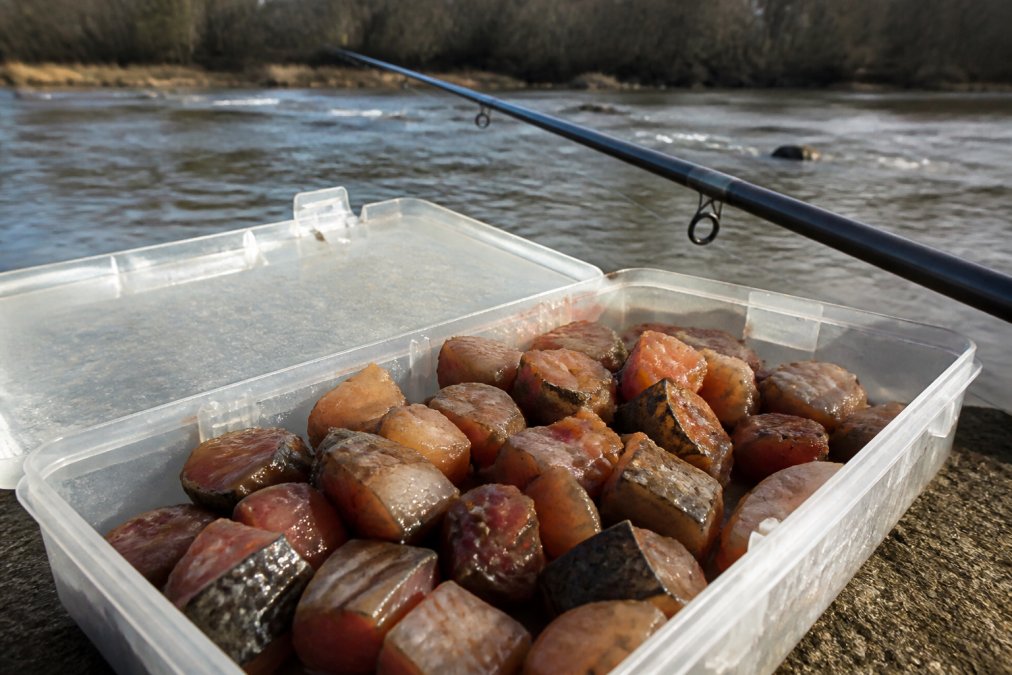
When you cast carp bait into the river, oils and amino acids release immediately, creating a scent plume that travels downstream. Catfish detect this chemical signal from significant distances, sometimes 50 feet or more depending on current and water clarity (peer-reviewed research).
Unlike soft baits that disintegrate within minutes, quality invasive carp bait maintains its shape long enough for catfish to locate, investigate, and bite. The preserved texture also prevents the bait from sliding off your hook during casting or strikes. The preservation process used in Blue River Carp, Inc. bait maintains structural integrity while enhancing scent profile, resulting in bait that performs like fresh-caught material but lasts months in your tackle box.
Scent Attraction and Freshness
Fresh bait releases maximum scent compounds immediately. Over time, those compounds oxidize and lose effectiveness. Preserved invasive carp bait maintains scent freshness through controlled processing, the bait you use three months after purchase smells as potent as the bait you used three weeks after purchase.
The scent compounds in carp bait are particularly effective for catfish because they mimic natural prey fish like shad and shiners, which have similar amino acid profiles to carp. When catfish encounter carp bait, their predatory response activates immediately.
Biodegradable Fishing Lures and Baits: Breaking Down the Options
True biodegradable bait must balance two competing demands: it must hold together long enough to be effective on the hook, but break down completely in water to avoid contributing to freshwater pollution. The best sustainable bait sits in the middle, it stays intact during your fishing session but breaks down fully within a reasonable timeframe once no longer actively fished.
Water-Soluble and Bio-Based Materials
Water-soluble components enhance scent dispersal by creating a cloud of dissolved compounds that fish detect from distance, while also beginning to break down naturally as soon as they contact water. Bio-based polymers derived from plant sources rather than petroleum can be engineered to break down under specific conditions, avoiding fragmentation into microplastics.
A quality sustainable bait maintains usable life of at least 2-3 hours while achieving full environmental breakdown within 30-90 days. Invasive carp bait from Blue River Carp, Inc. achieves this balance through preservation techniques that stabilize structure while using materials that break down naturally in freshwater environments. zero emission boating.
DIY Sustainable Bait Recipes for River Fishing
Making your own sustainable bait costs less than premium commercial options and gives you complete control over ingredients.
Cornmeal and Cottonseed-Based Dough Balls
Mix 2 cups cornmeal, 1 cup cottonseed meal, 1/2 cup flour, and water until you reach dough consistency. Optional additions include vanilla extract, anise oil, or garlic powder for scent. Form into golf ball-sized balls and use within 24-48 hours.
The advantage is complete biodegradability, cornmeal and cottonseed break down completely in water without contributing to microplastic pollution. The disadvantage is durability; dough balls soften quickly and may fall apart on aggressive strikes.
Ground Fish Chum and Pack Bait
Mix 1 container Preserved Ground Fish (available from Blue River Carp, Inc.), 2 cups cornmeal or crushed corn pellets, 1 cup cottonseed meal, and water until you reach wet sand consistency. Form into balls or pack into mesh bags.

This recipe stays intact much longer than pure cornmeal dough because ground fish acts as a binder. The scent profile is significantly stronger, and catfish respond aggressively to the combination of smell, texture, and taste.
Water Quality and Ecosystem Impact
The bait you use affects river water quality in ways most anglers never consider. Traditional bait sources contribute to pollution through waste runoff and escaped invasive species. Synthetic baits shed microplastics that accumulate in sediment and bioaccumulate in fish tissues.
Sustainable bait for river anglers minimizes these impacts through thoughtful sourcing and material selection. Using bait made from invasive carp actively improves water quality by reducing populations that outcompete native fish. The bait itself breaks down into components that aquatic ecosystems process naturally without accumulating in sediment.
According to the EPA's guidance on freshwater pollution sources, microplastics from consumer products including fishing gear represent an increasingly significant contamination pathway. By choosing baits that break down completely rather than fragmenting into microplastics, you reduce your contribution to this problem.
Regulatory Compliance and Best Practices for Sustainable Angling
Different states maintain different regulations regarding bait types and sources. Before using any bait, particularly invasive species bait, verify your local regulations. Most states actively encourage invasive carp bait because it supports removal efforts that protect native fish populations.
Best practices for sustainable angling include using only the amount of bait you'll fish with, recovering unused bait, choosing bait that breaks down completely if lost, supporting bait sources that don't spread invasive species, and practicing catch-and-release when appropriate.
Match your bait choice to your fishing style. If you fish frequently and need convenience, premium sustainable options like Blue River Carp, Inc. bait make sense. If you fish occasionally and can manage fresh bait properly, DIY recipes provide excellent performance at lower cost.
Choosing sustainable bait for river anglers means accepting that what works best on the water also benefits the ecosystem you're fishing in. Blue River Carp, Inc. transforms invasive carp that damage river health into premium bait that offers unmatched convenience with a 12+ month shelf life, requiring no refrigeration or freezing. With a 12+ month shelf life and scent infusions that stay potent through months of storage, our bait solves the core problems that make traditional bait frustrating. Get started with Blue River Carp, Inc. and experience the difference that sustainable, shelf-stable bait makes on every fishing trip.
Frequently Asked Questions
Q: What makes sustainable bait for river anglers more effective than traditional options?
A: Sustainable bait, especially invasive carp-based options, delivers superior scent attraction and longer freshness. Invasive Asian carp bait stays firm on the hook without refrigeration, maintains its potency for 12+ months, and creates a concentrated scent trail that draws catfish from greater distances. Traditional baits like chicken liver break down faster and lose effectiveness once exposed to water.
Q: Are biodegradable fishing lures as effective as conventional plastic baits?
A: Yes, biodegradable fishing lures perform equally well when made from quality natural ingredients. Water-soluble and bio-based polymer lures maintain structural integrity long enough to attract fish while breaking down naturally in freshwater ecosystems. The key difference is durability versus breakdown rate: premium biodegradable options stay intact for multiple casts while gradually degrading after loss, preventing long-term microplastic pollution.
Q: How long does sustainable bait actually stay fresh without refrigeration?
A: High-quality preserved bait, like invasive carp cut bait, maintains effectiveness for 12+ months when stored in a cool, dry tackle box. The preservation process removes moisture and applies protective compounds that prevent spoilage. This shelf stability eliminates the need for coolers or freezers, making spontaneous fishing trips convenient while reducing waste from expired bait.
Q: What's the environmental impact of using invasive carp bait for catfish?
A: Using invasive carp bait directly supports river ecosystem health. Asian carp removal reduces their population, which protects native fish species and aquatic habitat. These invasive species consume massive quantities of plankton and vegetation, damaging freshwater food chains. By harvesting invasive carp for bait, anglers contribute to ecological restoration while using a sustainable, non-toxic product that won't introduce microplastics into river systems.
This article was written using GrandRanker