
Is Chicken Liver Good for Catfish: A Complete Guide
Table of Contents
- Is Chicken Liver Good for Catfish?
- Best Bait for Channel Catfish and Other Species
- How to Keep Chicken Liver on a Hook
- Scent-Infused Cut Bait Benefits
- Chicken Liver vs. Other Catfish Baits
- Storage, Preparation, and Temperature Control
- Frequently Asked Questions
Last Updated: September 2, 2026
Is Chicken Liver Good for Catfish?
Chicken liver is one of the most effective baits for catfish fishing, and it's easy to understand why. The soft texture, strong scent, and natural appeal make it a go-to choice for anglers targeting channel catfish, blues, and flatheads. But here's what most anglers get wrong: chicken liver works best when you solve its biggest weakness, it falls apart on the hook too easily, especially after a few casts or when fighting a fish.
At Blue River Carp, Inc., we've spent years analyzing what separates a successful catfish trip from a frustrating one. The answer isn't always about finding the perfect bait, it's about using a bait that stays on your hook long enough to actually catch something. That's why we developed preserved, scent-infused cut bait from invasive carp. But before we get into alternatives, let's be clear: chicken liver absolutely works for catfish. The question is whether it works better than other options, and whether the hassle of keeping it fresh is worth the effort.
Best Bait for Channel Catfish and Other Species
Channel Catfish Preferences
Channel catfish are opportunistic feeders that respond aggressively to strong scents and soft baits. They hunt primarily by smell, which is why chicken liver triggers strikes so reliably. The organ meat releases scent compounds into the water column immediately, creating a scent trail that draws fish from a distance.
Channel catfish prefer baits that are easy to consume. Their mouth structure and feeding behavior favor soft, breakable pieces over hard or tough baits. Chicken liver fits this preference perfectly, it's soft enough to tear apart without effort, yet firm enough to stay on a hook for at least one or two casts if you're careful.
A common mistake is assuming all catfish have the same preferences. Channel catfish are smaller than blues or flatheads, so they're comfortable with baits that match their mouth size (fws.gov). Chicken liver chunks or whole chicken livers work well for channels in the 2-10 pound range. For larger channels (15+ pounds), you might want bigger pieces or tougher baits that stay intact longer.
Blue and Flathead Catfish: Different Appetites
Blue catfish and flathead catfish operate under completely different feeding rules than channel catfish. Understanding these differences changes how you approach bait selection.
Blue catfish are larger, more aggressive hunters that often prefer live bait or fresh-cut bait over organ meats. They're built for speed and power, and they hunt by sight as much as by scent. While chicken liver will catch blue catfish, it's not their preference. Blues often target shad, herring, or other fish-based baits. The soft texture of chicken liver can actually work against you with blues, they may mouth it and reject it before fully committing.
Flathead catfish are the most predatory of the three species (fws.gov). They're ambush hunters that target live fish almost exclusively in their natural behavior. Chicken liver rarely produces flatheads. If you're specifically targeting flatheads, live bluegill, shad, or live shiners are far more effective. Flatheads ignore dead baits and organ meats, they want movement and the profile of a living fish.
The practical takeaway: chicken liver is excellent for channel catfish, acceptable for blue catfish in a pinch, and nearly useless for flatheads.
How to Keep Chicken Liver on a Hook
Hook Selection and Rigging
The hook you choose determines whether your chicken liver stays on long enough to catch fish. This is where most anglers make critical mistakes.
Circle hooks are the best choice for chicken liver. Their curved design and inward-pointing barb hold soft baits better than traditional J-hooks. The wider gap of a circle hook also accommodates the soft texture without tearing it apart during the rigging process. Size matters too, use 2/0 to 4/0 circle hooks for most channel catfish applications. Larger hooks (5/0 to 8/0) work for bigger baits targeting larger channels or blues.

Treble hooks are popular for catfish but perform worse with chicken liver than circle hooks. The three points create more surface area for the bait to tear against, especially if you're casting repeatedly or dealing with current. Trebles shine with tougher baits like cut shad or stink bait, not soft organ meats.
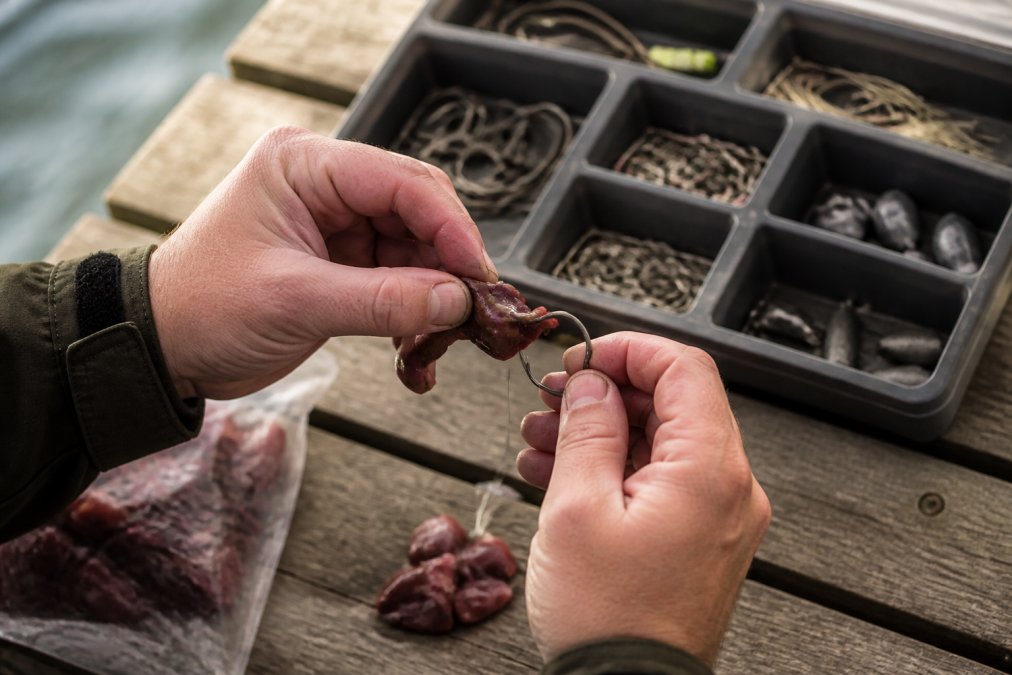
The rigging technique makes a huge difference. Thread the hook through the toughest part of the liver, typically the outer membrane or the thickest section. Avoid piercing the center, which causes the bait to break apart. If you're using a whole chicken liver, hook it once through the firm outer layer. If you're using chunks, hook through the firmest edge.
Toughening and Curing Techniques
Here's the part that separates successful anglers from frustrated ones: you can toughen chicken liver to make it stay on your hook dramatically longer.
The simplest method is salting. Lay chicken liver pieces on a paper towel and coat them generously with salt. Let them sit for 2-4 hours in a cool place. The salt draws moisture out of the liver tissue, firming it up considerably. Rinse the salt off before using. This method works well for same-day fishing but doesn't provide long-term storage.
Freezing is the next step up. Freeze chicken liver for 24-48 hours, then thaw it partially before fishing. The freeze-thaw cycle changes the cell structure, making the tissue firmer and more resistant to tearing. This approach extends usability but still requires refrigeration or a cooler.
For extended shelf life without refrigeration, chemical curing is necessary. Mix chicken liver with salt and a small amount of sugar (roughly 10:1 salt to sugar ratio). Pack it tightly in a jar and let it cure for 5-7 days in a cool place. The salt and sugar combination preserves the tissue while creating a firmer texture. The result is bait that stays on your hook for multiple casts and lasts for weeks without refrigeration.
Some anglers add smoke or drying to the process. Smoking chicken liver over low heat for 2-3 hours creates an even tougher exterior while maintaining the scent appeal. This produces bait that's nearly as durable as commercial preserved baits.
Scent-Infused Cut Bait Benefits
Scent-infused cut bait represents a different approach entirely, and it solves the durability problem at its root.
Preserved cut bait from invasive carp offers several advantages over fresh chicken liver. The preservation process toughens the tissue, so it stays on your hook through multiple casts and even during fights with larger fish. The scent infusion is intentional and potent, every piece releases attractant compounds immediately upon hitting the water.
The real advantage is convenience. Chicken liver requires refrigeration or constant attention to prevent spoilage. Cut bait from Blue River Carp, Inc. stays fresh for 12+ months without any refrigeration or freezing. You can keep it in your tackle box year-round, ready for spontaneous fishing trips. No cooler needed. No thawing required. This matters more than most anglers realize, how many times have you missed a fishing opportunity because your bait had gone bad?
Scent-infused cut bait also provides consistent results. Fresh chicken liver varies in scent intensity depending on age, storage, and handling. Commercial cut bait is formulated to release scent at a predictable rate. This consistency translates to more reliable catches.
The texture of preserved cut bait is another advantage. It's firm enough to withstand multiple casts and aggressive fish strikes, yet soft enough to release scent and attract fish aggressively. You're not choosing between durability and scent, you get both.
Chicken Liver vs. Other Catfish Baits
Gizzards and Shad: Direct Comparisons
Chicken gizzards are often mentioned as an alternative to chicken liver. They're tougher, which solves the durability problem immediately. Gizzards stay on the hook better than liver and can handle multiple casts without falling apart. However, gizzards release scent more slowly than liver. The tighter muscle tissue doesn't break down as quickly in water, so you get a weaker scent trail. For short-distance fishing in slow-moving water, this is acceptable. For distance casting or current fishing, chicken liver produces more aggressive strikes.
Cut shad is the middle ground. Shad is tougher than chicken liver but releases scent effectively. It's a fish-based bait, which appeals to a broader range of catfish species. Shad works well for blue catfish and channel catfish equally. The downside is availability, fresh shad requires either catching your own or purchasing from a tackle shop. It also spoils quickly, requiring refrigeration.
Stink bait is the opposite extreme. It's designed for maximum scent output and stays on the hook indefinitely. However, stink bait produces a different feeding response than natural baits. Some anglers swear by it; others find it less effective than fresh or preserved natural baits. Stink bait also creates a mess and requires careful handling.
Cost-Effectiveness and Convenience
Chicken liver is cheap. A pound of chicken liver costs only a few dollars at most grocery stores. If cost is your only consideration, chicken liver wins easily. But cost-effectiveness includes other factors: how much bait you waste, how often you need to replace spoiled bait, and how much time you spend managing storage.
Fresh chicken liver spoils within 2-3 days even with refrigeration (peer-reviewed research). If you fish once a week, you're likely throwing away half of what you buy. You also need a cooler, ice packs, or constant access to refrigeration. These hidden costs add up.
Preserved cut bait from Blue River Carp, Inc. costs more per pound initially, but you're buying bait that lasts 12+ months without any special storage. You buy it once and fish with it for a year. The per-trip cost is actually lower than chicken liver when you account for spoilage and storage equipment. Plus, preserved bait stays on your hook longer, meaning fewer casts wasted and more fish-catching opportunities.
Storage, Preparation, and Temperature Control
Proper storage determines whether your bait stays effective or becomes a liability.
Chicken liver requires cold storage. Fresh liver should be kept at 32-40°F (0-4°C). This means a cooler with ice packs for field use, or a refrigerator at home. Even with proper cooling, chicken liver deteriorates within 2-3 days. The tissue begins breaking down, releasing enzymes that cause decomposition. You'll notice a sour smell, that's the bait degrading, not just aging.
Temperature fluctuations are particularly damaging. If your cooler sits in the sun or warms up during the day, the liver degrades faster. Repeated thawing and refreezing (if you freeze it for longer storage) damages the cell structure, making it even softer and less durable on the hook.
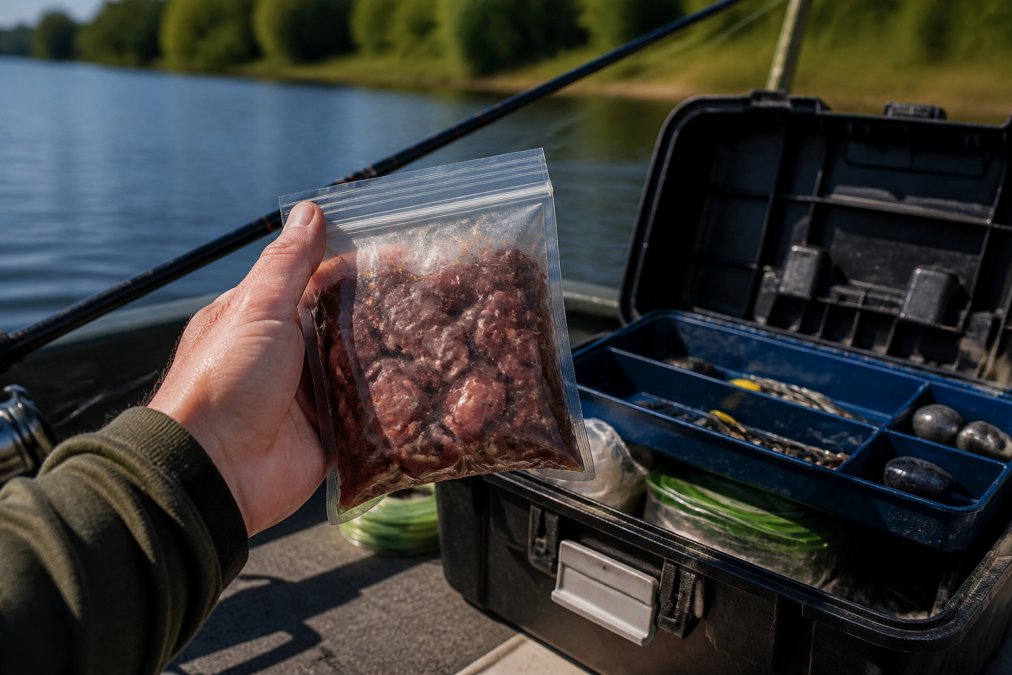
Preserved cut bait eliminates these concerns entirely. It's formulated to remain stable at room temperature. Your tackle box in the truck, your garage, your closet, any dry location works. No cooler. No ice packs. No temperature monitoring. The 12+ month shelf life means you can buy a supply and fish with it throughout the year.
If you do want to extend the life of fresh chicken liver beyond a few days, freezing works. Freeze it in individual portions so you only thaw what you need. Thaw in the refrigerator, not at room temperature. Once thawed, use it within a few hours. This approach gives you 2-3 weeks of usability instead of 2-3 days, but it still requires planning and refrigeration.
The practical reality: if you're a casual angler who fishes sporadically, preserved bait makes more sense. If you fish multiple times per week and have reliable cooler access, fresh chicken liver is acceptable.
Ready to stop worrying about whether your bait will stay fresh? Blue River Carp, Inc.'s preserved cut bait solves the durability and storage problems that make chicken liver frustrating. Our 10oz packages and 7oz packages stay fresh for 12+ months without refrigeration, stay on your hook through multiple casts, and deliver the scent intensity that triggers aggressive strikes from channel catfish. Whether you're a beginner simplifying your first fishing trip or an experienced angler tired of managing coolers, our veteran-made bait gives you the convenience and performance you need. Shop Blue River Carp, Inc. and fish with confidence, knowing your bait is ready whenever you are.


Frequently Asked Questions
Q: What type of liver is best for catfish bait?
A: Chicken liver works for catfish, especially channel catfish, but it has a major weakness: it's soft and falls off the hook easily. Fresh chicken liver produces better scent trails than frozen, but scent-infused preserved cut bait from invasive carp species offers durability and attractiveness. Beef liver is tougher but produces less scent. For results, preserved carp-based bait with added [blood](https://bluerivercarp.com/products/blue-river-carp-scents) or [shad oil](https://bluerivercarp.com/products/blue-river-carp-scents) scents stays on the hook longer while releasing attractants that trigger feeding behavior.
Q: How do you keep chicken liver on a hook?
A: Use a circle hook or treble hook with a wide gap to penetrate the liver firmly. Salt-cure the liver for 24-48 hours to toughen it, which reduces mushiness and improves hook retention. Wrap the liver in fine mesh or bait netting for extra security. Cast gently to avoid dislodging soft bait, and replace it frequently if it falls apart. Many anglers find that switching to preserved, pre-cured cut bait eliminates this problem entirely while maintaining the scent advantage.
Q: Is chicken liver effective for flathead catfish?
A: Chicken liver is less effective for flathead catfish than for channel catfish. Flatheads are aggressive hunters that prefer live bait or larger, tougher offerings. Fresh chicken liver can work for smaller flatheads, but it deteriorates too quickly for the longer soaks flathead anglers typically use. Blue catfish and channel catfish respond better to chicken liver, though both will hit preserved, scent-infused cut bait. If you're targeting flatheads specifically, live bluegill or shad are superior choices.
Q: Do catfish like chicken liver or gizzards more?
A: Channel catfish show a slight preference for chicken liver over gizzards due to higher fat content and stronger scent dispersion. However, gizzards are tougher and stay on the hook longer, making them more practical for extended fishing sessions. Blue catfish are less discriminating and will hit both equally. The advantage comes from scent-infused preserved bait, which combines the durability of cured liver with enhanced attractants like [blood oil](https://bluerivercarp.com/products/blue-river-carp-scents) or [shad oil](https://bluerivercarp.com/products/blue-river-carp-scents), triggering strikes.
This article was written using GrandRanker