
Live Bait Catfish Tips: Hook, Rig, and Catch More
Table of Contents
- Why Live Bait Outperforms Cut Bait for Active Catfish
- Hooking Techniques That Keep Your Bait Swimming
- Best Live Bait for Flathead Catfish: Bluegill, Shad, and More
- Catfish Rig Setups for Beginners: Slip Sinker, Carolina, and Bobber Rigs
- Scent-Infused Cut Bait Benefits: When Live Bait Isn't Practical
- Keeping Live Bait Alive and Active All Day
- Water Temperature, Depth, and Finding the Strike Zone
- Legal and Ethical Bait Sourcing: What Anglers Should Know
- Frequently Asked Questions
Last Updated: September 16, 2026
Why Live Bait Outperforms Cut Bait for Active Catfish
Live bait triggers a catfish's predatory instinct in a way dead bait cannot. A struggling bluegill or shad sends out movement, vibration, and scent simultaneously, and that combination is what pulls active catfish off structure and into the strike zone.
Live bait catfish fishing works because catfish are predators first and scavengers second. Channel catfish and flathead catfish both key in on injured or struggling prey, and a live baitfish swimming against the current broadcasts distress signals that cut bait simply cannot replicate. This guide covers the hooking techniques, rig setups, and bait care that separate a full stringer from a slow afternoon.

Cut bait still has its place, especially when catfish are finicky or when you're fishing heavy current where scent does the heavy lifting. But when fish are actively feeding, live bait is the sharper tool. Below, we'll show you exactly how to hook, rig, and present live bait so it stays lively and gets eaten.
U.S. Fish and Wildlife Service aquatic invasive species resources
Hooking Techniques That Keep Your Bait Swimming
The single biggest mistake anglers make with live bait is killing it on the hook. A baitfish that stops swimming stops attracting catfish, so every hooking technique below is built around preserving movement.
The two core methods are nose hooking and back hooking, and the right choice depends on your bait species and how you're fishing it.
Nose Hooking vs. Back Hooking: When to Use Each
Nose hooking means running the hook through the baitfish's upper lip or nostril area. It keeps the bait swimming naturally and lets it breathe, which matters for delicate baits like shad. Use nose hooking when you're fishing moving water or drifting, where you want maximum swimming action.
Back hooking places the hook just behind the dorsal fin, above the spine. This is the go-to for bluegill and sunfish because it holds the bait securely without hitting vital organs. Use back hooking when you're fishing a bobber rig or still water and need the bait to stay put cast after cast.
A common mistake is setting the hook too deep on either method. You want the hook point exposed and the bait's spine untouched. If the baitfish curls up or stops swimming within a minute, you went too deep.
Best Live Bait for Flathead Catfish: Bluegill, Shad, and More
Flathead catfish are the most predatory of the catfish family, and they prefer live bait over cut bait almost every time. The best live bait for flathead catfish is whatever baitfish is native to your water and sized to the fish you're targeting.
Here's how the common options stack up:
- Bluegill and sunfish: Hardy, widely available, and stay alive on the hook longer than most baits. Ideal for flatheads in the 5-20 pound range.
- Shad: The classic flathead bait, but shad are fragile. They die quickly unless you handle them carefully and keep them aerated.
- Bullhead and small catfish: Big flatheads eat other catfish. A 4-6 inch bullhead is a trophy-bait for oversized flatheads.
- Carp and sucker minnows: Tough, long-lived, and excellent for large flatheads holding in deep cover.
Match bait size to your target. A 3-inch bluegill catches eater-sized channels; an 8-inch bullhead is a bait for a fish you'll want to photograph. Flatheads also feed more at night, so a lively bait under a bobber after dark is one of the most reliable setups you can run.
Catfish Rig Setups for Beginners: Slip Sinker, Carolina, and Bobber Rigs
Catfish rig setups for beginners come down to three reliable patterns: the slip sinker rig, the Carolina rig, and the bobber rig. Each one solves a different problem, and you can fish all three with the same basic terminal tackle.
Slip sinker rig: An egg sinker slides on your main line above a swivel, then a leader runs to your hook. The sinker stays put on the bottom while the bait swims freely. This is the best all-around setup for bottom fishing.
Carolina rig: Similar to the slip sinker, but with a bead and a longer leader. The longer leader gives your bait more room to move, which helps in clear water or when fish are pressured.
Bobber rig: A slip bobber suspends live bait at a set depth. This keeps the bait out of snags and lets you watch for a take. It shines in shallow water and around cover.
| Rig | Best For | Leader Length | Sinker |
|---|---|---|---|
| Slip sinker | Bottom fishing, current | 12-18 inches | 1-3 oz egg sinker |
| Carolina | Clear water, pressured fish | 18-36 inches | 1-2 oz egg sinker |
| Bobber | Shallow water, cover | 12-24 inches | Split shot or none |
Leader Length, Swivels, and Hook Size (4/0-6/0 Guide)
Hook size selection is where beginners lose the most fish. For most live bait catfish fishing, a 4/0 to 6/0 circle hook handles everything from a 3-inch bluegill to a hand-sized bullhead. The 4/0 suits smaller baits and channel catfish; step up to a 6/0 for large baits and flatheads.
Circle hooks outperform offset hooks for live bait because they almost always hook the fish in the corner of the mouth, which means better hook penetration and fewer gut-hooked fish you have to release. If your local rules require circle hooks, this is not a compromise, it's an upgrade.
Leader length controls how much freedom your bait has. Short leaders (12-18 inches) keep the bait near the sinker and reduce tangles. Longer leaders (24-36 inches) let the bait roam and create a more natural presentation. A barrel swivel between your main line and leader prevents line twist and lets you swap rigs fast.
Scent-Infused Cut Bait Benefits: When Live Bait Isn't Practical
Scent-infused cut bait benefits show up exactly when live bait becomes a hassle. Keeping baitfish alive takes a bucket, an aerator, and constant attention. When you're fishing a quick evening trip, juggling kids, or dealing with bait that keeps dying, a shelf-stable cut bait removes the entire problem.
Cut bait lays down a scent trail that pulls catfish in from a wide area, which is why it dominates in muddy water, heavy current, and cold conditions where fish are less willing to chase. The trade-off is that it doesn't move, so you're relying on scent and vibration rather than the visual trigger of a struggling baitfish.
This is where Blue River Carp, Inc. fits for anglers who want a cut bait option that doesn't need a cooler. The bait is made from invasive Asian carp, stays fresh for 12+ months in the bag, and won't turn mushy on the hook. For anglers who fish once or twice a month, that shelf life means no wasted bait and no last-minute trip to the tackle shop.

If you're coming from chicken liver or a cheaper bait, expect a firmer bait that holds on the hook through a cast and a fight rather than sliding off on the retrieve.
Keeping Live Bait Alive and Active All Day
Bait maintenance is where most live bait trips quietly fall apart. A baitfish that's been in warm, oxygen-poor water for an hour is a dead baitfish, and dead bait on a live bait rig is the worst of both worlds.
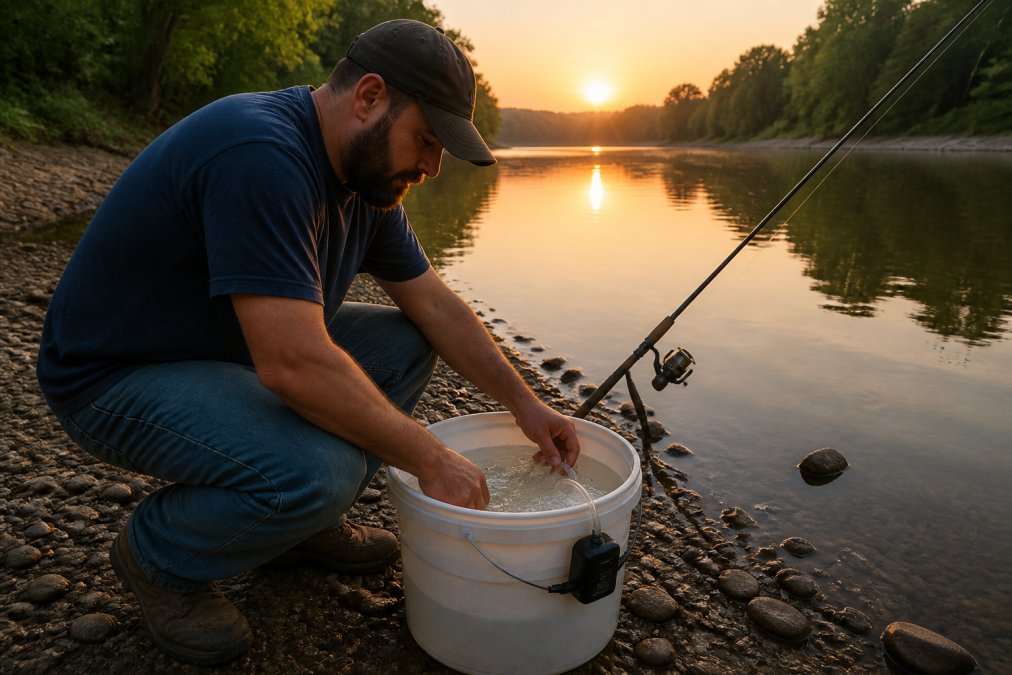
The essentials are simple: use a properly sized bait bucket, run an aerator, and change a portion of the water regularly to keep temperature down and oxygen up.
Water Temperature, Depth, and Finding the Strike Zone
Water temperature drives where catfish feed and how aggressively they chase. Understanding it turns random casting into a repeatable pattern.
Legal and Ethical Bait Sourcing: What Anglers Should Know
Bait sourcing rules vary by state, and getting them wrong can mean fines or worse, introducing invasive species into a waterway. Always check your state fish and wildlife agency's rules before you fish with live bait.
Frequently Asked Questions
What is the best way to hook live bait for catfish?
For active swimmers like bluegill or shad, nose hooking through both lips keeps the bait lively and swimming naturally. Back hooking just behind the dorsal fin works when you want the bait to stay deeper. Use a 4/0 to 6/0 circle hook for most channel and flathead catfish. Match hook gap to bait size so the point stays exposed for solid hook penetration.
Which catfish species prefer live bait over cut bait?
Flathead catfish are the strongest live bait takers, actively hunting bluegill, sunfish, and shad in the water column. Blue and channel catfish will hit both, but channel catfish often respond better to scent-heavy cut bait. If you target flatheads specifically, rig a live bluegill on a slip sinker setup near cover and let it swim.
How do you keep live bait alive while fishing?
Use a bait bucket with a battery-powered aerator and change a portion of the water every 30 to 45 minutes, especially in summer. Keep the bucket shaded and avoid crowding too many bait fish together. Shad are the most fragile; bluegill and sunfish tolerate warmer, lower-oxygen water better. Cooler water holds more oxygen, so add ice in small amounts on hot days.
What is a good live bait rig setup for catfish?
A Carolina rig works well for beginners: thread a 1/2 to 1 oz egg sinker on your main line, add a bead, tie a swivel, then attach an 18 to 24 inch leader with a 4/0 to 6/0 circle hook. This lets the bait swim while the sinker stays on bottom. For shallower water or suspended fish, a slip bobber rig keeps live bait in the strike zone.