
How to Transport Live Bait Safely: A Step-by-Step Guide
Table of Contents
- How to Transport Live Bait Safely: What You'll Need Before You Leave
- Step 1: Prep Your Bait Bucket and Water Before You Buy Bait
- Choosing the Right Container: Bait Bucket, Cooler, or Baitwell
- Water Source and Volume: Lake Water vs. Tap Water
- Step 2: How to Keep Minnows Alive in a Bucket During Transport
- Step 3: Bait Bucket Aerator Setup and Oxygen Management
- Step 4: Temperature Control and Stocking Density on the Road
- How Long Can Minnows Live in a Bucket? Transport Duration Limits
- How to Dispose of Unused Bait Without Spreading Invasive Species
- Common Mistakes That Kill Baitfish During Transport
- Frequently Asked Questions
Last Updated: October 12, 2026
How to Transport Live Bait Safely: What You'll Need Before You Leave
If you want to know how to transport live bait safely, the short answer is this: start with clean, cool water, keep the container sealed but aerated, and never move water from one lake to another.
This guide walks through the full process, step by step. We cover container choice, water volume, aeration, temperature, and the rules that vary by state. Most bait dies from bad water and heat, not from the drive itself.
Here is the part most anglers get wrong. They treat a bait bucket like a cooler. It is not. A cooler holds cold drinks. A bait bucket is a small life-support system, and it needs oxygen, clean water, and a steady temperature to work.
Below, we will show you exactly how to prep, load, and transport live bait so it stays strong from your driveway to the boat landing.
Step 1: Prep Your Bait Bucket and Water Before You Buy Bait
Fill your container at home before you ever reach the bait shop. Baitfish that sit in a bag on a hot counter for an hour start the trip already stressed.
Use lake or river water when you can. Tap water often carries chlorine and chloramine, which harm baitfish. If tap water is your only option, treat it with a water conditioner sold at any pet store.
A common mistake is overfilling the bucket. More water is not better. Baitfish need surface area for gas exchange, so leave several inches of air space at the top.
- Rinse the bucket with water only, never soap
- Fill to about two-thirds capacity
- Add a water conditioner if using tap water
- Keep the lid off until the bait goes in
Get the water close to the temperature of the water your bait came from. A sudden swing of more than a few degrees shocks minnows fast.
Choosing the Right Container: Bait Bucket, Cooler, or Baitwell
The right container depends on your trip length and how you are traveling. A simple bait bucket works for a short run to the landing. A cooler or built-in baitwell handles longer hauls and bigger loads.
Bait bucket: Best for short trips and wading. Look for a round, insulated model with a secure lid and a drain. Round buckets resist sloshing better than square ones.
Cooler: Best for long drives and hot days. A small hard-sided cooler holds temperature well and gives baitfish more room. Never use it for drinks and bait at the same time.
Baitwell or livewell: Best for boat owners. These are built into the boat and plumbed to circulate fresh water. They keep bait alive on the water for hours.
What most guides miss is the lid. A loose lid means sloshed water on your truck seat and bait on the floor.
Water Source and Volume: Lake Water vs. Tap Water
Water source matters more than most people think. Lake or river water from the same body you are fishing keeps baitfish in familiar conditions. Tap water is a backup, not a first choice.
Volume depends on how many baitfish you carry. A crowded bucket runs out of oxygen fast, even with an aerator. Give minnows room to swim and the water stays fresher longer.
| Water Source | Best For | Watch Out For |
|---|---|---|
| Lake or river water | Same-day trips on one water body | Never move it between lakes |
| Treated tap water | Backup at home | Chlorine and chloramine |
| Bottled or spring water | Short trips | Costs add up fast |
| Dechlorinated tap water | Home prep | Needs a conditioner |
Step 2: How to Keep Minnows Alive in a Bucket During Transport
Keeping minnows alive in a bucket comes down to three things: oxygen, temperature, and clean water. Nail all three and your baitfish will handle a two-hour drive without trouble.
Oxygen is the first limit. Minnows pull oxygen from the water, and warm water holds less of it. That is why a hot car is deadlier than a long drive.
Temperature is the second. Keep the bucket out of direct sun and off hot surfaces. A shaded floorboard beats a sunny back seat every time.
Water quality is the third. Baitfish release waste, and that waste builds up fast in a small container. Swap part of the water on long trips to keep it fresh.
- Keep the bucket shaded and off hot metal
- Crack a window for airflow
- Swap half the water every few hours on long hauls
- Do not feed baitfish before transport
Feeding is a trap. Uneaten food rots and fouls the water. Skip it. Baitfish do not need a meal during a day trip.
Step 3: Bait Bucket Aerator Setup and Oxygen Management
A bait bucket aerator is the single best investment for keeping bait alive. It pumps air into the water and keeps oxygen levels up, which is the number one reason baitfish survive long trips.
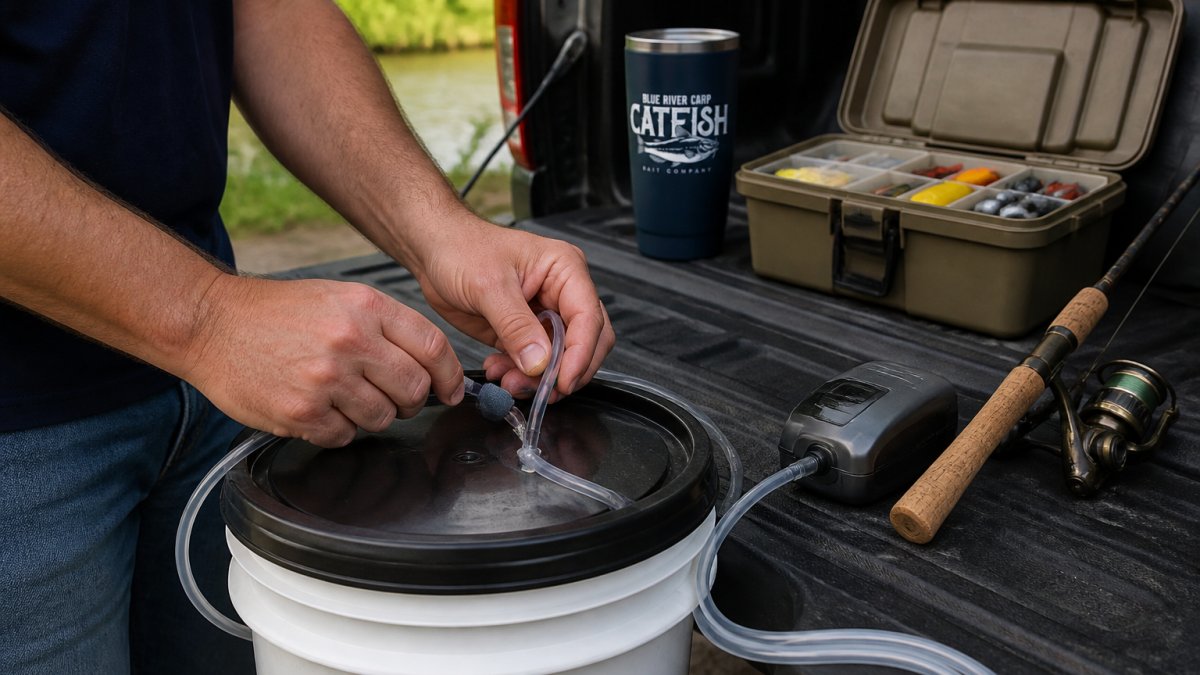
Battery-powered aerators are the most common choice. They run on AA or D-cell batteries and clip to the bucket rim. A single set of batteries usually lasts a full day on the water.
Setup is simple. Run the airline from the pump to an airstone at the bottom of the bucket. The airstone breaks the air into fine bubbles, which dissolve into the water better than big ones.
- Mount the pump above the waterline so it does not back-siphon
- Use an airstone for finer bubbles and better oxygen transfer
- Check batteries before every trip
- Keep a spare pump in your tackle bag
Step 4: Temperature Control and Stocking Density on the Road
Temperature control and stocking density decide how long your bait lasts. Cool water holds more oxygen, and uncrowded baitfish use less of it. Both work in your favor.
For temperature, keep the bucket out of the sun and add a little ice on hot days. Do not dump ice straight in. Put it in a sealed bag or a separate container so melting ice does not shock the bait with cold, fresh water.
Stocking density is the number one thing anglers ignore. A quarter-full bucket of minnows is fine. A packed bucket is a countdown to a die-off.
| Trip Length | Baitfish per Gallon | Aeration Needed |
|---|---|---|
| Under 1 hour | 8 to 10 | Optional |
| 1 to 3 hours | 5 to 6 | Yes |
| 3 to 6 hours | 3 to 4 | Yes, plus water swaps |
| All day | 2 to 3 | Yes, plus shade and ice |
These are working ranges, not hard rules. Watch your bait. If minnows crowd the surface and gasp, you have too many fish or too little oxygen.
How Long Can Minnows Live in a Bucket? Transport Duration Limits
Minnows can live in a bucket for several hours with proper aeration, and up to a full day with careful water management. Without oxygen and temperature control, they may last less than an hour on a hot day.
The real limit is not time. It is conditions. A well-aerated bucket in the shade keeps bait lively for a full day. A sealed bucket in the sun kills bait in minutes.
Signs your bait is in trouble:
- Minnows gulping at the surface
- Fish turning on their sides
- Cloudy or foul-smelling water
- Bait clustering in one corner
Act fast when you see these signs. Swap half the water, add shade, and check your aerator. Bait that recovers will fish fine. Bait that stays stressed will die on the hook.
How to Dispose of Unused Bait Without Spreading Invasive Species
Never dump leftover bait into the water. That single habit spreads invasive species, harms native fish, and breaks the law in many states. It is also the easiest mistake to avoid.
The safe move is to empty your bait bucket on dry land, well away from any water body. Trash the bait or take it home. Some anglers compost it. Others freeze it for later use as cut bait.
Water is the bigger risk. Invasive species travel in the water, not just on the fish. Never pour bucket water into a lake, river, or storm drain.
- Empty bait on dry land, far from water
- Never release bait into a water body
- Never dump bucket water into a lake or river
- Clean and dry your bucket before the next trip
Many state wildlife agencies publish bait rules that vary by water body. Check your state's rules before every trip, since some lakes ban certain bait species or require certified bait. The U.S. Fish and Wildlife Service invasive species resources explain how aquatic invaders spread and how anglers can stop them.
Common Mistakes That Kill Baitfish During Transport
Most baitfish die from a short list of avoidable mistakes. Fix these and your bait survives the trip almost every time.
The biggest killer is bad water.
Heat is the second killer. A sealed bucket in a hot truck turns into a sauna. Baitfish cook before you reach the ramp.
- Using untreated tap water
- Leaving the bucket in direct sun
- Packing too many baitfish per gallon
- Skipping aeration on long trips
- Moving water between water bodies
- Feeding baitfish right before transport
One more mistake: buying bait with no plan for it. If you fish once or twice a month, live bait can spoil between trips.
At Blue River Carp, Inc., we make scent-infused cut bait from invasive carp. It needs no refrigeration, no aeration, and no water.
Live bait works, but it demands water, oxygen, and attention from the moment you leave home. Miss one piece and your minnows pay for it.
Blue River Carp, Inc. delivers premium, scent-infused cut bait crafted from invasive carp.
Frequently Asked Questions
What container is best for transporting live bait?
A sealed bait bucket with a lid works for short trips, but a cooler or baitwell with a portable aerator is better for anything over 30 minutes. The container needs enough water volume to keep baitfish from crowding. A 5-gallon bucket handles a few dozen minnows; larger baitfish need more room. Match container size to the number of baitfish and trip length, and always secure the lid so water does not slosh out on turns.
How long can minnows live in a bucket without an aerator?
Minnows typically survive 1 to 2 hours in a bucket without aeration, depending on water temperature and how many fish are in the container. Warmer water holds less oxygen, so baitfish in summer die faster without a pump. A battery-powered bait bucket aerator extends that window to 8 to 12 hours or more. For any trip longer than an hour, run an aerator and change part of the water if it clouds.
Can you transport live bait across state lines?
Sometimes, but the rules vary by state and often by water body. Many states prohibit moving live baitfish across state lines because of aquatic invasive species risks. Some allow it only with a receipt from a licensed bait shop. Check your state fish and wildlife agency's bait regulations before any trip that crosses a border. Never dump leftover bait or bait water into a lake or river; that is how invasive species and diseases spread.
How should you dispose of unused live bait?
Never release leftover baitfish or bait water into the water body you fished. Dump the water on dry land away from storm drains, and either take the baitfish home for another trip or dispose of them in the trash. Some states require this by law. If you want to reuse the bait, keep it aerated in a bait bucket with fresh, dechlorinated water and it can survive another day or two.


