
Alternatives to Live Bait for Catfish: 7 Options That Work
Table of Contents
- Why Anglers Are Switching From Live Bait
- Scent-Infused Cut Bait Benefits for Catfish
- Best Bait for Channel Catfish: Top Non-Live Options
- Grocery Store and DIY Bait Alternatives
- How to Rig Artificial Catfish Bait
- Bait Storage, Cost, and Environmental Impact
- Frequently Asked Questions
Last Updated: September 25, 2026
Why Anglers Are Switching From Live Bait
Live bait still catches catfish. That part was never in question. The problem is everything that surrounds it: keeping shad alive in a bucket, hauling a cooler, and watching a $12 tub of chicken liver turn to soup in the July heat. This is why so many anglers are now weighing alternatives to live bait for catfish, and the gap between the two approaches has narrowed considerably.
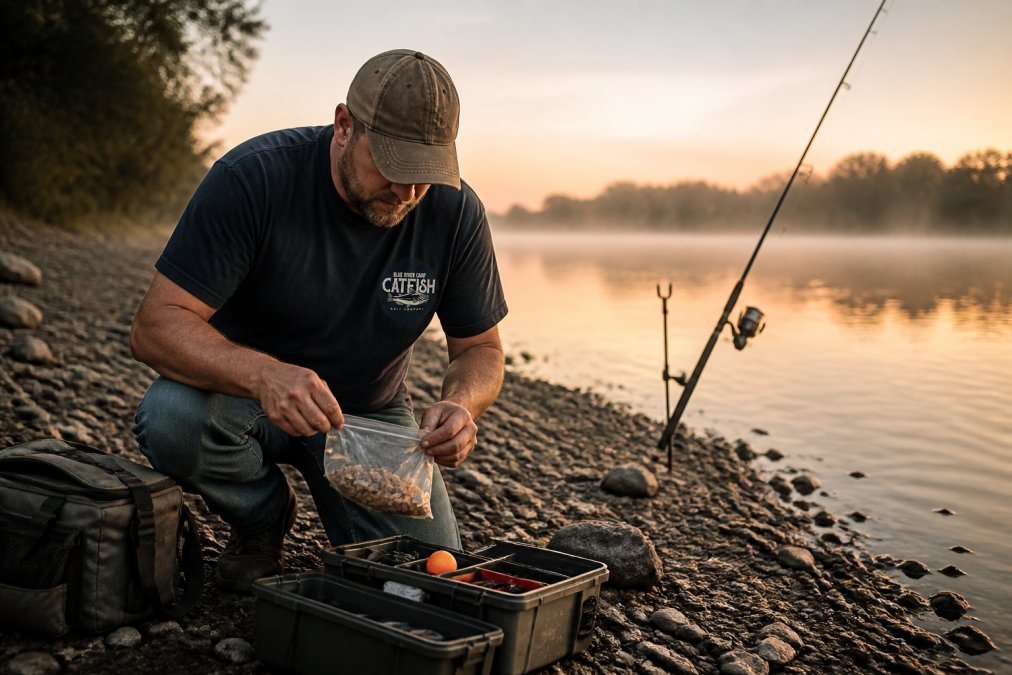
At Blue River Carp, Inc., we build our whole business around that shift. Scent-infused cut bait made from invasive carp solves the storage problem outright, and it stays on a hook instead of sliding off on the cast.

Convenience isn't the only driver.
Scent-Infused Cut Bait Benefits for Catfish
Scent-infused cut bait is preserved fish flesh treated with concentrated natural attractants, and it outperforms plain cut bait because it keeps releasing scent long after the initial cast. The scent is built into the meat rather than sprayed on the surface, so it survives current, depth, and time on the bottom.
How Scent Trails Trigger Catfish Feeding
Catfish rely on olfactory senses far more than eyesight. Barbels around the mouth detect dissolved amino acids in the water, and a steady scent trail turns a passing fish into a feeding fish. This is why freshwater fish sensory biology resources from the U.S. Geological Survey matter more to catfishing than lure color ever will.
Best Bait for Channel Catfish: Top Non-Live Options
The best bait for channel catfish is a scent-heavy, hook-hugging option that survives bottom fishing, and preserved cut bait beats most grocery-store substitutes on that score. Channel cats are the least picky of the three main species, but they still follow their noses.
Here's how the main non-live categories stack up:
| Bait Type | Scent Strength | Hook Retention | Storage |
|---|---|---|---|
| Preserved cut bait | High | Excellent | Shelf-stable |
| Scented dough and paste | Medium | Poor in current | Sealed tub |
| Grocery store meat | Medium | Fair | Refrigerated |
| Artificial lures | Low alone | Excellent | Dry storage |
Prepared Cut Bait vs. Live Bait
Prepared cut bait wins on convenience and hook retention; live bait wins on movement. Blue catfish and flathead respond strongly to a struggling baitfish, so live options still earn a place in the boat for trophy hunting.
Grocery Store and DIY Bait Alternatives
Grocery store bait works, and it's the cheapest way to start. Hot dogs, chicken liver, shrimp, and raw bacon all catch catfish, and most anglers already have them in the fridge. The trick is knowing which one to grab for the water in front of you, and how to keep it on the hook once it's there.
Here's how the common grocery options actually behave:
| Bait | Best For | Hook Retention | Storage Before Trip |
|---|---|---|---|
| Chicken liver | Channel cats in muddy water | Poor, flies off on hard casts | Refrigerate, use within 2 days |
| Hot dogs | Channel cats, bank fishing | Good | Fridge; freezes well |
| Raw shrimp | Blue cats, brackish water | Fair | Freeze; thaw in bag |
| Raw bacon | Channel cats, slow water | Fair | Fridge |
| Beef liver | Blue cats | Poor | Refrigerate, use fast |
DIY Dough and Stink Bait Recipes
DIY dough baits are the other classic route, and they're easy to mix at home. Most recipes follow the same structure: a dry binder, a liquid scent, and something to make the mix stick together.
Classic channel cat dough
- 1 cup wheat meal as the base binder
- 1/2 cup cornmeal to adjust stickiness
- Liquid scent: molasses, vanilla, or a splash of flavored soda
- Optional: a spoonful of fish oil or blood scent for a heavier trail
Cheese-and-garlic paste
- 1 cup grated cheddar or processed cheese
- 1/2 cup flour
- 2 cloves garlic, minced, or a teaspoon of garlic powder
- Water to reach a thick paste
Blood dough for blue cats
- 1 cup wheat meal
- 1/2 cup cornmeal
- 1/4 cup powdered blood or a few ounces of fresh blood
- Enough water to bind
Chumming Rules and Legal Notes
Before you scatter leftovers or soak a sack of dough in the water, check your state's rules on chumming. Some states restrict corn, others restrict blood, and a few ban chumming entirely in certain waters. The rules vary by species and by water body, so the safe move is to read your state fish and wildlife agency's current regulations before every trip.
How to Rig Artificial Catfish Bait
Rigging artificial catfish bait comes down to one rule: cover the hook point, leave the point exposed, and let the scent do the rest. Most failures trace back to a bait that slides down the shank on the cast.
Here's the sequence that works:
- Thread a bait stop or small piece of rubber band onto your line first
- Slide your chunk or strip onto the hook shank
- Push it up against the bait stop so it can't slide
- Confirm the hook point sits clear of the bait
- Add a drop of scent oil directly on the bait
Rigging for Bottom Fishing and Bobber Fishing
For bottom fishing, use a slip sinker rig with a 12- to 18-inch leader and a 5/0 to 8/0 circle hook. The sinker holds bottom while the bait drifts slightly, which spreads scent. Let the fish load the rod before you set the hook; circle hooks do the work on their own.
Bait Storage, Cost, and Environmental Impact
Bait storage is where preserved products separate themselves from everything else. Frozen bait needs a freezer, a cooler, and ice. Grocery bait needs refrigeration and a plan. Shelf-stable preserved bait lives in your tackle bag for over a year with no cooler at all.
Keeping Non-Live Baits Fresh on the Water
A long day on the water is where most non-live baits fail. Here's how to stretch each type:
- Chicken liver and beef liver: Pack them in a sealed container on ice, and add a pinch of salt to firm them up. Use them within the first few hours of the trip.
- Hot dogs and bacon: Keep them in a zipper bag out of direct sun. A small cooler with a frozen water bottle works fine for a half-day trip.
- Shrimp: Leave the shell on and keep them frozen until you're ready to bait up. Thaw only what you'll use in the next hour.
- Dough and paste baits: Store in a sealed tub in the shade. If the dough dries out, add a few drops of water and knead it back to life.
- Preserved cut bait: No cooler needed. Keep it sealed in the bag, out of direct sun, and it stays ready for the next trip.
Cost Per Catch: What You Actually Spend
The U.S. Fish and Wildlife Service on aquatic invasive species has documented how invasive carp damage native fisheries, which makes bait sourced from those fish a practical win as well as an environmental one. Using invasive carp as bait turns a management problem into a fishing advantage.
Environmental Impact of Synthetic vs. Natural Baits
Our answer to the storage problem is straightforward. Blue River Carp, Inc. Fish Attack Strips run $6.00 and stay on the hook far better than frozen bait. For bigger fish, the 10oz Chunks package at $10.00 targets trophy-class blues and flatheads, while the 7oz Nuggets at $10.00 suit everyday channel catfishing. A Scents and Oils bottle at $4.00 lets you refresh any bait mid-trip.


Frequently Asked Questions
What is the best bait for catfish if you don't want to use live bait?
Preserved cut bait made from invasive carp is one of the most effective options. It stays on the hook longer than live bait, requires no refrigeration, and has a 12+ month shelf life. Scent-infused strips and chunks release a strong scent trail that draws catfish in from a distance. For channel catfish, nuggets sized around 1 inch by 2 inches work well on rod and reel setups.
Do artificial lures work for catching catfish?
Yes, but they work best when paired with scent. Catfish rely heavily on their olfactory senses, so plain artificial lures without scent or flavor often get ignored. Adding a scent-infused strip to a lure or tube bait gives it the smell and flavor profile catfish are looking for. This combination works especially well in murky water where scent travels farther than sight.
How do you keep catfish bait on the hook without it falling off?
Preserved cut bait holds together better than frozen bait because it doesn't get mushy as it thaws.
Can you catch catfish using household items as bait?
Yes. Hot dogs, chicken liver, shrimp, and even soap have all caught catfish.
How do scent-infused baits compare to live bait for catfish?
Scent-infused cut bait offers convenience that live bait can't match. It requires no aerator, no cooler, and no last-minute bait shop run. It stays fresh for 12+ months in the bag and won't die or get mushy on the hook. In terms of effectiveness, catfish hunt primarily by smell, so a strong scent trail from preserved bait is effective.