

Which Gear Makes Messy Catfish Bait Easy to Handle?
Quick Summary
The essential gear for handling messy catfish bait is nitrile gloves, a resealable or sealed container, a towel for wiping hands and tools, and a bait knife with pliers. Keeping these together in one bag limits leaks, smears and odor on the trip.
- Thin nitrile gloves give dexterity for rigging, while heavier gloves suit cleaning fish.
- Keep a spare pair of gloves in the tackle box for when the first pair gets greasy.
- Use a snap-lid container and store it upright so oil does not pool at the seal.
- Use a microfiber towel for hands and tools, since it holds oil better than cotton.
- Rinse reusable tools with fresh water and dish soap after each trip, then dry them fully.
Table of Contents
- Why Messy Catfish Bait Needs the Right Gear
- Gloves for Handling Catfish Bait Without the Smell
- Catfish Bait Storage Containers That Stop Leaks
- Mess-Free Catfish Bait Options Compared
- Catfish Bait Tools and Tackle for Clean Rigging
- Setup and Cleanup Workflow for Messy Bait
- Choosing the Right Setup for Your Next Catfish Trip
- Frequently Asked Questions
Why Messy Catfish Bait Needs the Right Gear
Messy catfish bait is one of the fastest ways to ruin a fishing trip before the first cast. Cut bait leaves oil on your hands, sticky residue on your rod handle, and a smell that lingers in the truck long after you've packed up. The right gear keeps the job clean and quick.
Most anglers learn this the hard way: a dripping bag on the console or wet gloves in the cooler turns a relaxing outing into a chore. Firm, hook-ready cut bait in a resealable pouch helps reduce the leak and smear problem. A few simple tools still make handling easier and protect your gear.
Keep the approach simple: pick a few items that cover hands, storage and cleanup, and keep them in one place so you never hunt for them at the water's edge.
Gloves for Handling Catfish Bait Without the Smell
Disposable or washable gloves are the first line of defense. They keep oil off your skin and out of your fingernails, which is where catfish odor tends to stick around the longest.

Look for gloves that fit snugly enough to handle a hook without bunching. Thin nitrile gives good dexterity for rigging; heavier gloves suit cleaning fish or bigger chunks. Keep a spare pair in the tackle box for when the first gets greasy.
Watch out: gloves that are too loose will slip off when you pull a hook free, and that can drop a sharp hook into the sand or your leg.
Catfish Bait Storage Containers That Stop Leaks
Storage matters as much as handling. A resealable pouch keeps bait fresh and contained, but a second layer of protection helps when you're hauling gear over rough ground.
A small sealed container with a snap lid works well for pieces you've already rigged. Keep it upright in the tackle box so oil doesn't pool at the seal, and label containers by scent.
Blue River Carp, Inc. bait comes in resealable pouches and needs no cooler or freezer.
Mess-Free Catfish Bait Options Compared
Not every angler wants the same format, so the best choice depends on how you fish. Compare these mess-free catfish bait options to see which fits your trip. Blue River Carp, Inc. offers several preserved options, each suited to a different setup.
The 7oz Catfish Cut Bait Nuggets are about 1 x 2 inches and suit rod and reel, limb lines and trotlines. Browse the preserved nugget scents that need no cooler or freezer.
The 10oz Catfish Cut Bait Chunks run about 2 x 3 inches and are suited to blue cats, flatheads and other large predators. See the preserved chunk options for trophy catfish.
Looking for a complete kit? The Catfish Weekend Kit includes four 7oz nuggets (one each of Blood, Garlic, Shad and Natural) plus a 4oz Blood Scented Attractant, priced at $41.00 with free shipping. The Big-Cat Chunk Kit pairs four 10oz chunks with a pack of Garlic Fish Attack Strips for $44.00.
Blue River Carp, Inc. also carries Fish Attack Strips at $8.00 and Dried Cut Bait at $9.00.
| Option | Price | Best For | Mess Level |
|---|---|---|---|
| 7oz Cut Bait Nuggets | $11.00 | Rod and reel, limb lines | Low |
| 10oz Cut Bait Chunks | $12.00 | Trotlines, big cats | Low |
| Catfish Weekend Kit | $41.00 | Weekend trips, variety | Low |
| Big-Cat Chunk Kit | $44.00 | Blues, flatheads | Low |
| Dried Cut Bait | $9.00 | DIY scenting | Low to moderate |
Catfish Bait Tools and Tackle for Clean Rigging
A bait knife, pliers, and a towel are the floor, not the ceiling. The tools that actually keep a messy-bait trip clean match the consistency of the bait you use, liquid stink bait, dough or punch bait, cut bait, and prepared nuggets each make a different mess. Build a small dedicated kit around the bait you fish most and keep it in one bag.
The core kit, item by item.
- Bait knife. A 4- to 6-inch fixed-blade knife with a thin, flexible blade cuts nuggets and chunks cleanly and reaches into a bait container without a sawing motion. A folding knife works, but a fixed blade is easier to wipe down and has no hinge for residue to pack into. Keep a sheath on the belt or in the bait bag.
- Pliers. A 6- to 8-inch needle-nose or hook-removal plier lets you pull a hook free without touching bait and lets you crimp or cut line. A plier with a line-cutter notch covers two jobs.
- Line cutters or nippers. A small nipper on a lanyard keeps terminal rigs tidy and saves your knife edge for bait.
- Gloves. Thin nitrile for rigging, a heavier pair for cleaning fish. Keep a spare pair sealed in the bag.
- Towels. Two microfiber towels, one for hands and tools, one for the deck or tailgate mat. Microfiber holds oil better than cotton and rinses cleaner.
- Sealed container. A snap-lid tub sized to your bait, plus a smaller container for pre-rigged pieces.
- Waste bag or lidded tub. For gloves, trimmings, and used towels.
- Hand rinse. A small bottle of water with a splash of vinegar, or a pack of citrus-based hand wipes, for the end of the session.
Match the tool to the bait consistency. Liquid stink bait is hardest to contain, it needs a sealed screw-lid tub, a dedicated syringe or sponge applicator, and gloves every time. Dough and punch bait is sticky; a punch-bait tool or spring-loaded holder keeps it on the hook, and a towel is mandatory.
Bank versus boat. On the bank, a folding table or tailgate is your work surface, and a lidded bucket doubles as waste container and bait rest. On a boat, a deck towel and a bungeed waste tub keep gear from sliding, and a small tool bag clipped to a seat pedestal keeps knife and pliers within reach.
Hooks and terminal tackle. Match hook size to bait size, not the fish you hope to catch. A 3/0 circle hook suits most nugget and chunk setups; step up to 5/0 or larger for big chunks and flatheads. Circle hooks set in the corner of the mouth and reduce deep hooking, meaning less fish handling and less bait residue on your hands.
Watch out: a bait knife left open on a boat deck or a bank slope is a slip-and-cut waiting to happen, and a greasy glove is the usual reason a hook slips while you are pulling it free. Wipe the glove, sheath the knife, and re-rig on the towel.
Cleaning and maintaining reusable tools. Rinse the knife, pliers, and containers with fresh water and a little dish soap after every trip, then dry fully, bait oil left on a blade or in a plier hinge turns rancid and transfers to next trip's gear. Wipe the bait container with a paper towel and air it out open before the lid goes back on.
Setup and Cleanup Workflow for Messy Bait
Most guides tell you which tools to buy and stop there.
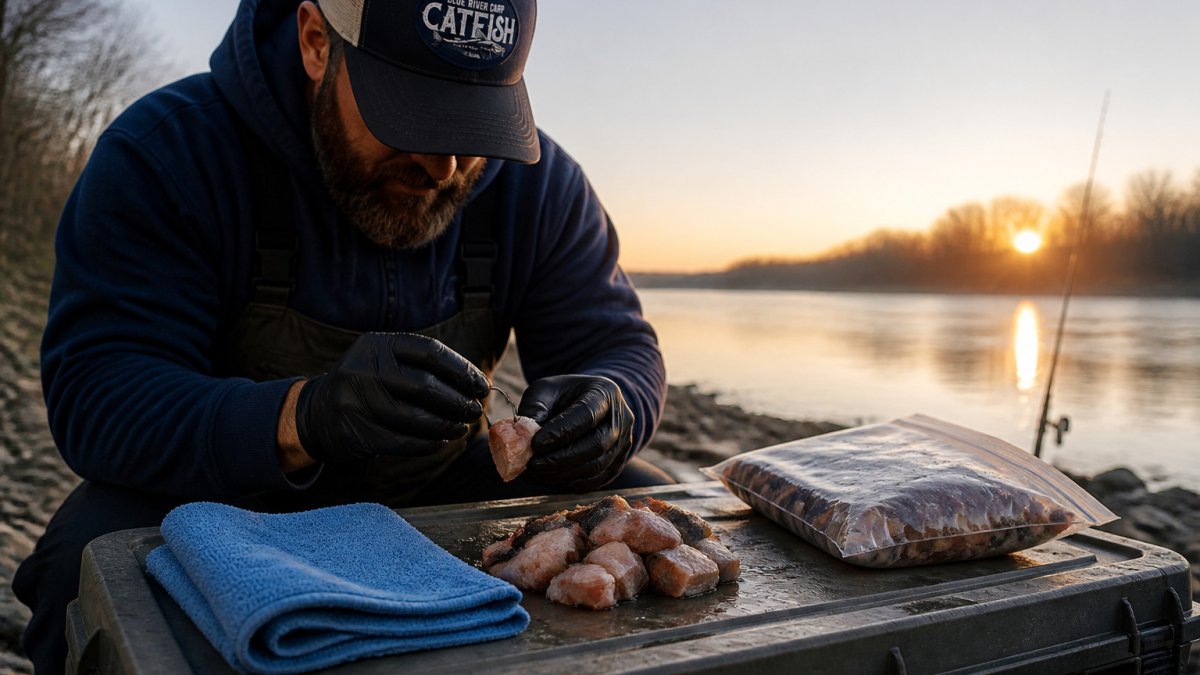
Before you leave the house. Pre-cut what you can, portion nuggets and chunks into a sealed container the night before so you're not cutting bait on a windy bank with a knife balanced on your knee.
At the water: lay out a work zone. Open the tailgate or clear a flat spot on the boat deck and lay a towel down as a mat.
Rig in batches, not one at a time. Cut or pull out only the pieces you need for the next few casts, rig them, and close the container.
Handle with gloves, wipe with the towel, and keep the two separate. Put gloves on before opening the bait and take them off before touching the reel, phone, or cooler lid. Wipe the glove on the towel after each rig rather than wiping bare hands. When the glove gets slick, change it, a greasy glove slips on a hook shank and is the usual reason a hook ends up in a finger.
Watch out: a knife set down on a slick boat deck or a sloping bank slides, and a bait knife is usually the sharpest blade on the trip. Keep it on the towel or back in its sheath between cuts, never balanced on the container lid.
Contain the waste as you go. Keep a heavy-duty zip-top bag or small lidded waste tub in the bait bag for gloves, trimmed pieces, and used towels.
End-of-trip cleanup, in order. Rinse reusable tools, knife, pliers, container, and the outside of the bait bag, with fresh water before residue dries. Soap and water on the knife and container, then a dry towel. Turn gloves inside out and bag them.
Bank versus boat. On the bank, the work zone is the tailgate or a folding table, and the waste bag goes back in the vehicle, not on the ground.
Odor control after the trip. Wash hands with soap and water, then rinse with a mix of water and a little vinegar or lemon juice if the smell lingers, an acidic rinse cuts fish oil better than soap alone. Don't use scented hand sanitizer before handling food or touching your face.
The whole sequence adds maybe ten minutes at the ramp and ten at home, and saves the hour you'd otherwise spend scrubbing a cooler, rod grip, and truck bed after the smell has set in.
Choosing the Right Setup for Your Next Catfish Trip
Your setup should match the fishing you plan to do. For a short bank trip with rod and reel, a 7oz nugget pack, a few gloves, a towel and a sealed container cover most needs. For trotlines or bigger cats, add 10oz chunks and a bit more line strength.
Start with the basics and add tools as you learn what slows you down. Blue River Carp, Inc. bait needs no cooler or freezer, so your gear list stays short and light. Pack what you'll use, leave the rest at home, and you'll spend more time fishing and less time cleaning up. Read a complete guide to effective catfish fishing to round out your plan.
Frequently Asked Questions
Should I wear gloves when handling catfish?
Gloves are a practical choice when you handle cut bait, because the oils, blood and scent in strong baits transfer easily to skin and stay on clothing. Nitrile or disposable food-grade gloves give a secure grip on slippery pieces and keep odor off your hands between casts. Change gloves if they tear, and rinse your hands with soap and water after you finish rigging. Gloves also protect against fish spines and sharp fillet edges when you handle caught fish.
What is the best way to store catfish bait while fishing?
Keep bait in its resealable pouch or a sealed container. Blue River Carp cut bait is shelf-stable for 12+ months and does not need a cooler or freezer, so a sealed bag in a dry tackle box works well on a day trip. Store scented oils and attractants upright in leak-proof bottles, away from your gear, so spills do not soak into tackle or line.
Does WD-40 attract catfish?
WD-40 is not a bait and is not designed to attract catfish. Anglers who want scent should use a dedicated attractant made for fishing. Blue River Carp's Scents and Oils, including Blood Scent and Shad Oil, are made to add odor to cut bait and lures, and they are sold at $4.99 each. Use only fishing-grade products on your bait and keep non-fishing lubricants off hooks and lines, since they can affect how bait holds and how fish respond.
How do you clean catfish bait residue from fishing gear?
Rinse rods, reels and pliers with fresh water soon after use, then wipe them down with a microfiber bait towel. Blood-based scents can stain fabric and carpet, so clean tackle boxes and vehicle floors promptly. Wash towels and gloves in hot water and let them air dry before the next trip, since trapped odor builds up over time. Keep a dedicated bag for used towels so residue stays contained until you can wash them.


