
Does Chicken Liver Work for Flathead Catfish?
Table of Contents
- Does Chicken Liver Work for Flathead Catfish? The Short Answer
- Chicken Liver vs Live Bluegill vs Cut Bait: Side-by-Side Comparison
- Why Chicken Liver Catches Channel Cats but Struggles With Flatheads
- The Best Bait for Flathead Catfish: What Actually Lands Big Fish
- Live Bait for Flathead Catfish: Rules, Rigging, and Reality
- How to Keep Chicken Liver on a Hook (If You Still Want to Try It)
- Alternatives to Chicken Liver for Catfish: Shelf-Stable Options That Stay on the Hook
- Conclusion
- Frequently Asked Questions
Last Updated: October 18, 2026
Does Chicken Liver Work for Flathead Catfish? The Short Answer
Chicken liver works for channel catfish. For flathead catfish, it is a weak choice at best. Flatheads are obligate predators that key in on live and freshly cut fish, and a soft, bloody piece of liver rarely survives long enough on a hook to matter. This guide from Blue River Carp, Inc. breaks down when liver earns a cast, when it wastes one, and what to throw instead when flatheads are the target.
The honest answer to "does chicken liver work for flathead catfish" is: occasionally, by accident, and almost never on purpose. Flatheads have a well-documented preference for live baitfish. Liver catches fish, just mostly the wrong species.
Below, we compare liver, live bluegill, and cut bait side by side, explain the species gap, and show you the rigging tricks that keep soft bait on the hook. But first, here is what most guides get wrong: they treat all catfish as one fish. They are not.

Chicken Liver vs Live Bluegill vs Cut Bait: Side-by-Side Comparison
Three baits, three different jobs. Chicken liver is a scent bait built for channel cats. Live bluegill is a predator bait built for flatheads. Cut bait sits between them, carrying real fish scent and flesh in a package that stays on the hook. The comparison below is about behavior, not brand loyalty. Match the bait to the species you are actually fishing for.

Comparison Table: Scent, Durability, and Target Size
| Bait | Scent Strength | Hook Durability | Best Target Species | Typical Size Class |
|---|---|---|---|---|
| Chicken liver | Very strong, blood-heavy | Poor, tears off easily | Channel catfish | Small to medium |
| Live bluegill | Moderate, natural | Excellent, swims on hook | Flathead catfish | Medium to large |
| Cut bait (fish chunks) | Strong, oily fish scent | Good, firm flesh | Flathead, blue, channel | Medium to large |
| Preserved carp chunks | Strong, infused scent | Very good, stays firm | Flathead, blue, channel | Medium to large |
The pattern is clear. Liver wins on scent and loses on durability and species fit. Live bait and cut bait flip that equation.
A Decision Guide by Goal and Condition
The table above tells you what each bait does. This guide tells you when to reach for it. The single most useful question is: what is your goal tonight?
If your goal is to catch any catfish, especially channel cats: chicken liver is a reasonable choice. Channel catfish are opportunistic scavengers that follow scent, and liver throws a loud one.
If your goal is specifically flathead catfish, especially larger fish: live bluegill is the top choice where legal, with fresh cut bait as the practical second.
If the water is cold or flatheads are pressured: downsize slightly and slow everything down.
If you are fishing current or heavy cover: durability matters more than scent. Cut bait and preserved chunks hold together through a cast and a soak far better than liver.
If you are fishing at night: flatheads feed more actively after dark, and live bait presented near structure is the classic pattern.
If you are bank fishing with limited gear: preserved cut bait needs no cooler and stays firm on the hook, which makes it the lowest-maintenance option. Liver demands frequent rebaiting and a clean hands routine.
The takeaway is not that one bait is best.
Why Chicken Liver Catches Channel Cats but Struggles With Flatheads
Chicken liver catches channel catfish because channels are opportunistic scavengers. They follow scent, and liver throws a loud one. Flatheads are a different animal: they are ambush predators that feed heavily on live fish, and their senses are tuned to movement and fish-shaped profiles rather than a cloud of blood.
A flathead sitting under a log is not sniffing around for poultry byproducts. It is watching for something that swims. That is the core mismatch, and no amount of soaking liver in garlic changes it.
Anglers do report the occasional flathead on liver. Treat those as outliers, not a strategy. If you are specifically chasing flatheads, the bait choice is a species question first and a scent question second.
The Best Bait for Flathead Catfish: What Actually Lands Big Fish
The best bait for flathead catfish is live baitfish, with bluegill at the top of most anglers' lists. Flatheads are structure-oriented predators, and a live bluegill pinned near cover gives them exactly what they hunt: movement, profile, and a natural scent trail.
Cut bait is the practical second choice. Fresh chunks of fish release oils and blood while holding together on the hook far better than liver. For big flatheads, bait size matters too. A whole baitfish or a large chunk filters out small fish and presents a meal worth moving for. While chicken liver remains a staple for many anglers, the nuances of scent dispersal become apparent when comparing liver treats to other organ-based options.
10oz Catfish Cut Bait Chunks – Preserved Real Fish, 6 Scents →
This is where preserved cut bait earns its place in the boat. Our 10oz Catfish Cut Bait Chunks are cut roughly 2 by 3 inches, sized for bigger fish, and they list flatheads among the species they target. They stay firm on the hook and need no cooler, which matters on a long sit.
Live Bait for Flathead Catfish: Rules, Rigging, and Reality
Live bait for flathead catfish is effective, and it comes with rules. The legal landscape is the part most anglers skip, and it is the part that can cost you a citation. Baitfish regulations vary widely by state and even by waterbody.
The ethical dimension matters too. Moving live bait between waters risks introducing disease or invasive species. Even where legal, many anglers choose to use only baitfish caught from the same water they are fishing, or to use cut bait instead.
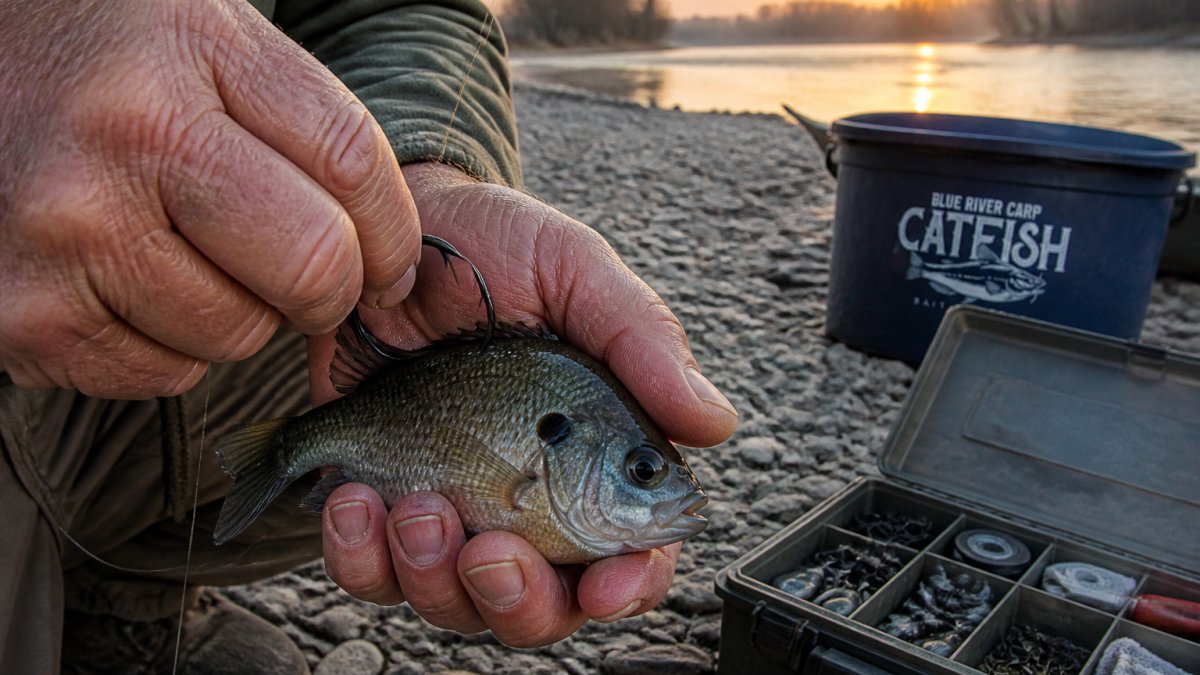
Rigging matters as much as legality. A live bluegill needs a hook that leaves it swimming naturally. A circle hook set through the back or the lips keeps the bait lively and reduces gut-hooking.
Hook size should match the bait. A bluegill in the 3- to 5-inch range pairs well with a 5/0 to 7/0 circle hook. Larger baits call for larger hooks.
Handle live bait with wet hands and change it when it stops swimming. A dead bluegill on a hook is cut bait with extra steps, and you already have better cut bait options.
How to Keep Chicken Liver on a Hook (If You Still Want to Try It)
Keeping chicken liver on a hook comes down to three moves: dry it, wrap it, and stop casting like you are mad at the water. Fresh liver is wet and fragile, so pat it dry with paper towels and let it firm up in the air before it goes near a hook.
Next, use a bait threader or a piece of pantyhose to bind the liver to the shank. Anglers have used the stocking trick for decades because it works: the mesh holds the liver together through a cast and a soak. A treble hook or a bait holder hook with barbs on the shank also helps.
Finally, lob the bait rather than snapping a hard cast. Underhand casts and short pitches keep soft bait intact. Soaked or frozen liver firms up further, though neither fixes the flathead problem.
Alternatives to Chicken Liver for Catfish: Shelf-Stable Options That Stay on the Hook
Alternatives to chicken liver for catfish solve the two problems liver creates: it falls off, and it does not target flatheads. Preserved cut bait made from invasive carp addresses both. The flesh is firm enough to hold on a hook through a long soak, and it carries real fish scent rather than poultry blood.
Shelf stability is the quiet advantage. A bait that lives in a resealable pouch for 12+ months and needs no refrigeration means you can keep it in the truck and fish on a whim. For casual anglers and families, that removes the messiest part of the trip.
Our Big-Cat Chunk Kit bundles four 10oz chunk packs in Blood, Garlic, Shad, and Natural scents plus a pack of strips, at $44.00. For channel cats and smaller presentations, the 7oz Catfish Cut Bait Nuggets run $11.00 and are pre-cut around 1 by 2 inches. Add a bottle of scented attractant for $4.99 if you want a louder trail.

These baits are veteran-owned and made in Indiana, and they are built to stay firm instead of turning to mush on the hook.
Conclusion
The hard part is not finding bait. It is matching the bait to the fish in front of you, and liver keeps failing that test on flathead water. If you want a bait that stays on the hook, carries real fish scent, and does not need a cooler, our preserved carp chunks are ready when you are. Get started with Blue River Carp, Inc. and keep a flathead-ready bait in the truck all season.
Frequently Asked Questions
Does chicken liver work for flathead catfish?
It can catch flatheads, but it is not a reliable bait for them. Flatheads are predatory and respond far more consistently to live baitfish like bluegill and to fresh cut bait. Chicken liver's soft texture falls off the hook quickly and its scent profile appeals more to channel and blue catfish. Anglers targeting flatheads usually do better with live bluegill, cut carp, or firm preserved cut bait that stays on the hook through a long soak.
Is chicken liver better for channel catfish or flathead catfish?
Chicken liver is a stronger choice for channel catfish. Channel cats are opportunistic feeders that follow strong scent, and liver's blood and odor draw them in. Flatheads are obligate predators that key in on live or freshly cut fish. If you are fishing a mixed waterway and want channel cats, liver is worth trying. If flatheads are the target, switch to live bait for flathead catfish or a firm cut bait option.
How do you keep chicken liver on a catfish hook?
Wrap the liver in a piece of nylon stocking or thread it on a treble hook with a bait stop. Some anglers freeze liver slightly first so it firms up, then hook it through the tough membrane. Even with these tricks, liver breaks down after 10 to 15 minutes in warm water. That is why many anglers move to preserved cut bait chunks that hold their shape on the hook for a much longer soak.
What bait should you use instead of chicken liver for flathead catfish?
Live bluegill, green sunfish, and fresh cut carp are the most common substitutes. For a mess-free option, preserved cut bait made from invasive carp gives you real fish scent without the cooler. Blue River Carp's 10oz Catfish Cut Bait Chunks ($12.00) are cut roughly 2 x 3 inches and hold up on rod and reel, limb lines, and trotlines. The Big-Cat Chunk Kit ($44.00) bundles four scents for anglers chasing bigger fish.
Are live bait or cut bait better for flathead catfish?
Live bait wins for big flatheads in most situations. A live bluegill on a slip rig gives off vibration and movement that trigger a flathead's predatory strike. Cut bait works well in current, on set lines, and when live bait is hard to keep alive. Many anglers carry both: live bluegill for active fish and cut bait for soaking. Check your state's rules on live baitfish before you fish, since transport and use restrictions vary.


