
Best Catfish Bait for Summer Fishing
Table of Contents
- Why Catfish Bait Selection Matters in Summer Heat
- Cut Bait vs. Live Bait: Which Works Better for Summer Catfishing
- Top Cut Bait Options: Gizzard Shad, Blood, and Scent-Infused Choices
- How to Keep Cut Bait Fresh Without Refrigeration
- Best Bait for Bank Fishing in Summer Conditions
- Summer Catfishing Rigs: Matching Bait to Setup
- Bait Presentation and Scent Trail Techniques
- Night Fishing Strategies and Seasonal Feeding Patterns
Last Updated: August 27, 2026
Why Catfish Bait Selection Matters in Summer Heat
Summer heat transforms how catfish feed. Water temperatures above 80 degrees push catfish deeper and make them more aggressive hunters but also more selective about what they'll eat (peer-reviewed research). Your bait choice directly impacts whether you catch fish or waste a trip.
Summer catfishing requires baits that maintain scent integrity in warm water, stay on the hook through multiple casts, and don't deteriorate before you fish.
Cut Bait vs. Live Bait: Which Works Better for Summer Catfishing
Cut bait dominates summer catfishing because scent dispersal accelerates in warm water. When you cut fresh fish, you create a scent trail that travels through warm water faster than live bait can produce it. Catfish rely heavily on smell to locate food, and summer's heat accelerates scent molecule dispersal.
Live bait struggles in summer heat. Minnows and sunfish tire quickly, die faster, and stop producing the natural oils that attract catfish. Cut bait holds together through multiple casts, temperature swings, and extended soak times, while live bait deteriorates rapidly in warm water, changing the scent profile and reducing effectiveness.
Top Cut Bait Options: Gizzard Shad, Blood, and Scent-Infused Choices
Gizzard Shad: The Summer Standard
Gizzard shad is the gold standard for summer catfish bait. Channel catfish, blue catfish, and flatheads all respond aggressively to shad chunks in warm water. Summer water temperatures enhance shad's effectiveness by accelerating the release of amino acids and oils from shad meat, creating a stronger scent trail (peer-reviewed research). The meat density of gizzard shad prevents it from falling apart on the hook, allowing you to fish longer without replacing bait.
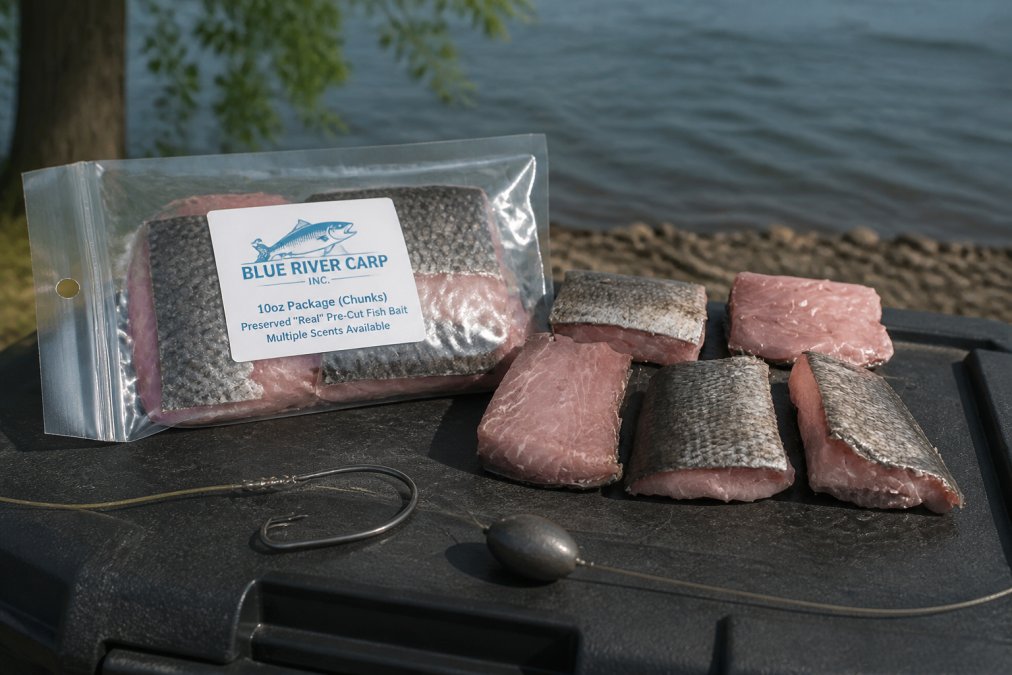
Blue River Carp's preserved gizzard shad chunks arrive ready to fish with no thawing or preparation. The 10oz chunks suit trophy blue catfish and larger channels; the 7oz nuggets work equally well for smaller channels and bullhead catfish.

Blood and Garlic Scents: Proven Attractants
Blood scent triggers aggressive responses in catfish during summer. The ammonia compounds in blood create a strong olfactory signal that travels through warm water faster than natural fish oils (peer-reviewed research). Garlic compounds work differently, they stimulate feeding behavior through sensory overload, making catfish more aggressive and less selective about striking.
Blue River Carp infuses blood and garlic scents directly into preserved carp bait during processing, not as a spray. This means scent releases gradually and consistently throughout your fishing session.
Preserved Carp Bait: Shelf-Stable Performance
Preserved carp bait solves the summer storage problem entirely. No refrigeration needed, it stays shelf-stable for 12+ months, ready year-round without planning ahead. Summer heat doesn't degrade preserved carp bait the way it does fresh fish. The preservation process removes moisture and applies protective compounds that prevent bacterial growth.
Carp oils contain high levels of omega-3 fatty acids and oleic acid, creating a scent signature that travels through warm water exceptionally well. Blue River Carp's preserved carp bait chunks and nuggets are ready to use straight from the bag with no thawing or preparation.
How to Keep Cut Bait Fresh Without Refrigeration
Preserved cut bait is already processed to prevent bacterial growth, maintaining scent and integrity without a cooler. Store it in a cool, dry location, your tackle box, truck, or backpack, away from direct sunlight. The resealable bag design prevents air exposure, the primary enemy of bait durability. Reseal immediately after removing bait.
Temperature matters less than most anglers think. Preserved bait is stable at 90 degrees because the preservation process has already eliminated conditions bacteria need to multiply. Air exposure and physical damage matter more. For multi-day events, preserved cut bait eliminates the cooler problem entirely, no ice, no melting water, no spoilage concerns.
Best Bait for Bank Fishing in Summer Conditions
Bank fishing in summer demands baits that stay on the hook through multiple casts and don't require constant replacement. Cut bait is your best option because it's durable, delivers strong scent, and doesn't require the active management that live bait demands.
Smaller nuggets work better for bank fishing than large chunks. A 7oz nugget at approximately 1" x 2" is easier to cast repeatedly and presents a more natural profile to cautious summer catfish. Set multiple rods if regulations allow, switching between scents every 20-30 minutes until you identify what triggers strikes.

Current matters more than depth for summer bank fishing. Position rods in current breaks where water flows around structure and creates eddies. Catfish use current breaks to rest and intercept drifting food. Your bait in a current break produces better results than the same bait in slack water.
Summer Catfishing Rigs: Matching Bait to Setup
Slip Sinker and Circle Hook Rigs
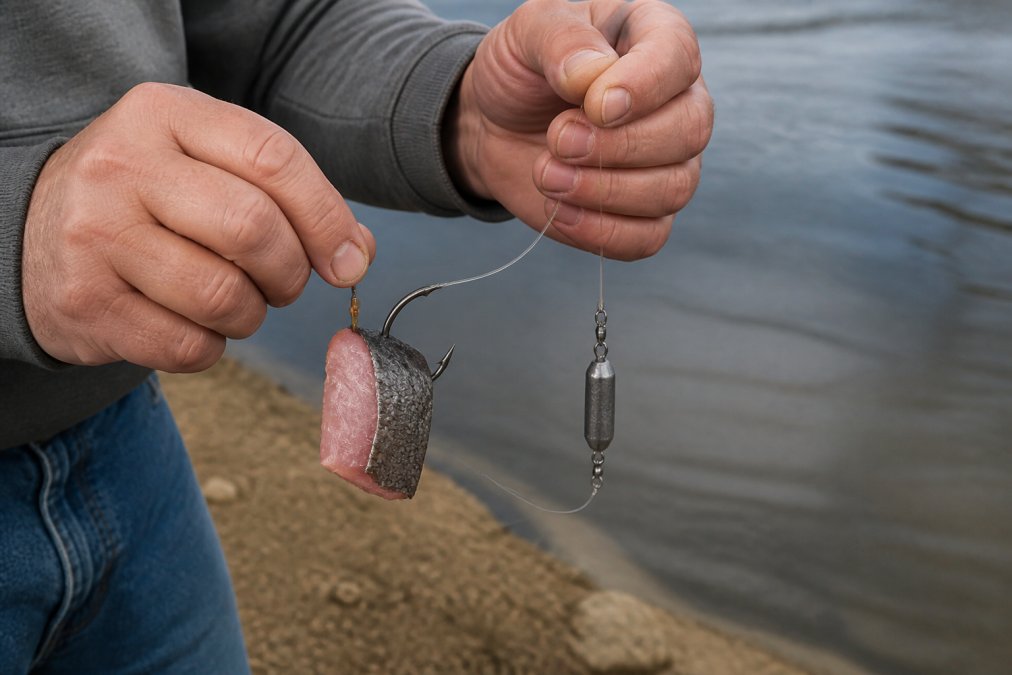
The slip sinker rig is the workhorse for summer catfishing. A sinker slides freely on your main line above a leader, allowing your bait to move naturally while staying on bottom. Circle hooks (size 2/0 to 8/0 depending on bait size) hook catfish in the corner of the mouth, increasing landing rates and reducing gut-hooking.
Set up a slip sinker rig by threading your main line through a barrel sinker (1/2 to 2 ounces depending on current and depth), then tying a barrel swivel below the sinker. Attach 18-24 inches of leader line to the swivel, then tie your circle hook to the leader. In summer, use the lightest sinker that keeps your bait on bottom, lighter weight allows more natural bait movement.
Santee Rig for Bottom Drifting
The Santee rig is purpose-built for drifting catfish baits along the bottom in current. This rig uses two hooks on a single leader, one on bottom and one suspended above it. To tie a Santee rig, start with a three-way swivel. Attach your main line to one eye, a dropper line with a sinker to another eye, and a leader with two hooks to the third eye. Space the hooks 12-18 inches apart.
Summer catfish respond well to Santee rigs because the dual-bait presentation increases your odds of triggering a strike. Use preserved cut bait on both hooks, or mix scents (blood on one hook, garlic on the other) to test which one catfish prefer. Drift slowly, just fast enough to keep your sinker bouncing bottom.
Bait Presentation and Scent Trail Techniques
Scent trail is everything in summer catfishing. Position your bait slightly upstream of structure so current carries scent downstream. Catfish moving downstream detect the scent trail and follow it upstream to the source.
In slack water, create movement by casting your bait and allowing it to settle, then retrieving slowly and recasting. Bait chunk size affects scent dispersal, larger chunks (2" x 3") release scent gradually and create longer-lasting trails; smaller nuggets (1" x 2") release scent faster. Refresh your bait every 15-20 minutes during active fishing. A fresh bait chunk always outperforms one that's been soaking for an hour.
Night Fishing Strategies and Seasonal Feeding Patterns
Summer catfish move into deeper water during daylight and migrate to shallower feeding zones at night. Start fishing 30 minutes after sunset and continue through midnight, this is when catfish are most active. Water temperature is less of a factor at night; summer catfish are often more aggressive after dark because they're not dealing with bright light and high water temperatures simultaneously.
Use preserved cut bait with strong scents for night fishing. Blood and garlic scents work exceptionally well because catfish rely entirely on smell and lateral line detection after dark. Night fishing also lets you use lighter tackle, catfish are less cautious at night and more likely to strike.
Moon phase affects summer catfish activity. New moons and full moons produce the most aggressive feeding. Plan your night fishing around moon phases for best results.
Summer catfish bait selection comes down to understanding that heat changes how catfish feed. Cut bait outperforms live bait, preserved options eliminate storage headaches, and scent-rich formulations trigger strikes when catfish are deeper and more selective.
Blue River Carp's preserved cut bait gives you shelf-stable, scent-infused options that stay fresh 12+ months without refrigeration. The 10oz chunks work for trophy hunting; the 7oz nuggets suit everyday bank fishing. Start with the Best 3 Bundle in your preferred scent combination to test what works on your local water, then stock your tackle box with what produces results. You'll catch more summer catfish when your bait is ready before you even leave the dock.

Frequently Asked Questions
Q: What is the best catfish bait for summer fishing?
A: Cut bait from gizzard shad, blood-scented chunks, and preserved carp bait all excel in summer conditions. Preserved, shelf-stable options like those infused with blood, garlic, or shad oil create strong scent trails that attract catfish even in warm water. Summer heat accelerates decomposition of fresh bait, so choosing bait that stays firm on the hook and maintains its scent profile, without requiring refrigeration, gives you a significant edge over traditional frozen options.
Q: How do I keep cut bait fresh in summer without a cooler?
A: Preserved cut bait that requires no refrigeration solves this problem entirely. Look for shelf-stable, resealable packages designed to last 12+ months at room temperature. These maintain their firmness and scent in heat, preventing the mushy texture that causes bait to fall off the hook. Store them in a cool, dry part of your tackle box, away from direct sunlight. Unlike frozen bait that thaws and deteriorates quickly in summer heat, preserved bait stays ready for any trip without spoilage.
Q: Should I use live bait or cut bait for summer catfishing?
A: Cut bait typically outperforms live bait in summer. Cut bait releases a scent trail that travels farther in warm water, attracting catfish from greater distances. Live bait can work, but it requires constant attention in heat and dies faster. Cut bait also stays on the hook better during casting and long waits, critical when targeting channel catfish, blue catfish, and bullhead catfish in peak summer temperatures. Preserved cut bait eliminates the spoilage risk entirely.
Q: What makes scent-infused bait better for summer catfishing?
A: Scent-infused bait compounds the natural attractant with added oils and flavors that intensify in warm water. Blood, garlic, and shad oil scents trigger aggressive feeding responses, especially during night hours when catfish hunt most actively. These scents create a feeding trail that guides fish to your rig faster than unscented bait. Summer's higher water temperatures accelerate scent dispersal, making infused options particularly effective for bottom drifting and structure fishing.
Q: Why choose preserved carp bait over other summer options?
A: Preserved carp bait from invasive species offers triple advantages: it's shelf-stable without refrigeration, it delivers proven catfish attractants through natural fish oils, and it supports environmental cleanup efforts. The 12+ month shelf life means you're always prepared for spontaneous summer trips. Unlike traditional frozen bait that requires coolers and melts in heat, preserved carp bait stays firm and maintains its scent profile throughout the fishing season, making it ideal for bank fishing and frequent outings.
This article was written using GrandRanker


