
Best Bait for Large Catfish: Trophy-Size Choices
Table of Contents
- What Makes a Bait Effective for Large Catfish?
- Best Bait for Channel Catfish vs. Blues and Flatheads
- Live Bait vs Cut Bait for Trophy Catfish: Which Wins?
- Top 5 Cut Baits That Consistently Produce Big Catfish
- The Role of Catfish Scent Attractants and Oils
- Bait-to-Hook Ratio: Rigging for Maximum Hook-Ups
- Seasonal Bait Selection and Water Conditions
- Final Verdict: Choosing Your Trophy Catfish Bait
- Frequently Asked Questions
Last Updated: September 5, 2026
The most effective bait for large catfish isn't the freshest live fish or the smelliest homemade concoction; it is a durable, high-protein cut bait presented correctly on the bottom. Trophy-class blues and flatheads are primarily predatory, keying in on large forage fish. At Blue River Carp, Inc., we produce bait specifically designed to trigger that predatory response.
This guide covers the science of scent trails, the difference between live and cut bait, the five cut baits that consistently produce trophy fish, and rigging ratios that improve hook penetration and prevent short strikes.
What Makes a Bait Effective for Large Catfish?
A bait earns its keep with large catfish through three non-negotiable traits: a strong scent profile, high oil content, and substantial size. Large catfish rely heavily on their olfactory senses to locate food in dark or murky water, so a bait that leaches amino acids and blood into the current creates a scent trail they can follow from a distance (peer-reviewed research). A single chunk must be large enough to be worth the energy expenditure of a big fish, which is why a 2-inch piece often outperforms a handful of smaller morsels.
The most effective bait for large catfish also needs physical durability. A bait that falls apart on the cast or disintegrates after ten minutes in the current will never reach the strike zone intact. This is where preserved and scent-infused options shine.
Best Bait for Channel Catfish vs. Blues and Flatheads
Matching your bait to the species is more important than any single "magic" ingredient. Channel catfish are opportunistic scavengers with a highly varied diet, making them the easiest to catch. The best bait for channel catfish often includes stink baits, prepared dough baits, and chunks of shad, but they will readily hit nightcrawlers and crawfish. They are less focused on size and more on scent volume.
Blue catfish are primarily piscivorous, meaning they feed almost exclusively on other fish. Fresh cut bait like gizzard shad or skipjack herring is the gold standard here. Flathead catfish are the most specialized, preferring live fish, though they will strike a fresh, bloody cut bait presented directly on their ambush points. For flatheads, the bait must be exceptionally fresh.
Live Bait vs Cut Bait for Trophy Catfish: Which Wins?
The debate between live bait vs cut bait for trophy catfish is a constant one, but for targeting the largest fish, cut bait generally wins on efficiency and hook-up ratio. Live bait is undeniably attractive to a wary flathead, but it often gets swallowed deep, leading to gut hooks, or it hides in cover where a hook-set is impossible. Cut bait allows you to control the presentation and fish a larger profile that discourages smaller fish from stealing it.
Cut bait also allows you to fish multiple rods effectively. You can deploy a large chunk of fresh shad on a Carolina rig and let it sit, knowing it will stay on the hook. With live bait, you are constantly checking for tangles and ensuring the bait is swimming naturally.
Top 5 Cut Baits That Consistently Produce Big Catfish
When the goal is a trophy, these five cut baits represent the most effective bait for large catfish across North American waters.
1. Fresh Gizzard Shad
Gizzard shad is the undisputed king of catfish bait. Its soft, oily flesh creates a massive scent trail, and its availability in most reservoirs makes it a primary forage species. Cut it into steaks or chunks, and fish it directly on the bottom or under a slip float.
2. Skipjack Herring
Skipjack herring is arguably the most potent bait for river systems. Their flesh is extremely bloody and oily, and they are a favorite food of large blue catfish in current. A fresh skipjack fillet left to "sour" for a day becomes a scent bomb that can pull fish from long distances.
3. Large Chunks of Carp or Buffalo
While often overlooked, common carp and buffalo chunks are incredibly durable and effective. The thick, white meat stays on the hook for hours, making it ideal for long soak sessions. It is also a sustainable choice, as carp are an invasive species in many regions.
4. Freshwater Eel Strips
Eel is a secret weapon for trophy flatheads. The tough, fatty skin holds up to casting and current, and its natural oils are highly attractive. Cut eel into thick strips, leaving the skin on to help secure it to the hook.
5. Scent-Infused Preserved Cut Bait
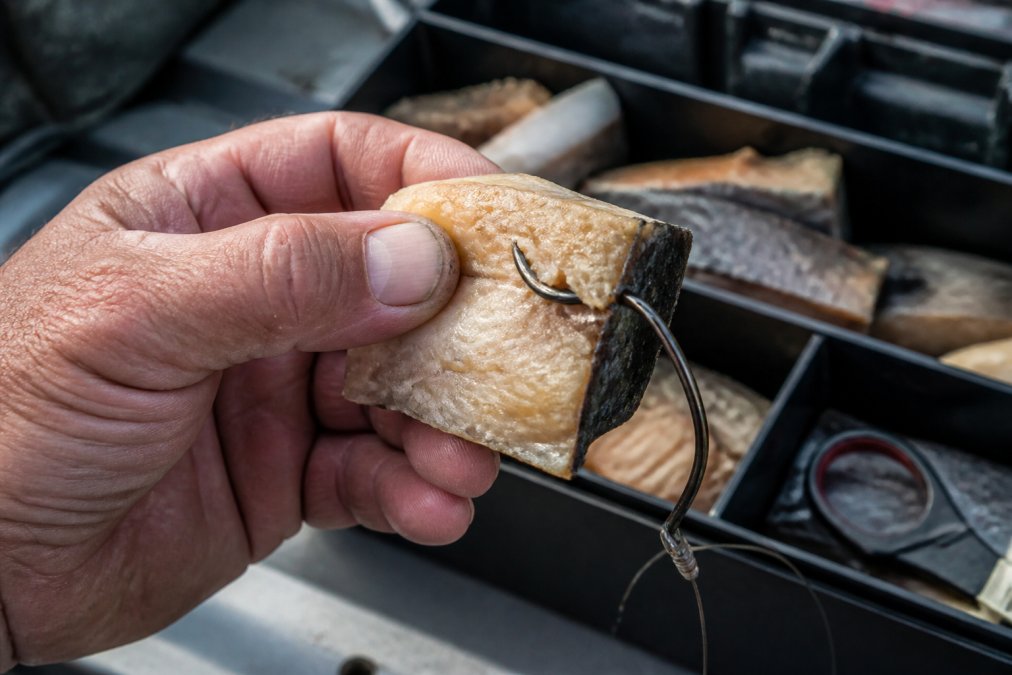
Preserved options provide the convenience of fresh bait without the hassle of refrigeration. The key is choosing a product that uses real fish and infused scents rather than synthetic fillers. Blue River Carp, Inc. offers 10oz packages of pre-cut chunks that are shelf-stable for 12+ months, making them an excellent choice for spontaneous trips.

The Role of Catfish Scent Attractants and Oils
Scent is the primary language of a catfish, but understanding why certain scents work, and how they travel, separates a casual angler from a consistent trophy hunter. Catfish are essentially swimming noses, with thousands of taste buds and olfactory receptors spread across their skin, barbels, and gill plates.
The Chemistry of Attraction
What you're actually trying to replicate is the chemical signature of a wounded or dying forage fish. This signature is a cocktail of amino acids, bile acids, and nucleotides. Key amino acids like alanine, glycine, and serine are potent feeding triggers for catfish. Commercial attractants and dips are often formulated to mimic these specific compounds, but the most effective ones use real fish oils and extracts because they contain the full, complex profile of these chemicals, not just a synthetic approximation.

How Scent Travels: Temperature and Current
The dispersion of these scent molecules is governed by physics. In warmer water (above 70°F), molecules vibrate and diffuse rapidly, creating a large but quickly dissipating scent plume (britannica.com). This means a bait's scent trail can travel far, but it also fades fast, requiring you to reapply or refresh your bait more often. In colder water (below 55°F), molecular movement slows dramatically. The scent plume is much smaller and more concentrated, hugging the bottom. This is why a heavily oiled bait or a dip bait is critical in winter, you need a high concentration of scent to overcome the slow diffusion rate.
Current is another variable. In a river, the current stretches the scent plume into a long, narrow cone downstream. A bait sitting in a slack-water eddy will only emit a scent trail that circles within that eddy, potentially not reaching fish holding in the main current. Conversely, a bait placed on the edge of a current seam will have its scent broadcast downstream, pulling fish from a much larger area.
Oil: The Slow-Release Carrier
Oils are the most effective carriers for these scent compounds because they are hydrophobic, they don't mix with water. Instead, they form a slick on the surface and slowly leach out over time. This creates a persistent, long-lasting scent trail that doesn't wash off instantly. This is why blood-based oils and shad oils are so effective; they provide a sustained release of attractants.
Water Clarity: The Visual vs. Scent Trade-off
A critical factor most guides ignore is how water clarity dictates your scent strategy. In clear water (visibility over 3 feet), catfish will often rely on their lateral line and vision to locate prey before their sense of smell. Here, a subtle scent profile is fine, but the bait's profile and action are more important. In stained or muddy water (visibility under 1 foot), scent is the only way a catfish will find your bait. This is when you need to double down on high-oil, high-amino-acid baits and use a heavier application of attractant. Products like the shad oil from Blue River Carp, Inc., which is a mix of gizzard and skipjack oil, are designed to trigger a feeding response even in these sluggish, low-visibility conditions.
Bait-to-Hook Ratio: Rigging for Maximum Hook-Ups
The bait-to-hook ratio is the most overlooked variable in catfishing. The goal is to have a bait large enough to attract the fish but small enough to allow for solid hook penetration. A common mistake is threading a huge bait onto a hook that is too small, which results in the hook being buried in the bait and never reaching the fish's mouth.
A general rule is to use a circle hook where the gap is roughly one-third the width of the bait. For a 2-inch chunk of shad, a 7/0 or 8/0 circle hook is a solid starting point. This ensures that when the fish takes the bait and turns, the hook rotates and lodges firmly in the corner of the jaw. This rigging strategy maximizes your hook-up ratio and minimizes deep hooking, making release easier for undersized fish.
Seasonal Bait Selection and Water Conditions
Water temperature dictates catfish metabolism and, consequently, their bait preferences. In the spring and fall, when water temperatures are between 60°F and 75°F, catfish are highly active and feed aggressively to build energy reserves (usgs.gov). During these windows, fresh cut bait and prepared baits are highly effective.
Summer heat pushes large catfish into deeper water and deeper structure during the day, making them less active. Here, a durable bait that can sit for long periods is key. The low-oxygen conditions in summer also slow down a catfish's metabolism, so a heavily scented bait is necessary to entice a strike. In the winter, catfish metabolism drops drastically. They will rarely chase a meal, so your bait must be placed directly in front of them. Small, concentrated baits like a single nightcrawler or a small piece of fresh shad fished slowly on the bottom are far more effective than large chunks.
| Season | Water Temp | Bait Strategy | Target Species |
|---|---|---|---|
| Spring | 55-70°F | Fresh cut bait, crawfish | Channel, Blue |
| Summer | 75-85°F | Durable cut bait, deep water | Blue, Flathead |
| Fall | 60-70°F | Large cut bait, aggressive feeding | Blue, Channel |
| Winter | 35-50°F | Small baits, slow presentation | Channel, Blue |
Final Verdict: Choosing Your Trophy Catfish Bait
The most effective bait for large catfish is a large, oily, and durable cut bait fished on the bottom near structure. While live bait has its place, cut bait offers the best combination of scent dispersal, hook-up ratio, and convenience for serious anglers. Prioritize gizzard shad or skipjack herring when they are available, but also have a reliable, shelf-stable option in your tackle bag for when fresh bait is not an option.
For anglers who want the convenience of a preserved bait that doesn't require a cooler or a trip to the bait shop, Blue River Carp, Inc. provides scent-infused cut bait chunks made from invasive Asian carp. This bait stays fresh for over a year in its resealable bag and is designed to stay on the hook, ensuring you are always ready for a trophy. Get started with Blue River Carp, Inc. and keep a reliable, high-quality bait ready for your next fishing trip.
Frequently Asked Questions
What is the best bait for catching giant catfish?
Large cut bait offerings are the most reliable choice for giant catfish. Trophy blues and flatheads feed on sizable forage fish, so bait chunks around 2" x 3" match their natural prey and trigger predatory instincts. Fresh gizzard shad, skipjack herring, and preserved scent-infused carp chunks all work well. The key is matching the bait size to the fish you are targeting and ensuring your hook is sized to keep the bait secured.
Is cut bait or live bait better for large catfish?
For trophy catfish, both live bait and cut bait work, but cut bait often produces more consistent results. Live bait, like large goldfish or suckers, appeals to flatheads that prefer a moving meal. Cut bait releases a stronger scent trail through the water, which is a major advantage for locating fish in deep water or heavy current. The best approach is to have both options ready, but cut bait offers better convenience for extended sessions.
What smell attracts catfish the most?
Catfish rely heavily on their olfactory senses to find food. Strong, natural scents of blood and fish oils are the most effective attractants. Blood scent mimics a fresh wound, signaling an easy meal. Shad oil, derived from gizzard shad, is another proven option because it matches their natural forage species. Scent-infused cut baits combine this attraction with a durable presentation, keeping the scent trail active without the mess of liquid additives.
How does water temperature affect bait choice for large catfish?
Water temperature dictates catfish metabolism and activity levels. In warm water above 70°F, catfish are aggressive and actively hunt, so larger cut baits and live bait work well. In cooler water between 50°F and 65°F, their metabolism slows, and they prefer smaller, easier meals. You should downsize your bait and slow your presentation during these months. Always check current conditions to adjust your bait size for the best chance of a bite.
This article was written using GrandRanker