
How to Prepare Corn for Carp Fishing Step by Step
Last Updated: November 3, 2026
Quick Summary
To prepare corn for carp fishing, soak dry field corn in warm water for 12 to 24 hours, then boil it for 30 to 45 minutes until the kernels dent easily under your thumbnail. Sweet canned corn only needs 5 to 10 minutes of simmering. Cool and dry the corn before storing it.
- Soak dry field corn in warm water for 12 to 24 hours.
- Simmer field corn 30 to 45 minutes on the stovetop, stirring every 10 minutes.
- Canned sweet corn needs only 5 to 10 minutes of simmering.
- Cool corn to room temperature and pat it dry before bagging.
- Refrigerate prepared corn at 34 to 40 degrees Fahrenheit for 5 to 7 days.
Table of Contents
- What You Need Before You Start
- Soaking Time for Field Corn: How Long Is Enough
- Boiling Corn for Carp: Method and Safety
- Best Corn Additives for Carp and How to Use Them
- Hair Rig Setup for Corn and Presentation
- Storing Prepared Corn and Troubleshooting Failed Batches
- Start Your Next Carp Session With Prepared Bait
- Frequently Asked Questions
Corn is one of the most reliable baits for carp fishing, and learning how to prepare corn for carp fishing properly makes a real difference on the water. A well-prepared kernel stays on the hook, releases scent steadily, and draws fish in. Carp are foragers that root along the bottom for grain and seeds, and sweet corn matches that natural diet closely.
Corn does three things well. It holds a strong color that stands out in murky water, it gives off a sweet scent trail, and it is cheap and easy to find. A single bag can cover many sessions if you store it correctly.
Raw, hard kernels often fail to soften and bounce off the hook, so prepare your corn before the trip.
What You Need Before You Start
Gather your supplies before you soak or boil anything. Preparation goes faster when everything sits within reach.
- Dry field corn or canned sweet corn, depending on your method
- A large pot or pressure cooker
- A colander and a clean bucket
- Clean water and a pinch of salt
- Airtight containers or resealable bags for storage
Choose field corn if you plan to soak overnight, since it softens more evenly. Sweet corn works well when you want a quick session and a softer texture.
Soaking Time for Field Corn: How Long Is Enough
Soak dry field corn in warm water for 12 to 24 hours. Most anglers find that kernels swell and split when they reach the full soak, which signals they are ready to cook.
Check a few kernels by pressing them with your thumbnail. If the kernel gives slightly and the skin peels easily, it is ready. If it still feels hard in the center, soak it longer.
Common mistake: soaking too long turns the kernels mushy and sour. Drain the water once the corn is swollen, and do not let it sit for several days.
Here is a quick reference for the soaking and boiling times covered in the article.
| Step | Time | Note |
|---|---|---|
| Soak dry field corn | 12 to 24 hours | Use warm water; kernels swell and split |
| Stovetop simmer | 30 to 45 minutes | Stir every 10 minutes |
| Pressure cooker | 20 to 30 minutes | Cook at 15 psi |
| Sweet corn simmer | 5 to 10 minutes | Canned corn is already cooked |
| Cool before bagging | Room temperature | Warm corn traps steam |
Boiling Corn for Carp: Method and Safety
Boiling does two jobs: it softens the kernel so a carp can crush it, and it gelatinizes the starch so the corn releases scent instead of sitting inert on the lakebed. Get the boil wrong and you either get rock-hard kernels that bounce off the hook or mush that flies off on the cast.
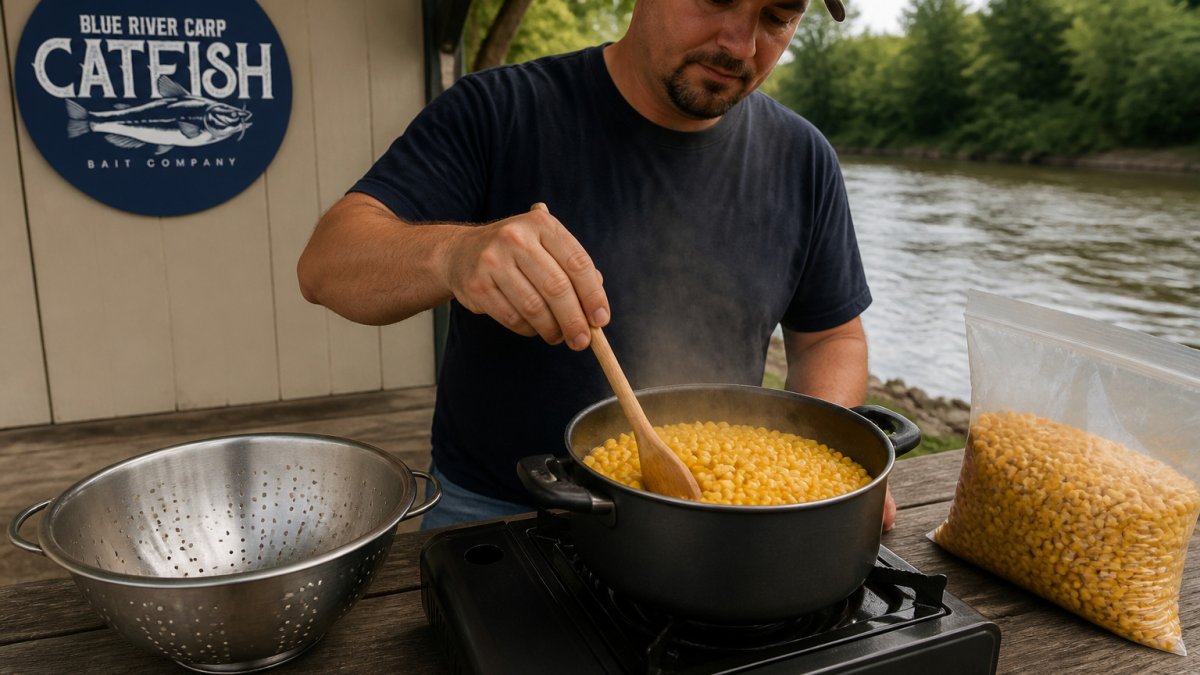
Stovetop method. Drain your soaked field corn and cover it with fresh water by about 2 inches in a heavy-bottomed pot. Bring it to a rolling boil, then reduce to a steady simmer for 30 to 45 minutes. Stir every 10 minutes so the kernels at the bottom do not scorch and stick. Sweet corn from a can is already cooked, so it only needs 5 to 10 minutes of simmering to heat through and take on additives; boiling it for 45 minutes turns it to paste.
Pressure-cooker method. A pressure cooker cuts field corn down to roughly 20 to 30 minutes at 15 psi, but it is the step where most home batches go wrong. Never fill the cooker more than two-thirds full, because corn foams and can block the vent. Add a tablespoon of oil to reduce foaming. Let the pressure drop naturally instead of running the cooker under cold water, since a fast release can pull starchy water up through the valve. Follow the manufacturer's venting and lid-locking sequence exactly.
Testing for doneness. Pull three kernels from different parts of the pot. Press each between your thumbnail and forefinger: a properly boiled kernel dents easily, the skin slips, and the center is soft but not watery. If the center is still chalky, add 10 minutes. If the kernel smears when pressed, you have overcooked it and it will not stay on a hair.
Cooling and drying. Spread the corn in a single layer on a tray or in a colander and let it cool to room temperature before bagging. Sealing warm corn traps steam, which softens the kernels further and shortens shelf life. Once cool, drain and pat dry; surface water is the main reason corn slides off the hair on the cast.
Watch out: hot water and steam cause serious burns, so keep children and pets clear of the stove, never leave a boiling pot or pressurized cooker unattended, and never open a pressure cooker until the pressure indicator has fully dropped.
Best Corn Additives for Carp and How to Use Them
Additives add scent and sweetness that carp respond to. Many anglers use a small amount of liquid molasses, which coats the kernels and builds a sweet trail.

Add a splash at a time and mix thoroughly. Too much liquid makes the corn slimy and harder to hook. Give the mix about 30 minutes to absorb the flavor before you fish.
A simple, reliable blend is cooked corn with a light molasses coating. This keeps the bait sticky without overloading it.
Hair Rig Setup for Corn and Presentation
Corn works best on a hair rig, which keeps the bait off the hook shank and lets it sit naturally on the bottom. Tie a short hair, slide one or two kernels onto it, and secure them with a small stop knot.
Keep the hair short, usually 1 to 2 inches, so the corn rests just off the bottom. Check the presentation every few casts and replace kernels that look soft or torn.
Storing Prepared Corn and Troubleshooting Failed Batches
Prepared corn is a wet, starchy food, and it spoils the same way any wet starch does. How you store it decides whether you get a week of usable bait or a bag of sour slime, and how you diagnose a bad batch decides whether you waste a session or fix it in ten minutes.
Short-term storage. Drain the corn well, bag it in resealable bags or screw-top jars, and refrigerate at 34 to 40 degrees Fahrenheit. Plain boiled corn keeps about 5 to 7 days this way. Label each container with the boil date; corn past a week may look fine but smell off.
Freezing. For batches you will not use within a week, portion the corn into freezer bags, press out the air, and freeze. Frozen corn holds quality for roughly 3 to 6 months. Thaw a portion in the refrigerator overnight rather than in the sun, and do not refreeze what you have thawed.
Fermenting on purpose. Some anglers deliberately ferment corn to build a sour, amino-acid-rich bait that carp key on in warm water. The controlled version is simple: cover cooked corn with non-chlorinated water in a clean jar, add a pinch of salt, loosely cap it so gas can escape, and leave it at room temperature for 3 to 7 days, stirring daily. A healthy ferment smells sour and yeasty, like sauerkraut or bread. This is a deliberate process, not the same as letting a bag rot in a hot car.
Troubleshooting failed batches. Work from the symptom back to the cause:
- Sour or slimy corn you did not mean to ferment. Bacteria got in through dirty hands, dirty containers, or warm storage. Discard it; do not try to rinse it back to usable.
- Kernels too hard in the center. The soak was too short or the boil too brief. Next batch, extend the soak to 24 hours and add 10 minutes to the simmer.
- Kernels mushy or falling off the hair. Overboiled, oversoaked, or sealed while still warm. Shorten the boil, drain and pat dry before bagging, and cool fully first.
- Corn sliding off on the cast. Surface water or a hair that is too long. Dry the kernels, use a bait stop, and shorten the hair to 1 to 2 inches.
- Mold (fuzzy patches, black or green spots). Discard the whole batch. Mold means the corn was stored wet or too warm, and the toxins are not removed by rinsing.
- Ferment that smells like rot rather than sour. The jar was too warm or not stirred. Dump it and restart in a cooler spot with daily stirring.
Watch out: never taste bait corn to check it, and never feed spoiled or moldy corn to pets or livestock; discard it in the trash, not the yard.
Start Your Next Carp Session With Prepared Bait
Prepared corn gives you a dependable bait that carp readily accept. Follow the soak, boil, and additive steps above, and your next session starts with bait that holds up on the hook. For a ready-to-use alternative, corn pellets are high-attraction feed pellets that are easy to use anywhere, in any season.

If you would rather skip the prep work, Blue River Carp, Inc. offers ready-to-use options. Our Cornmeal bait and Corn Pellets are a convenient choice for busy anglers, and our Liquid Molasses adds sweetness to any mix.
Frequently Asked Questions
Does normal corn work for carp?
Yes. Canned or boiled sweet corn is the most common choice because it is soft, bright, and easy to hook. Field corn, the hard yellow kernels sold as animal feed, also works but needs a longer soak and a full boil before it softens enough to bait. Either type draws carp, but prepared corn stays on the hook better than raw dry kernels, which can crack or wash off quickly. Check your state fishing regulations before use, since some states restrict corn as bait or chum.
What do carp like better, bread or corn?
Most experienced anglers find corn more reliable than bread for carp, especially in waters where carp feed on natural grains and seeds. Bread breaks down fast and can cloud the water, which may bring in smaller fish and ducks. Corn holds together longer on the hook and gives a steady scent trail. Many anglers use both, starting with bread to get attention and switching to corn once carp are feeding.
How long should you soak corn before cooking it for bait?
Soak field corn for 12 to 24 hours in fresh water before boiling. The kernels should swell noticeably and feel softer when pressed between your fingers. Sweet corn needs little or no soaking because it is already tender, though a short soak in sugar water can add flavor. Change the water if it smells sour before the soak is finished. Soaking time depends on how old and dry the corn is, so test a few kernels before committing a full batch.
Do carp prefer sweet corn or field corn?
Sweet corn is easier for beginners because it is ready to use after a quick boil and hooks cleanly. Field corn is cheaper, lasts longer in storage, and is often more durable in moving water, but it must be soaked and boiled thoroughly. Both work well. Choose sweet corn for quick sessions and field corn when you want bulk bait that holds up over a longer day.


