
Cost Effective Bait Options for Catfish Fishing
Table of Contents
- Why Cheap Catfish Bait Still Has to Work
-
Cheap Catfish Bait Ranked: 9 Options That Deliver
- 1. Nightcrawlers and Worms
- 2. Chicken Liver (About $2 per Tub)
- 3. Fresh Shad and Cut Baitfish
- 4. Cornmeal and Blood Meal Bases
- 5. Dough Bait, Punch Bait, and Dip Bait
- 6. Preserved Cut Bait Nuggets ($11 for 7 oz)
- 7. Hot Dogs and Cheese
- 8. Live Minnows and Panfish
- 9. Preserved Ground Fish as a Scent Booster
- Matching Bait to Species: Channel, Blue, and Flathead Catfish
- Homemade Catfish Bait Recipes With Cost Breakdowns
- Catfish Bait for Rivers: What Survives Moving Water
- How to Keep Bait on a Catfish Hook
- Cost Per Outing, Storage, and Waste Reduction
- Conclusion
- Frequently Asked Questions
Last Updated: October 20, 2026
Why Cheap Catfish Bait Still Has to Work
The best cost effective bait options for catfish fishing share one trait: they put scent where a catfish can find it without emptying your wallet. Cheap bait only pays off when it stays on the hook. A bargain tub that dissolves in ten minutes costs more per fish than a firm piece that survives the cast.
Cheap Catfish Bait Ranked: 9 Options That Deliver
Ranking bait by sticker price misses the point. Value means cost per usable hook-bait, not cost per package, it depends on how many pieces you get, how long they keep, and how often you re-bait.
| Rank | Bait | Typical Cost | Approx. Servings | Storage Life | Est. Cost per Hook-Bait | Best For | Main Drawback |
|---|---|---|---|---|---|---|---|
| 1 | Nightcrawlers and worms | Low, often free | 12-24 per dozen | Days in a cool container | Under $0.25 | Beginners, all species | Small fish steal them |
| 2 | Chicken liver | About $2 per tub | 15-25 pieces | 1-2 days refrigerated | About $0.10-$0.15 | Channel cats, scent | Soft, falls off easily |
| 3 | Fresh shad and cut baitfish | Free if cast net | 20+ chunks per fish | Same day on ice | Near zero | Blue cats | Spoils fast |
| 4 | Cornmeal and blood meal bases | $5-$10 per bag | Dozens of sessions | Months, sealed and dry | Under $0.50 per session | Homemade batches | Prep time |
| 5 | Dough, punch, and dip bait | Low | 30+ applications per tub | Months, sealed | About $0.15-$0.30 | Channel cats in current | Messy to apply |
| 6 | Preserved cut bait nuggets | $11 for 7 oz | 20-30 pieces | 12+ months shelf-stable | About $0.40-$0.55 | Convenience, no cooler | Higher upfront cost |
| 7 | Hot dogs and cheese | Very low | 10-15 chunks per pack | Days refrigerated | Under $0.20 | Casual trips | Attracts small fish |
| 8 | Live minnows and panfish | Moderate | 1 per hook | Hours with aerator | $1 or more | Flatheads | Needs a bucket and aerator |
| 9 | Preserved ground fish | $11.50 per 2.2 lb bag | A full season as a booster | 12+ months shelf-stable | Pennies per session | Scent boosting | Odor |
Cost per hook-bait assumes you use most of the package before it spoils and re-bait roughly once per cast.

1. Nightcrawlers and Worms
Worms top the value list because a dozen often costs a few dollars and a garden supplies them free. Thread a worm once through the middle so the ends wiggle, and expect 12-24 hook-baits per dozen. Small catfish and panfish peck at them, so upsize or switch to cut bait when the bite gets picky.
2. Chicken Liver (About $2 per Tub)
Chicken liver is the classic cheap catfish bait, earning its reputation on cost per piece, roughly $0.10-$0.15 per hook-bait from a $2 tub. The problem is texture: liver tears off on a hard cast, so wrap it in pantyhose or thread it twice through the shank. Buy only what you will use within a day or two.
3. Fresh Shad and Cut Baitfish
Shad is the gold standard for blue catfish, and a cast net makes it free. A single shad yields 20 or more chunks, which puts cost per hook-bait near zero. The trade-off is spoilage: cut shad goes soft fast in warm water, so keep it on ice and use it the same day.
4. Cornmeal and Blood Meal Bases
Cornmeal and blood meal are the backbone of homemade catfish bait. A 2.2 lb bag of cornmeal costs $5, and blood meal runs $10 for the same weight. Both stretch across many sessions, a dough-ball batch costs well under $0.50, and keep for months when sealed dry. Check state regulations before using corn as chum.
5. Dough Bait, Punch Bait, and Dip Bait
Prepared dough, punch, and dip baits are affordable and made for channel catfish. A tub delivers 30 or more applications, landing cost per hook-bait around $0.15-$0.30, and sealed tubs keep for months. Punch bait goes on a treble hook with a specialized tool; dip bait coats a sponge or worm. They shine in current because the scent plume travels downstream.
6. Preserved Cut Bait Nuggets ($11 for 7 oz)
Preserved cut bait is real fish, pre-cut and shelf-stable, so it needs no cooler. A 7 oz bag of cut bait nuggets runs $11 and holds roughly 1" x 2" pieces sized for channel cats. At 20-30 pieces per bag, cost per hook-bait lands around $0.40-$0.55, higher than liver, but nothing spoils and a bag survives 12+ months on the shelf.

7. Hot Dogs and Cheese
Hot dogs and cheese are the cheapest bait in the fridge, and they catch catfish. A pack yields 10-15 chunks, so cost per hook-bait stays under $0.20. Neither holds a hook well without help: dry hot dog chunks in the sun for an hour before rigging, and keep cheese cold.
8. Live Minnows and Panfish
Live bait is the flathead specialist's choice. Flatheads are predators, and a live minnow or small panfish fished near cover gets attention scent bait cannot. The costs add up: a bucket, an aerator, and bait that dies if you skip either, gear and mortality push the real cost per fish well above the other options.
9. Preserved Ground Fish as a Scent Booster
Preserved ground fish is a scent base, not a standalone hook bait. A 2.2 lb bag of preserved ground fish costs $11.50 and mixes into dough, pack bait, or chum. One bag lasts a season, pennies per session.
Matching Bait to Species: Channel, Blue, and Flathead Catfish
Species drives bait choice more than price does. Channel catfish are the most adaptable and take chicken liver, dough bait, punch bait, and cut bait equally well.
If you fish one water for all three, carry cut bait and live bait and skip the rest. That covers every species without a truckload of tubs.
Homemade Catfish Bait Recipes With Cost Breakdowns
Homemade bait wins on cost per session, and both recipes below use ingredients from the list above.
Cornmeal Dough Ball (About $0.40 per Session)
Mix two cups of cornmeal with one cup of flour and enough water to reach a firm dough. Add a spoonful of sugar or vanilla for scent, then roll into marble-sized balls. A $5 bag makes dozens of sessions, putting the cost per outing near $0.40.
Catfish Weekend Kit - 4 x 7oz Nuggets →
Blood Meal and Fishmeal Pack Bait
Combine equal parts cornmeal, menhaden fishmeal, and blood meal, then moisten with water or creamed corn until it packs around a sinker. The fishmeal brings a heavy, oily scent that disperses in water. One batch covers several trips.
Catfish Bait for Rivers: What Survives Moving Water
Rivers punish soft bait. Current strips chicken liver and dough off a hook in seconds, so river anglers need firm textures and heavy scent.
Fish the seams behind current breaks and let the scent do the work downstream. A bait that releases scent steadily beats one that washes clean on the first cast.
How to Keep Bait on a Catfish Hook
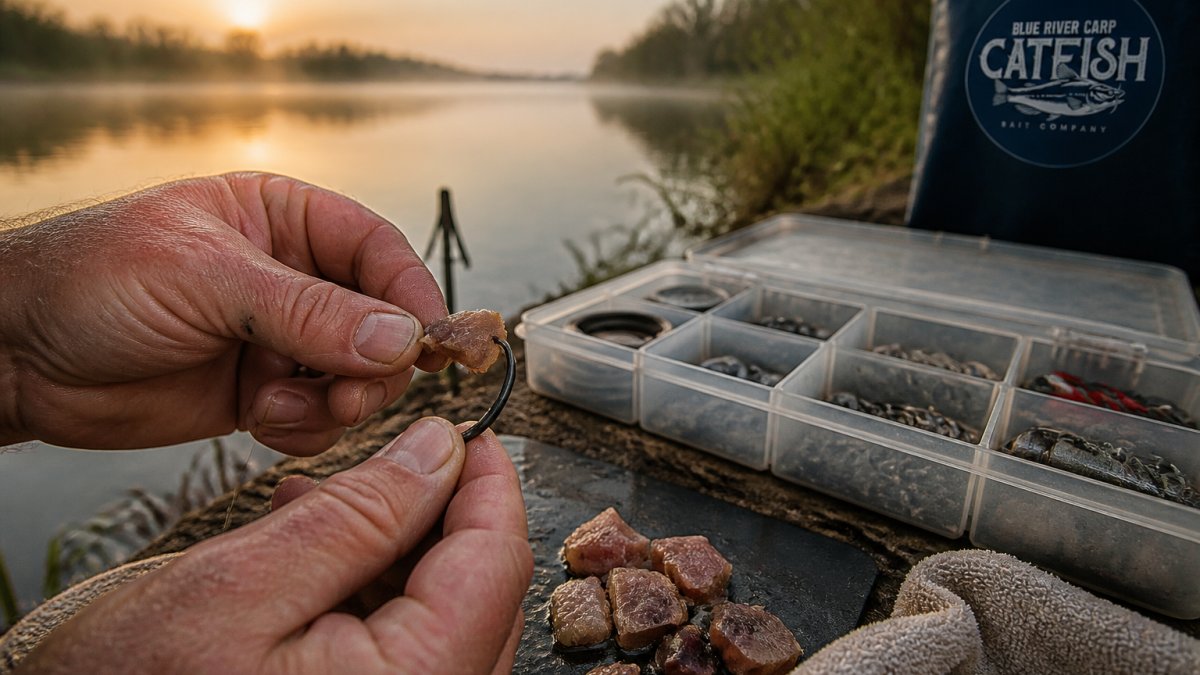
Bait stays on a catfish hook when it is firm, matched to the hook size, and threaded through the shank rather than pierced once. Follow this sequence:
- Match hook size to bait: a 5/0 to 8/0 circle hook for cut bait, smaller for worms.
- Thread the bait onto the shank so the point exits cleanly.
- Leave the hook point exposed; buried points miss fish.
- Wrap soft baits with thread or pantyhose for a hard cast.
- Re-bait after every missed hookset.
Cost Per Outing, Storage, and Waste Reduction
Waste, not sticker price, drives the real cost of catfish bait. A tub of liver that spoils before the next trip costs more per fish than a shelf-stable option used down to the last piece.
Suppose you buy a $2 tub of chicken liver and an $11 bag of preserved cut bait nuggets for the same month.
Storage That Stretches Every Package
- Portion before you freeze. Split bulk bait into trip-sized bags so you thaw only what you will use. Refreezing softens cut bait and liver into mush.
- Keep cut bait on ice, not in water. Meltwater leaches scent and speeds breakdown; a drained cooler keeps chunks firm longer.
- Seal dry bases tight. Cornmeal, blood meal, and fishmeal absorb moisture from the air and clump into hard bricks. Store them in sealed bags in a cool, dry place.
Free and Locally Sourced Bait, and the Rules That Come With It
Free bait is the biggest cost lever available, but it comes with legal strings. Digging worms, cast-netting baitfish, and using household scraps can cut cost to near zero, yet baitfish transport and chum rules vary by state. Before hauling anything home, check your state fish and wildlife agency's rules on:
- Which baitfish species may be collected and used, and whether they may be transported live.
- Whether chumming with corn, blood meal, or ground fish is permitted on the water you fish.
- Whether collected bait may be moved between water bodies, since many states restrict transport to slow the spread of invasive species and disease.
A common pattern is that bait collected from one lake cannot legally be used in another, so keep collected bait on the water where you caught it and buy preserved or prepared bait for trips that cross state lines.
Matching Bait Cost to How Often You Fish
Buy shelf-stable bait when you fish sporadically, and fresh bait only for trips you know you will make. Weekly anglers can justify fresh shad and liver because it gets used before it turns. Monthly anglers should lean on preserved nuggets, sealed dough and punch baits, and dry homemade bases, which carry the lowest waste rate per dollar.
Conclusion
Every angler faces the same problem: bait that spoils between trips, falls off the hook, or costs more than the fish is worth. Blue River Carp, Inc. solves that with preserved cut bait made from invasive carp, built to stay firm and ready without a cooler. Our Catfish Weekend Kit bundles four scent varieties with a blood attractant, and every bag carries a 12+ month shelf life, veteran-owned and made in Indiana.

Frequently Asked Questions
What is the cheapest bait for catfish?
Cornmeal and blood meal bases cost the least per session. A 2.2 lb bag of cornmeal runs about $5 and a 2.2 lb bag of blood meal about $10, and each stretches across many trips when mixed into dough or pack bait. Chicken liver at roughly $2 per tub is the cheapest store-bought option. Preserved cut bait sits in the middle: $11 for a 7 oz bag of catfish bait nuggets that needs no refrigeration and does not spoil between trips.
Is chicken liver a good bait for catfish?
Chicken liver catches channel and blue catfish reliably, and it is one of the cheapest baits you can buy. The trade-off is texture. Liver is soft, tears off the hook on long casts, and spoils fast without a cooler. Many anglers wrap it in pantyhose or thread it on a treble hook to hold it. If you want liver scent without the mess, a preserved cut bait infused with blood scent gives you similar appeal in a firm piece that stays rigged.
How do you keep catfish bait on the hook?
Match the bait to the hook and the hook to the bait. Use a firm piece about 1 x 2 inches on a circle hook for rod and reel, and push the hook through twice so the point exits the bait. Soft baits like liver need thread or a bait stop. Firm preserved cut bait holds without extra hardware, which is why it casts well and survives current. On trotlines and limb lines, larger 2 x 3 inch chunks stay put through repeated checks.
Do catfish prefer live bait or cut bait?
It depends on the species. Flatheads lean heavily toward live bait such as minnows and panfish, especially at night. Channel and blue catfish take cut bait, shad, and prepared baits readily and are the reason cut bait is the standard for most anglers. Live bait costs more and needs a bait bucket and aerator. Cut bait is cheaper, easier to store, and works across all three species, which makes it the better starting point for beginners.
Can you catch catfish with hot dogs?
Yes. Hot dogs are a low-cost, beginner-friendly bait that stays on a hook better than liver and needs no cooler until opened. Slice them into rounds or chunks and let them soak in garlic powder or blood scent for extra appeal. They are not as effective as fresh shad or preserved cut bait for bigger fish, but for casual trips with kids or a quick bank session, a $3 pack of hot dogs covers a full outing.


