
Best Alternatives to Stink Bait for Catfish
Table of Contents
- Why Anglers Look for Alternatives to Stink Bait
- Natural Cut Bait Options That Outperform Stink Bait
- Live Bait vs. Prepared Bait: Which Works Better for Catfish
- Homemade Bait Recipes: DIY Alternatives to Stink Bait
- The Best Bait for Channel Catfish and How to Choose It
- Scent-Infused Cut Bait Benefits: Why Smell Matters
- How to Store Catfish Bait Without Refrigeration
- Conclusion: Picking the Right Alternative for Your Next Trip
- Frequently Asked Questions
Last Updated: October 3, 2026
Why Anglers Look for Alternatives to Stink Bait
Stink bait works, but it comes with a list of problems that wear on you trip after trip.
That mess is exactly why so many anglers ask us about the best alternatives to stink bait for catfish. At Blue River Carp, Inc., we make preserved cut bait from invasive carp, so we have a clear bias toward real bait over paste.
The best alternatives to stink bait for catfish are natural cut bait, live bait, prepared shelf-stable cut bait, and homemade dough or dip recipes. Each one trades off mess, storage, and hook retention differently.
Below, we break down each option, when to use it, and how to store it without a cooler.
Natural Cut Bait Options That Outperform Stink Bait
Natural cut bait is any fresh fish flesh cut into chunks and fished on the bottom. It outperforms stink bait for one simple reason: catfish evolved eating fish, not paste.
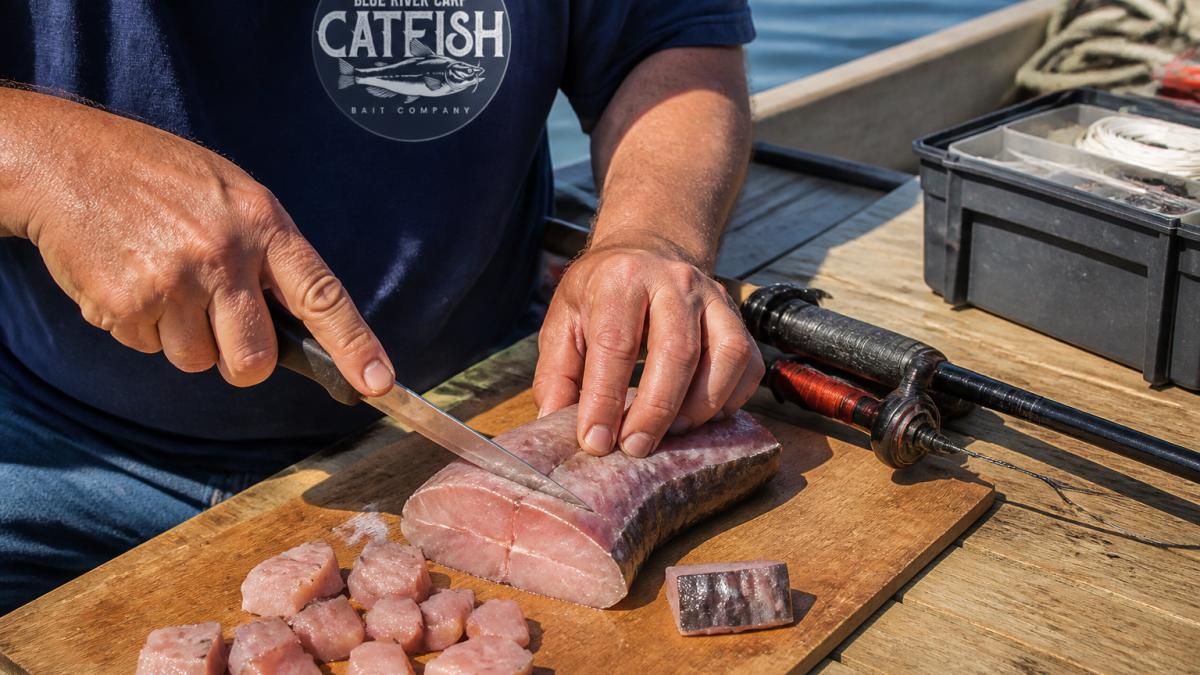
Shad, skipjack, and bluegill are the classic choices. Fresh shad is the gold standard for channel and blue catfish because it bleeds scent into the current.
The catch is freshness. Cut bait breaks down fast, and once it turns rancid it loses the scent trail you wanted. That's the trade-off: better natural appeal, more work and more waste.
Live Bait vs. Prepared Bait: Which Works Better for Catfish
Live bait wins when catfish are actively feeding and hunting. Prepared bait wins when you want convenience, shelf life, and a bait that stays put on the hook.
Live shad, minnows, and small bluegill trigger a predatory strike, especially from flatheads. But live bait means a bait tank, aerator, and constant attention.
Prepared bait, whether commercial or preserved cut bait, keeps for months without refrigeration. It's always ready when you are. For casual anglers who fish once or twice a month, prepared bait is the practical pick.
| Factor | Live Bait | Prepared Bait |
|---|---|---|
| Storage | Bait tank, aerator | Shelf-stable, no cooler |
| Best for | Active flatheads | Channel and blue cats |
| Shelf life | Hours to days | 12+ months |
| Convenience | Low | High |
| Hook retention | Varies | Firm pieces |
Homemade Bait Recipes: DIY Alternatives to Stink Bait
Homemade dough and dip baits cost almost nothing and catch catfish, provided you accept the mess. A basic dough bait combines a binder, a liquid, and a scent.
Try this simple recipe:
- 1 cup wheat meal or crushed wheat cereal
- 1/2 cup cornmeal or flour to adjust stickiness
- Water, molasses, or a flavored soda to bind it
Mix until it holds together like cookie dough.
The downside is real: dough balls dry out, fall off on the cast, and leave your hands a mess. That's the same problem you started with.
The Best Bait for Channel Catfish and How to Choose It
The best bait for channel catfish is a firm, scent-heavy cut bait that stays on the hook. Channel cats are the most common eater catfish, and they feed heavily on scent and small chunks. But "channel cat bait" is not the same as "blue cat bait" or "flathead bait," and treating them as interchangeable is where most anglers lose fish.
How the three main catfish species feed differently
- Channel catfish are opportunistic scavengers. They root along the bottom, take small pieces, and respond strongly to scent. A 1" x 2" nugget of firm cut bait is close to ideal.
- Blue catfish are more predatory and grow larger. They take bigger chunks and whole baitfish, and they often feed in current. A 2" x 3" chunk or a whole cut baitfish holds up better and matches their prey size.
- Flathead catfish are almost exclusively live-bait predators. Cut bait will catch them, but live bluegill, shad, or small bullheads are far more effective. If flatheads are your target, prepared cut bait is a secondary option, not a primary one.
Choosing bait for channel cats: the three variables
- Size: Nuggets around 1" x 2" fit channel cats on rod and reel. Bigger pieces get picked at by small fish before a channel cat commits.
- Scent: Blood, garlic, and shad scents build a strong scent plume. Oily baits leach faster in warm water; firm baits hold scent longer in cold water.
- Durability: Firm pieces survive the cast and the current. Soft or mushy bait slides off on the cast and leaves you re-baiting every few minutes.
Hook selection by bait type
This is the step most guides skip, and it costs fish. The hook you choose should match the bait's texture and how the fish takes it:
- Circle hooks are the standard for cut bait on rod and reel. They set in the corner of the mouth as the fish turns away, which reduces gut-hooking and makes release easier. Use a circle hook sized to your bait, roughly a 5/0 to 8/0 for 1" x 2" nuggets.
- Treble hooks are common on dough and dip baits because the soft bait needs multiple points to stay attached. They are a poor match for firm cut bait, where a single wide-gap hook holds better.
- J-hooks still have a following for live bait and for anglers who prefer to set the hook themselves, but they increase deep-hooking rates on cut bait.
- Hook gap matters as much as hook style. A gap that is too narrow will not clear a thick chunk of cut bait; a gap that is too wide leaves the point exposed and prone to snagging.
For channel cats, our 7oz Nuggets are pre-cut to the 1" x 2" size that pairs well with a 5/0 to 8/0 circle hook. For bigger blues and flatheads, the 10oz Chunks give you larger pieces for set lines and trotlines, where a wider-gap hook keeps the chunk pinned in current.
Catfish Weekend Kit - 4 x 7oz Nuggets →


Scent-Infused Cut Bait Benefits: Why Smell Matters
Scent-infused cut bait benefits come down to how catfish hunt. Catfish rely on olfactory senses far more than sight, so a strong scent trail pulls fish in from a distance. But "strong smell" is not the whole story. What actually determines whether a catfish finds your bait is how the bait's texture interacts with moving water, and that is where most guides stop short.
How scent dispersion actually works
A scent trail is not a cloud that sits still. It is a plume that forms as water-soluble compounds and oils leach out of the bait and get carried downstream. Three variables control how far that plume reaches:
- Leach rate, how fast the bait releases scent. Soft, oily baits leach fast and create a hot but short-lived trail. Firm, fibrous baits leach slowly and hold fish in the area longer.
- Current speed, faster water stretches the plume farther but dilutes it. Slack water concentrates scent but keeps it close to the bait.
- Bait surface area, a rough, torn cut edge exposes more flesh and releases more scent than a smooth, sealed piece.
Fibrous vs. liquid baits: two different tools
This is the practical takeaway most articles skip. Bait texture dictates where in the water column your scent trail does its work:
- Fibrous cut bait (shad, skipjack, bluegill chunks) releases scent slowly and steadily. The trail is narrow but persistent, which is ideal for stationary presentations, a bottom rig, a set line, or a trotline where you want fish to find and hold on the bait.
- Liquid and paste baits (dip bait, blood-soaked dough) dump scent fast. The plume is wide and loud but fades quickly, which suits drifting or moving water where you are covering ground and want to pull fish from a distance.
- Oils and blood additives sit between the two. They disperse quickly in current but cling to the bait surface, so they extend the trail without changing the bait's physical durability.
A common pattern among experienced anglers is to pair a fibrous base bait with an oil or blood topcoat: the base holds fish at the hook, and the oil rebuilds the long-range plume after the current strips the first layer.
Matching scent strategy to conditions
- Muddy, fast water: lean on oils and blood. Visibility is low, so scent does all the work, and the current will carry a strong plume far downstream.
- Clear, slow water: lean on fibrous cut bait. A loud, fast-leaching bait can actually spook pressured fish in clear water, while a steady, natural trail draws them in without overwhelming them.
- Cold water: metabolism slows and catfish feed less aggressively, so a persistent low-level trail from firm cut bait tends to outperform a short, intense burst.
The texture of your bait decides the shape of your scent trail. Fibrous baits hold fish at the hook; liquid and oil baits pull fish from farther away. The best setups use both.
How to Store Catfish Bait Without Refrigeration
Shelf-stable bait solves the storage problem. Preserved, sealed cut bait keeps for 12+ months in a resealable pouch with no cooler and no freezer.
Here's how to store catfish bait without refrigeration:
- Keep the pouch sealed between trips to lock in scent and moisture.
- Store it in a cool, dry place, not a hot truck cab in summer.
- Reseal leftover pieces after each use.
- Check the seal before a trip so pieces don't dry out.
The catch with frozen bait is that it thaws, gets mushy, and falls off. Preserved bait skips that cycle. Our Catfish Weekend Kit packs four scent varieties and a blood scent oil, ships free, and lives in your truck ready to go.

bait storage and handling guidance confirms keeping bait sealed and cool preserves quality and reduces waste.
Conclusion: Picking the Right Alternative for Your Next Trip
Every alternative here beats stink bait on at least one front. Live bait wins on active fish, homemade dough wins on cost, and preserved cut bait wins on convenience and shelf life.
The hard part is matching the bait to your trip and your storage. If you fish on a whim and hate a cooler, that narrows it fast.
Get started with Blue River Carp, Inc. and keep a bag in your truck so you're ready the next time the bite turns on.
Frequently Asked Questions
What smell attracts catfish the most?
Catfish rely on olfactory senses to locate food, and the most effective smells mimic natural forage. Blood, shad, and garlic scents are proven attractants. Scent-infused cut bait from Blue River Carp uses these odors to create a scent trail that draws catfish from a distance. Unlike stink bait, which relies on rancid odors, these scents are strong but not offensive to anglers.
Is cut bait better than stink bait for large catfish?
Yes, cut bait generally outproduces stink bait for large catfish because it offers a substantial protein-based meal that big fish seek. Stink bait is effective for channel catfish, but trophy blue and flathead catfish prefer natural forage like shad or skipjack. Using preserved cut bait from Blue River Carp gives you the durability and convenience of stink bait without the mess.
How do you keep bait on the hook without using stink bait?
Use firm, fibrous baits that stay on the hook, such as preserved cut bait chunks or nuggets. Blue River Carp's pre-cut bait pieces are designed to stay securely on the hook, even in current. For added retention, try Fish Attack Strips, which can be wrapped around the hook or added to lures. Proper hook selection, like a circle hook, also helps keep bait in place.
What are the best natural baits for catching trophy catfish?
Trophy catfish respond best to natural baits like live shad, skipjack, and large cut bait chunks. Blue River Carp offers 10oz chunks (approximately 2" x 3") made from invasive carp, ideal for big blues and flatheads. These chunks are firm and release scent slowly, attracting fish without the need for refrigeration. For channel catfish, smaller 7oz nuggets work well.